
Coretax Could Serve as Government Reference for Measuring Poverty Levels
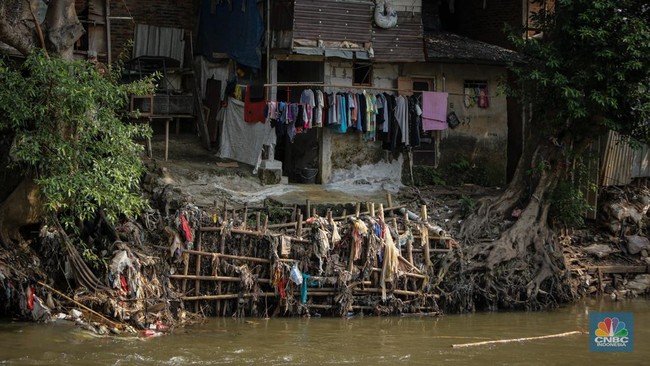
The utilisation of taxation data is considered a potential breakthrough in improving the accuracy of poverty measurement in Indonesia. Furthermore, in the future, this data has the potential to serve as the basis for ensuring social assistance (bansos) is distributed more precisely.
Media Wahyudi Askar, an observer from the Centre of Economic and Law Studies (CELIOS), stated that modern taxation systems such as Coretax can be utilised to map the economic conditions of the population more accurately through recorded asset and income data. He noted that similar practices have been widely used in various countries to support data-driven social protection policies.
“If we use Coretax effectively, it can, in the future, record the entire projection of Indonesian citizens’ assets,” said Media during a discussion at the STIS Polytechnic of Statistics, Jakarta, on Friday (1/9/2026).
However, he emphasised that the effectiveness of the system depends on the completeness of the incoming data. This means that it is not just certain taxpayers who must report data, but the entire population needs to be integrated into the system. With a comprehensive database, the government is deemed capable of mapping public welfare levels more precisely while simultaneously determining who is entitled to receive assistance.
“So, if my income and assets are below the poverty line and I input them into Coretax, I automatically become classified as poor, and the state automatically sends me funds,” he remarked.
Media explained that this scheme is known as a ‘tax benefit’—a mechanism where the taxation system functions not only to collect state revenue but also as an instrument for distributing social assistance. “That’s what we call a tax benefit. Then, if Person A was previously poor and suddenly becomes wealthy, through Coretax, they will realise: when I was poor, the state gave me money, and now I am paying taxes. This is something that can be implemented in the future,” he continued.
BPS Opens Opportunity to Use Tax Data
This idea of utilising tax data aligns with the plans of the Indonesian Central Bureau of Statistics (BPS), which is opening opportunities to use taxation data as one of the information sources for updating the National Single Social and Economic Data (DTSEN).
Setia Pramana, Director of Methodology and Data Science at BPS, stated that currently, poverty measurement still relies on a household expenditure approach because the government does not yet possess complete data on public income.
“Why not income? Because we do not have income data, so we use expenditure,” said Setual.
He believes that utilising tax data has the potential to increase the quality of poverty measurement and improve the accuracy of determining social assistance recipients. Nevertheless, Setia emphasised that the use of taxation data still requires cross-agency coordination and an adequate legal framework, particularly regarding personal data protection.
He also did not rule out the possibility of BPS collaborating with tax authorities to strengthen the quality of the DTSEN as the basis for various government assistance programmes and social policies.
“When we talk about data, it is very possible for us to collaborate with all existing ministries and agencies,” he concluded.