
CORE: Strengthening Domestic Raw Materials Key to Indonesia's Manufacturing Resilience
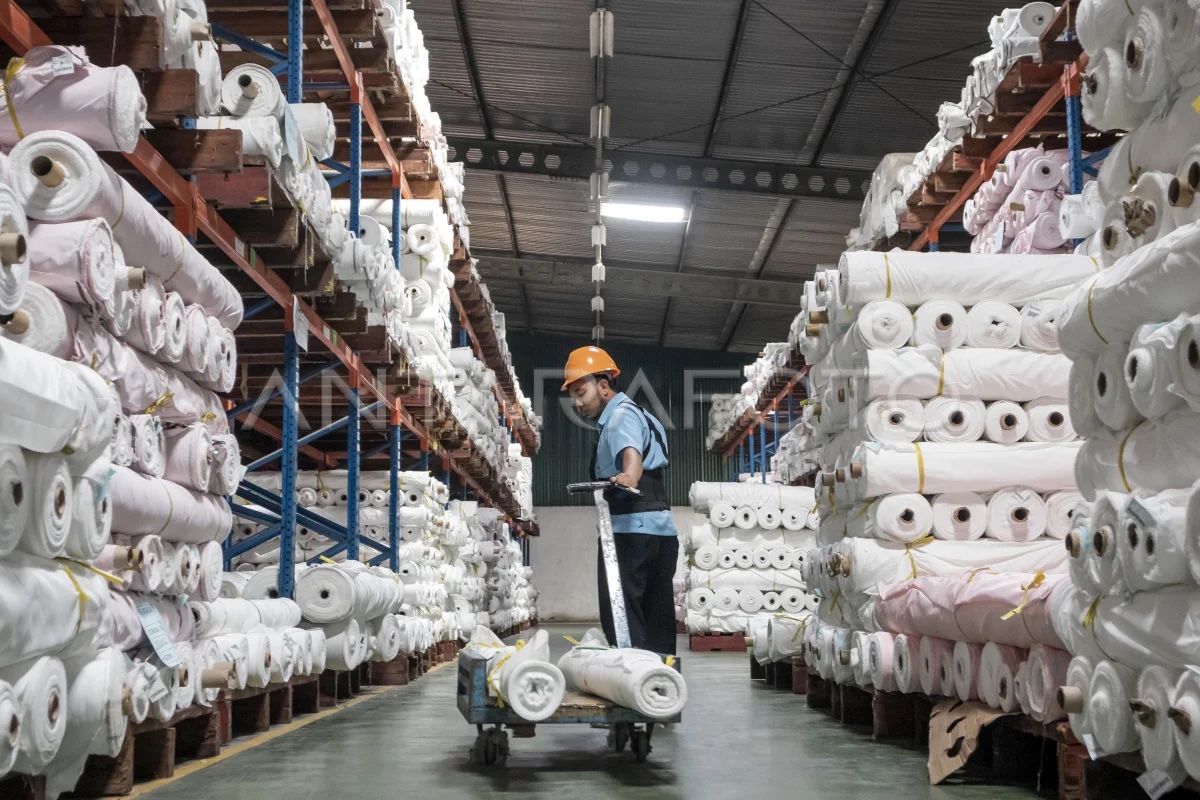
Center of Reform on Economics (CORE) Indonesia views strengthening domestic raw material industries as key to maintaining national manufacturing resilience amid rising production costs from global dynamics.
CORE Indonesia Executive Director Mohammad Faisal said manufacturing pressures emerged in March 2026 after relatively strong activity in January-February.
“If we look at the first quarter as a whole, the aggregate remains positive at 5 percent,” Faisal told ANTARA in Jakarta on Friday.
The Central Statistics Agency (BPS) previously recorded manufacturing growth of 5.04% year-on-year in Q1 2026, contributing to national economic growth of 5.61%.
Faisal also noted Indonesia’s manufacturing Purchasing Managers’ Index (PMI) reached 53.8 in February 2026 but fell to 49.1 in April, returning to contraction territory.
He attributed this to geopolitical pressures affecting manufacturing through higher raw material, logistics, and insurance costs, along with the rupiah’s depreciation against the US dollar.
“Production costs have risen due to war-related factors, increasing the cost of raw materials and logistics,” he said.
According to CORE Insight research, around 70% of Indonesia’s imports consist of industrial raw materials and components, meaning rupiah weakness and global supply chain disruptions quickly impact domestic production costs.
Moreover, CORE states that 85% of domestic pharmaceutical raw materials depend on imports, mainly from India and China.
Faisal said this situation should serve as a catalyst to strengthen domestic industry structures, making manufacturing more resilient to external pressures.
He identified key sectors needing reinforcement: naphtha-based petrochemicals, textiles and textile products, and iron and steel.
He explained that naphtha-based petrochemicals are crucial as primary inputs for textile and plastic industries, while iron and steel are vital for supporting domestic manufacturing and construction supply chains.
The textile industry is strategic, absorbing approximately 3.76 million workers, or about 19% of the national manufacturing workforce.
“The government must create space for manufacturing to thrive better, alleviate production cost burdens, and safeguard domestic market access,” Faisal said.
CORE proposes policy support including tariff relaxation for strategic raw materials, faster tax refunds, and input subsidies for healthy but cost-pressed industries.
In line with this, the government continues to push for strengthening national industry structure through downstreaming policies and developing domestic raw material industries, particularly in petrochemicals and steel to bolster national supply chains.
The government also targets Rp3.8 trillion in downstreaming investments for priority commodities to strengthen national industrial supply chains and increase domestic value addition.
Source: jawawa.id (https://jawawa.id/newsitem/core-strengthening-domestic-raw-materials-key-to-indonesias-manufacturing-resilience-1780038906)
Originally published by Antara (Indonesian) (https://www.antaranews.com/berita/5586297/core-nilai-penguatan-bahan-baku-kunci-jaga-daya-tahan-manufaktur-ri), translated from Indonesian