
CORE: Strengthening 'cold chain' is key to breaking the cycle of chilli price volatility
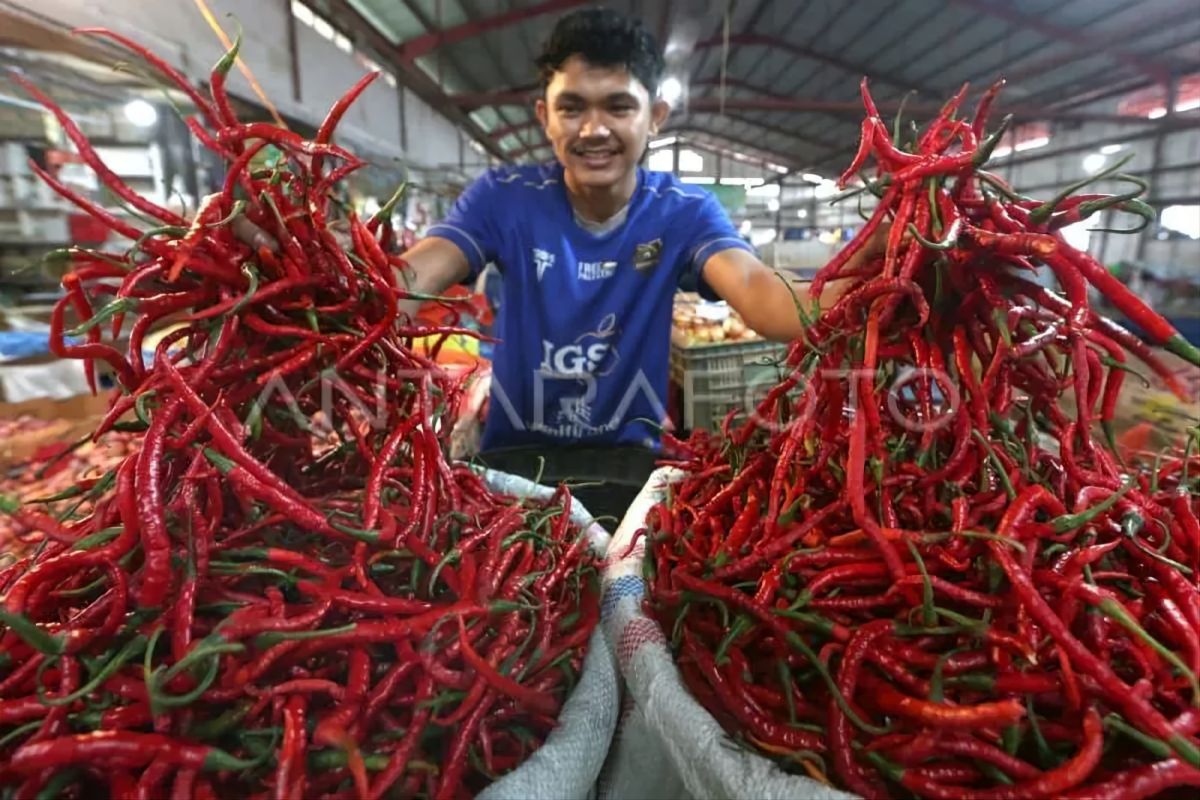
Jakarta (ANTARA) - Eliza Mardian, a researcher at the Centre of Reform on Economics (CORE) Indonesia, believes that strengthening the cold chain is a vital step in suppressing price volatility in horticultural food, especially for chillies, which occurs annually.
Eliza stated that horticultural commodities such as chillies are highly perishable, necessitating more robust storage and distribution systems. “Strengthening cold storage and cold chain logistics is of the highest urgency to break the cycle of horticultural price fluctuations,” Eliza told ANTARA in Jakarta on Friday.
According to her, without adequate storage technology, the shelf life of fresh chillies lasts only a few days, causing prices to plummet during peak harvests and surge when supplies dwindle. The National Research and Innovation Agency (BRIN) and the Ministry of Agriculture noted in 2023 that post-harvest losses for horticulture in Indonesia reached approximately 14 per cent annually.
She explained that this pattern causes horticultural food prices in Indonesia to tend to rise quickly, fall slowly, and recur every year with varying intensities. Data from the National Strategic Food Price Information Centre (PIHPS), managed by Bank Indonesia, recorded that the price of red bird’s eye chilli in early June 2024 remained around Rp84,400 per kilogram (kg) at the national retail level. In recent weeks, prices have fluctuated from approximately Rp54,700 per kg in early May to over Rp84,000 per kg leading up to Eid al-Adha.
“This is a classic phenomenon of Indonesia’s volatile food, which rises quickly, falls slowly, and repeats annually with varying intensities,” she said.
Eliza assessed that the issue is structural, as commodities like chillies are mostly grown by small-scale farmers, have a short shelf life, and are highly sensitive to weather and pests. Furthermore, production centres are concentrated, and long distribution chains to various regions increase the risk of supply shrinkage during transit.
Eliza noted that the horticultural situation differs from rice, which benefits from the Government Rice Reserve (CBP) and large-scale Food Supply and Price Stabilisation (SPHP) programmes. “Chillies are different from rice because there is CBP and large-scale SPHP. Meanwhile, chillies do not have a strong buffer stock,” she said.
Consequently, she urged the government to build and develop a national cold chain, including for horticultural commodities such as chillies, shallots, and tomatoes. Meanwhile, the government, through Perum Bulog, is currently building 100 national food warehouses to strengthen storage and commodity absorption in various regions. This programme aims to support food supply stabilisation and strengthen post-harvest infrastructure with a budget of approximately Rp5 trillion.
Eliza believes that the development of food storage infrastructure should not only focus on rice and maize but should also be directed towards horticultural commodities that are more vulnerable to price volatility due to limited cold chains. Integrated cold storage in production centres and wholesale markets could function as a supply buffer by extending the shelf life of horticultural products during periods of abundance.
A 2022 study by the World Resources Institute (WRI) Indonesia also showed that strengthening food storage and distribution systems could significantly reduce horticultural food loss. WRI noted that the use of crates during transport could reduce the loss of fruit and vegetable products by up to 87 per cent. Thus, supplies can be reintroduced to the market during periods of decreased production or increased demand, particularly during holidays and extreme weather.
In addition to the cold chain, Eliza assessed that the government needs to strengthen food data and forecasting systems that integrate real-time production, weather forecasts from the Meteorology, Climatology, and Geophysics Agency (BMKG), and market demand. “There needs to be an integrated data and forecasting system between real-time production, BMKG weather forecasts, and market demand so that horticultural price volatility does not continue to recur every year,” she concluded.
Source: jawawa.id (https://jawawa.id/newsitem/core-strengthening-cold-chain-is-key-to-breaking-the-cycle-of-chilli-price-volatility-1780818290)
Originally published by Antara (Indonesian) (https://www.antaranews.com/berita/5595471/core-penguatan-cold-chain-kunci-putuskan-siklus-gejolak-harga-cabai), translated from Indonesian