
CORE: Risk of layoffs rising in Q2 2026 amid global conflict
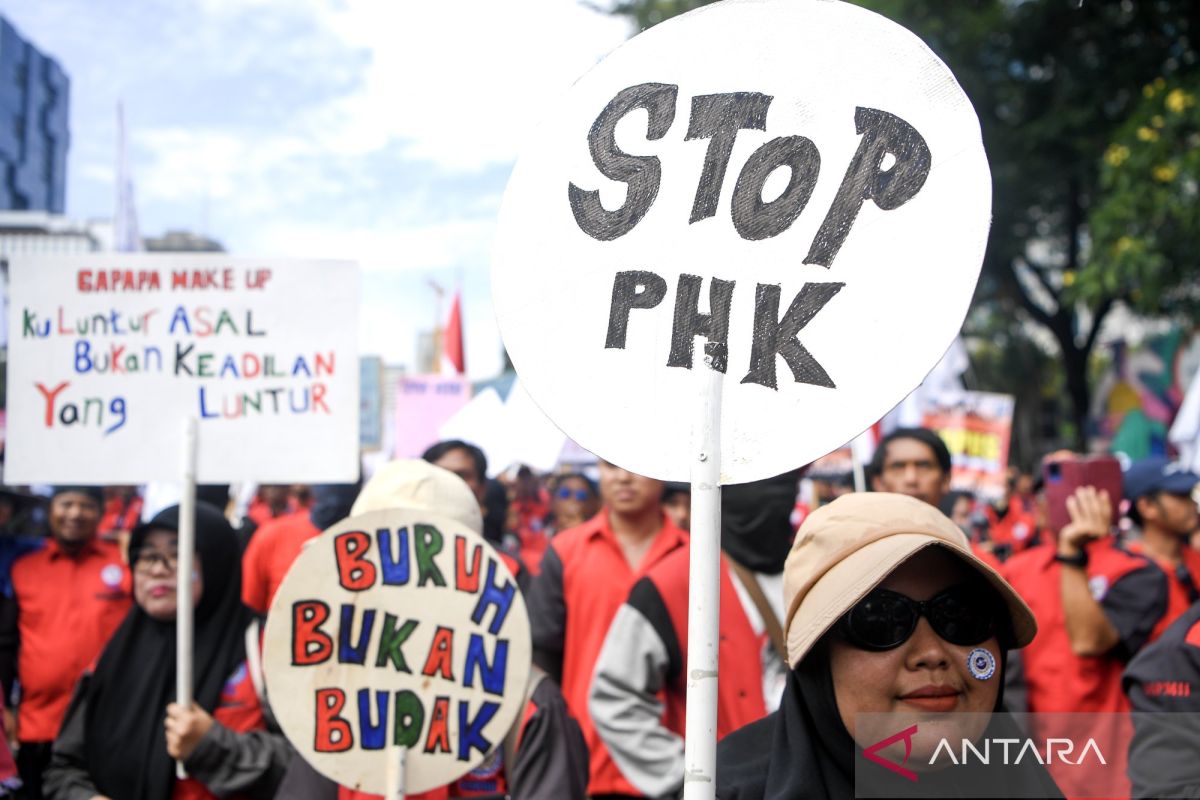
Jakarta (ANTARA) - The Center of Reform on Economics (CORE) Indonesia has warned that the risk of layoffs (PHK) could rise in the second quarter of 2026 due to global pressures beginning to affect the domestic manufacturing sector.
In its latest report, quoted in Jakarta on Wednesday, CORE said the conflict in Iran, which disrupts trade routes through the Strait of Hormuz, has disrupted the global supply chains.
For Indonesia, where the manufacturing industry still relies on imported raw materials, the disruption has pushed up production costs.
“Pressure on the labour market stems from two more structural factors, namely the transmission of cost shocks from global conflict to the business sector and Indonesia’s industrial dependence on imported raw materials,” CORE wrote in the report.
As costs rise, the pressure is being felt by firms and could constrain labour absorption.
Evidence of this is reflected in the S&P Global Purchasing Managers’ Index (PMI) survey for April 2026, which showed a decline in labour absorption in the manufacturing sector.
The PMI in April 2026 fell to 49.1, entering contraction territory, after previously reaching 53.8 in February 2026.
In this environment, CORE estimates that the cost pressures could lead to higher layoffs in the near term.
Based on simulations using the 2020 input–output table from Statistics Indonesia (BPS), the additional layoffs are estimated at between 15,300 and 20,300 workers.
The layoffs are expected to be concentrated in industrial agglomerations, such as the electronics sector in Batam, textiles and apparel in West Java, chemicals and pharmaceuticals in East Java, and the footwear industry in Banten.
CORE also identifies four manufacturing subsectors most vulnerable to cost pressures: textiles and apparel, footwear, electronics and computers, and chemicals and pharmaceuticals.
The textiles and apparel industry employs around 3.76 million workers, or about 19 percent of total national manufacturing employment.
Meanwhile, the footwear industry employs about 921,000 workers. The electronics and computers sector has a high import dependence, while the chemicals and pharmaceuticals sector relies up to 85 percent on imported inputs.
Separately, data from the Ministry of Manpower show that 15,425 workers were laid off from January to April 2026, with about 59 percent occurring in industrial areas.
Although this figure is lower than in the same period last year, CORE says the pressure in Q2 could push the number of layoffs higher.
To respond to the situation, CORE urges that investments, including those managed by Danantara, be directed to the most vulnerable strategic sectors, such as textiles and textile products, nafta-based petrochemicals, and iron and steel.
“These industries are at the most vulnerable point in Indonesia’s current manufacturing structure,” the report states.