
CORE: One million tonnes of molasses available for bioethanol development
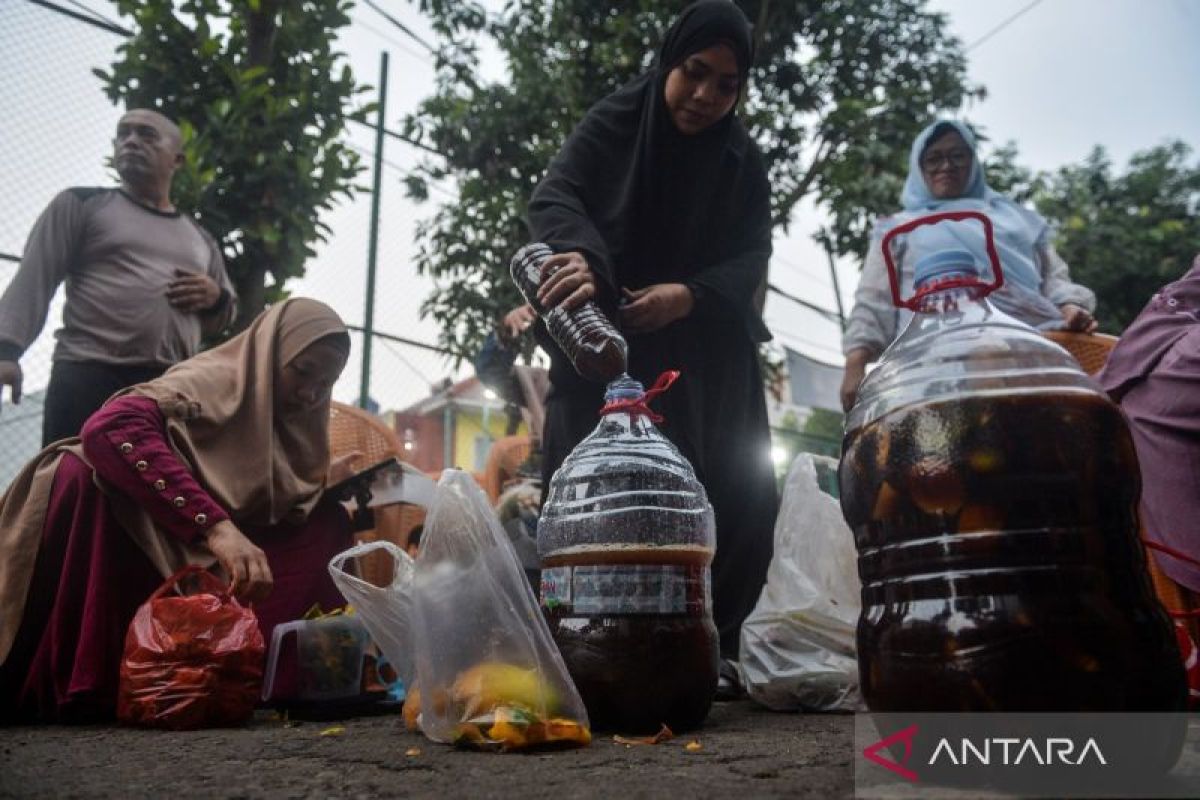
Jakarta (ANTARA) - Eliza Mardian, an economist at the Center of Reform on Economics (CORE) Indonesia, said there are one million tonnes of cane molasses, or tetes tebu, that could potentially be used for bioethanol development.
“Total national molase production is around 1.9 million tonnes per year. Only 900,000 tonnes are absorbed, leaving another one million tonnes. This could be put to use,” Eliza said when contacted by ANTARA from Jakarta on Sunday.
However, she noted, most molase supplies originate from outside Java, while processing facilities are located on Java. This creates logistics costs in the process.
Furthermore, Eliza highlighted the nation’s limited capacity to produce fuel grade ethanol (FGE), or ethanol with a purity above 99 per cent, suitable for blending with fuel.
“The reality is that domestic production is only around 26,000 kilolitres (KL) per year, coming from three main companies in Lampung, DIY, and Solo,” she said.
The total installed capacity of all national ethanol plants reaches 303,000 KL, with actual utilisation standing at around 172,000 KL.
“Most of it is still allocated for non-fuel industrial purposes such as cosmetics, pharmaceuticals, and food,” Eliza said.
She assessed that this situation reflects limited raw material supply and industrial infrastructure that is not yet ready to support a mandatory blending scale in the near term.
Therefore, to implement E5 through E20 bioethanol policies on a national scale, Eliza stressed the importance of massive investment in bioethanol supply chains and infrastructure over the coming years.
“The success of implementing E5, E10, and even E20 will depend heavily on policy scenarios to raise sugarcane productivity, as well as mandatory blending enforced with certainty of an offtaker such as Pertamina,” she said.
This would allow the gap between FGE production capacity and the needs of bioethanol development to be closed gradually, without having to rely on ethanol imports.
Minister of Energy and Mineral Resources Bahlil Lahadalia said the government is targeting the application of a 10 per cent ethanol blend in fuel (E10) starting in 2027, as an initial stage before moving to E20.
He said the government has been studying a mandatory ethanol policy since 2025. The study is now nearly complete and will form the basis of a roadmap for implementing E20, which is targeted to proceed in phases through 2028-2029.
According to Bahlil, the policy of blending ethanol into petrol aims to reduce Indonesia’s dependence on imported fuel, particularly petrol.