
CORE: Mitigating dry season impact must focus on water and farmers
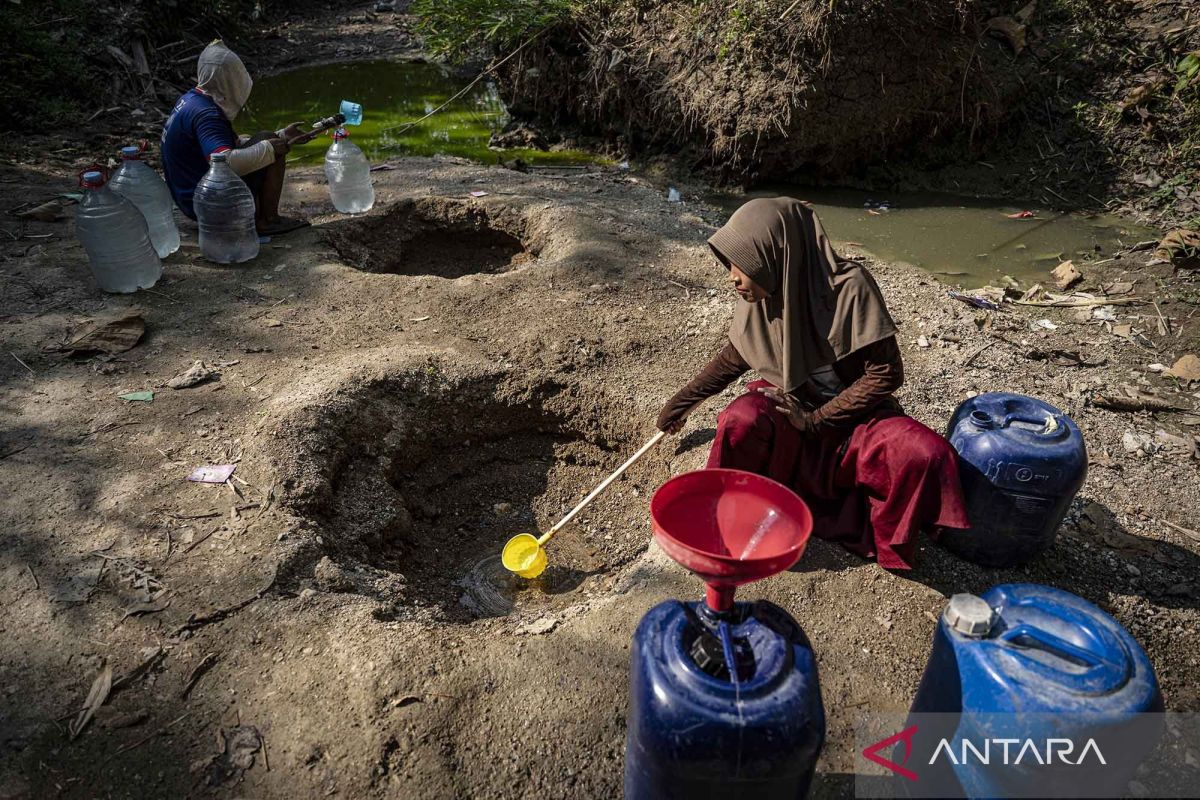
Center of Reform on Economics (CORE) Indonesia researcher Eliza Mardian has said that mitigating the impact of the drought on food production needs to prioritise water management and farmer protection, especially in areas with limited water sources.
“Policy for the next 3–6 months must focus on water and distribution,” Eliza told ANTARA on Thursday.
According to her, the El Niño risk to rice production is real, but it does not necessarily lead to a crisis. A longer and drier dry season has the potential to suppress planting area and productivity, particularly on rain-fed land and in areas with limited irrigation.
She said a number of rice production centres need attention, including Lamongan, Bojonegoro and Gresik in East Java, rain-fed areas in Central Java, northern West Java, NTB, NTT, Lampung, South Sumatra, and parts of South Sulawesi.
The large contribution of Java to national production means that disruption in these areas has the potential to have a wider impact.
The risk of crop failure also increases in areas experiencing prolonged days without rain, especially in Nusa Tenggara.
The Meteorology, Climatology and Geophysics Agency (BMKG) has stated that El Niño is currently active with a strong category. The peak of the 2026 dry season is forecast to be most widespread in August, covering 369 Season Zones (ZOM) or 48.84 percent of Indonesia’s land area.
In facing these conditions, Eliza considers pumpisation effective as long as there are still water sources that can be utilised to irrigate agricultural land.
“Pumpisation is effective only in locations that still have surface water sources,” she said.
For areas that do not have adequate water sources, she recommends adjusting the planting calendar, using drought-tolerant or early-maturing varieties, and temporary diversification to more water-efficient crops.
“If the area has no water, then pumpisation cannot be forced. Alternatives that can be done include adjusting the planting calendar and using drought-tolerant or early-maturing varieties,” she said.
According to Eliza, alternative crops can include maize and legumes as well as commodities that are more tolerant of drought so that production activities can continue when water availability declines.
The Ministry of Agriculture (Kementan) in 2026 has prepared 56,000 water pump units as part of national drought mitigation. Their distribution is directed, among others, to rice production centres that still have water sources to maintain water supply to agricultural land.
In addition to water management, Eliza also stressed the importance of protecting farmers through agricultural insurance and assistance with production inputs such as seeds and fertilisers, especially in areas with high drought risk.
According to her, mitigation needs not only to maintain food price affordability at the consumer level, but also the sustainability of farming businesses and farmer welfare so that they retain the ability and interest to plant again.
In this regard, the Ministry of Agriculture is also running the Rice Farming Business Insurance (AUTP) with a coverage value of up to Rp6 million per hectare for land experiencing crop failure due to disasters.
Support for AUTP premium facilitation is allocated through regional budgets (APBD I and APBD II) in 13 provinces. Farmers affected by drought are also provided with seed assistance and production inputs.
For the short term of up to three months, Eliza recommends optimising reservoirs, pumpisation according to water availability, rehabilitating critical irrigation, weather modification in strategic locations, and adjusting the planting calendar based on BMKG forecasts.
“Solving these problems can prevent a decline in planting area and price spikes for consumers,” she said.
On a three- to twelve-month horizon, mitigation needs to be strengthened through food reserves, diversification of water sources, drought-tolerant varieties, weather index-based insurance, and real-time monitoring of agricultural conditions using satellites.
Meanwhile, in the long term, Eliza assesses that Indonesia needs to modernise irrigation, implement climate-smart agriculture, strengthen local food diversification and water governance, and build an integrated early warning system.
“Indonesia needs to build a climate-resilient food system,” said Eliza.
In line with the need to strengthen climate resilience, the Ministry of Agriculture together with the Ministry of Public Works (PU) is accelerating the strengthening of irrigation networks and the provision of water sources to face the dry season.
In 2026, the Directorate General of Agricultural Land and Irrigation of the Ministry of Agriculture is targeting 89,600 activity units projected to support irrigation of around 2.1 million hectares of agricultural land.
As of 25 July 2026, the physical realisation of the programme has reached around 46 percent, with benefits estimated to have reached around 1 million hectares.
The programme includes pump irrigation, pipe irrigation, small reservoirs, long storage, ditch dams, rehabilitation of tertiary irrigation networks, and optimisation of surface water and groundwater.
The Ministry of Agriculture is also strengthening mitigation through mapping drought-prone areas and early warning systems, accelerating planting in areas that still have water sources, utilising drought-tolerant and early-maturing varieties, and optimising swamp land and newly developed rice fields.
Through the Agency for Agricultural Instruments Standardisation and Modernisation (BRMP), the ministry is encouraging the use of adaptive superior varieties, water-saving technology, and dry-land specific cultivation patterns to maintain productivity amid water limitations.