
CORE: Japanese Investment Vital for Supporting Infrastructure Development
Investment under current conditions is becoming increasingly essential and important, as many governments require it, including city administrations, for infrastructure improvements and boosting competitiveness.
The Executive Director of the Center of Reform on Economics (CORE) Indonesia, Mohammad Faisal, assessed that Japanese investment is important for supporting infrastructure development amidst the need to enhance competitiveness and government fiscal limitations.
Faisal stated that investment is becoming more essential because many regional governments require financing support to repair and develop infrastructure to increase urban economic productivity. “Investment in today’s circumstances is becoming increasingly essential, more important, because many governments need it, including city governments for infrastructure improvement and competitiveness enhancement,” Faisal said in Jakarta on Wednesday.
According to him, Japan still views Indonesia as a prospective investment destination compared to several competitor nations in the region. This assessment, Faisal continued, persists even though Indonesia still faces investment challenges related to permitting, procedures, policy, and labour. “Japan, actually among the many investors and investor source countries, still sees Indonesia as extremely prospective,” he said.
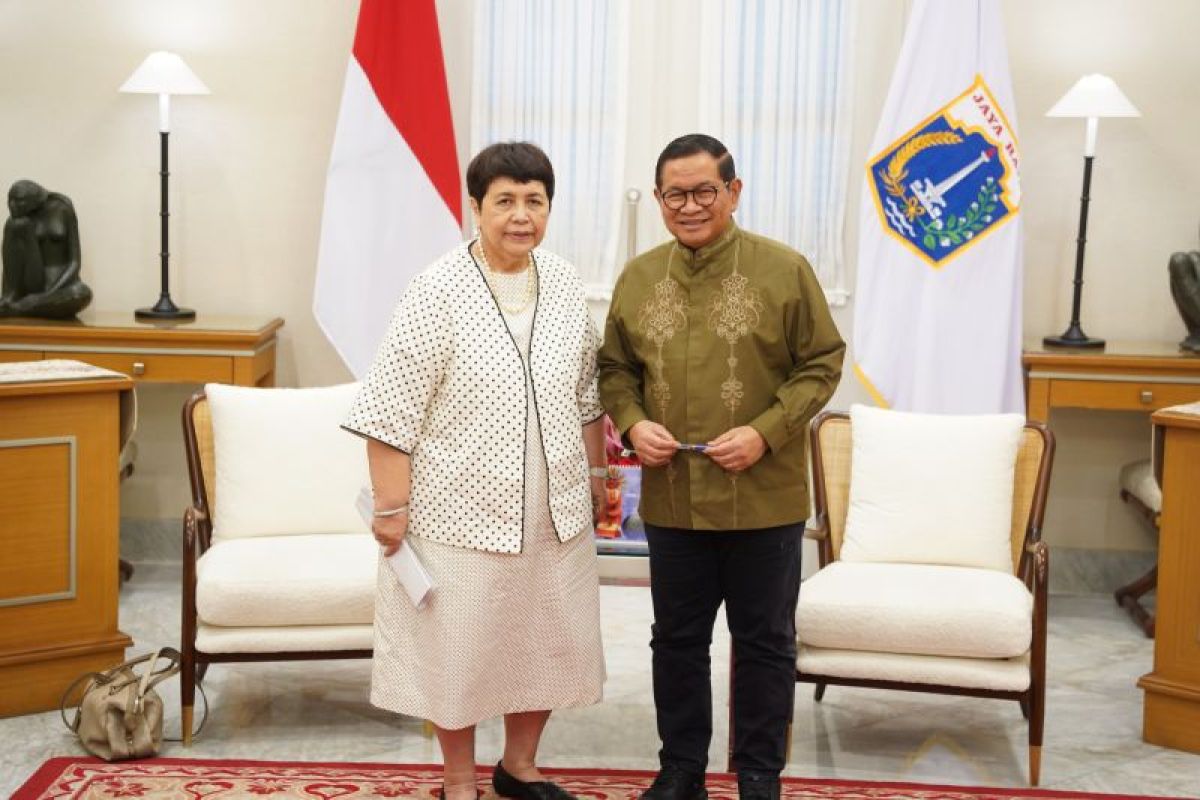
Meanwhile, Indonesian Ambassador to Japan Nurmala Kartini Pandjaitan Sjahrir is exploring Japanese investment opportunities in six strategic projects in DKI Jakarta: the expansion of the Jakarta Mass Rapid Transit (MRT), the construction of the Mass Integrated Transportation Hub Jakarta (MITJ), and the Sunter Intermediate Treatment Facility (ITF). Additionally, exploration is underway for the National Capital Integrated Coastal Development (NCICD) sea wall project, the strengthening of the Pluit Timur Reservoir pump polder system, and the construction of Light Rail Transit (LRT) Phase 2 from Kelapa Gading to Jakarta International Stadium. This exploration is a follow-up to DKI Jakarta Governor Pramono Anung’s visit to Tokyo in April 2026 and his meeting with Tokyo Metropolitan Governor Yuriko Koike.
Jakarta-Tokyo cooperation has been ongoing since 1989 through a sister-province framework and is reinforced by the presence of over 10,000 Japanese nationals working at around 1,500 companies in Jakarta. Japan, through the Japan International Cooperation Agency (JICA), has been involved in the investment for MRT Phase 1 and the construction of the Pluit Timur Reservoir pump. The DKI Jakarta Provincial Government is also targeting the participation of Japanese investors to help complete the approximately 16.7 kilometres remaining of the NCICD sea wall construction. Meanwhile, the pump infrastructure capacity for the Pluit Reservoir is reportedly only about 17 per cent built from the total water management needs of Jakarta and is expected to be increased through further investment.
Faisal assessed that Japanese investment in DKI Jakarta’s infrastructure projects needs to be continually maintained and enhanced, especially for projects with high demand and commercial viability. According to him, projects like the MRT and water management infrastructure remain attractive to investors because they possess good long-term return potential. “Japanese investment, whether in the MRT or water infrastructure handling, is certainly something that must be maintained and even enhanced between the government and Japan,” he said.
Faisal stated that infrastructure investment is not only important for current development but also for maintaining the sustainability of future economic growth. Infrastructure investment is considered capable of creating a multiplier effect on the economy, ranging from labour absorption in the construction sector and increasing urban economic productivity to attracting further investment. He mentioned that improved infrastructure development can increase competitiveness, thus expanding opportunities for new investment across various economic sectors. “Infrastructure actually requires a lot of labour in the construction and industrial sectors, and if infrastructure improves, the city’s competitiveness will further increase, including attracting even more investment in the future,” he remarked.
Additionally, he assessed that investment cooperation with Japan needs to be directed towards strengthening technology transfer so that the technical capacity of domestic players can increasingly improve. Through this technology transfer, he believes the technical capacity of domestic players in executing infrastructure projects can increase, allowing dependence on foreign technology to be gradually reduced.