
CORE: Irrigation networks key to safeguarding food production amid El Niño
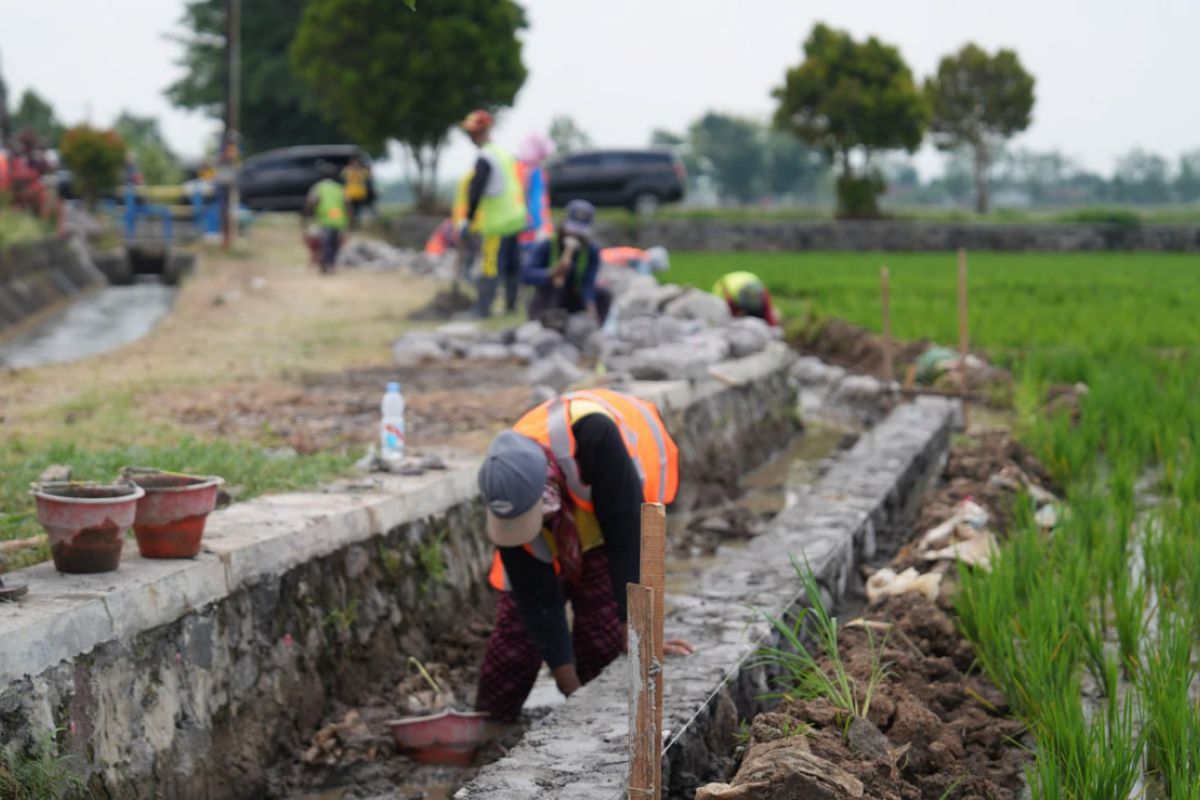
Jakarta (ANTARA) - Center of Reform on Economics (CORE) Indonesia researcher Eliza Mardian has assessed that strengthening water infrastructure, especially irrigation networks, is a determining factor in maintaining national food production amid the potential El Niño climate phenomenon. According to her, various measures prepared by the government such as pumpisation, reservoirs, deep wells, land optimisation, and new paddy field creation can help reduce the impact of drought, but still require the support of reliable irrigation systems. “These interventions are actually quite effective as a buffer for moderate to medium droughts, but are insufficient on their own for a strong El Niño scenario,” Eliza told ANTARA in Jakarta on Friday. She stated that drought is fundamentally a condition of water deficit during the critical growth phases of plants, making water availability the most decisive factor for production success. Eliza cautioned that irrigation repairs need to be carried out not only on tertiary networks but also upstream. According to her, siltation still occurs in primary and secondary irrigation canals, weirs, and reservoirs due to sediment accumulation influenced by land-use changes and limited sediment control structures. This condition, she continued, means that revitalising irrigation networks faces challenges because it requires substantial costs and sustained cross-sector coordination. “Irrigation is the key, but currently around 60 per cent of irrigation networks are still categorised as damaged,” she said. Meanwhile, the rehabilitation of tertiary networks, which the government has frequently undertaken, is considered to have limited impact if upstream problems are not comprehensively addressed. Nevertheless, Eliza noted that pumpisation, reservoirs, and deep wells still play an important role as supplementary water sources in drought-prone areas. According to her, pumps can help save crops during critical phases such as flowering and grain filling. However, she cautioned that using pumps also increases production costs because they require fuel or electricity to operate. Reservoirs and deep wells are also considered beneficial for diversifying water sources, although they still face challenges including relatively high operational costs, dependence on supporting infrastructure, and a scale of utilisation that is not yet massive compared to national needs. In drought-prone regions such as West Nusa Tenggara and East Nusa Tenggara, the presence of pumps, reservoirs, and deep wells can help maintain production, but cannot yet replace the function of permanent irrigation. “Pumpisation, reservoirs, and deep wells are quite effective as water supplements in critical areas,” she said. In addition, Eliza assessed that the new paddy field printing programme also faces challenges because new land generally requires one to two planting seasons to achieve stable productivity and often encounters limited water access. Thus, investment in water infrastructure is considered to have a greater long-term impact as it can increase farmer productivity and income compared to input subsidies, which tend to be short-term in nature. “Without sufficient and timely water, superior seeds, fertilisers, or planting patterns also potentially cannot work optimally,” she revealed. On the other hand, Minister of Agriculture Andi Amran Sulaiman stated that the government has strengthened various agricultural infrastructures to anticipate the impact of El Niño on national food production, including through the construction of reservoirs, pumpisation, deep wells, pumping irrigation, land optimisation, and the new paddy field printing programme. The government has prepared the construction of around 15,000 pumping irrigation units, 3,000 pipeline irrigation units, and 3,000 water conservation structures focused on rice production centres and drought-prone areas. In addition to strengthening water infrastructure, the government is also increasing the national rice reserve to maintain supply availability and food price stability amid the potential long dry season. The Ministry of Agriculture recorded that the current rice reserve stock has reached approximately 5.2 million tonnes. This figure has the potential to increase along with estimated production from rice crops still in the growth phase (standing crop) of around 10 to 11 million tonnes. With this stock support and production potential, the government estimates that national food availability is sufficient to meet public needs for approximately the next 10 to 11 months.