
CORE: Involving MSMEs can expand the economic impact of food aid
Jakarta (ANTARA) - The Executive Director of the Centre of Reform on Economics (CORE) Indonesia, Mohammad Faisal, believes that involving micro, small, and medium enterprises (MSMEs) as suppliers of food aid commodities can expand the programme’s multiplier effect on the community’s economy.
“The economic multiplier effect will be greater if backward linkages are also considered, ensuring that rice, oil, or whatever is to be distributed as food aid is purchased from the community or MSMEs,” said Faisal when contacted by ANTARA in Jakarta on Tuesday.
According to him, the benefits of food aid programmes should not only be viewed from the perspective of distribution to the public, or forward linkages, but also from the supply chain of the goods used in the programme.
By involving small businesses in the provision of aid commodities, the resulting economic activity can reach the community both as aid recipients and as business actors within the supply chain.
“So, it is not just the forward linkage being distributed to the lower-middle class, but the procurement of raw materials must also be ensured to be sourced from small businesses managed or operated by the lower-middle class,” he said.
In the context of purchasing power, Faisal stated that food social assistance functions to maintain the ability of lower-income groups to meet essential needs, particularly food.
He noted that this function should be distinguished from efforts to increase aggregate household consumption, as social assistance is primarily aimed at protecting the purchasing power of those in need.
“This means ensuring that the lower-middle class does not experience a decline in purchasing power, especially for the purchase of essential food items,” he said.
In addition to food aid, Faisal assessed that energy subsidies remain necessary because fuel, LPG, and electricity are linked to the community’s needs for transport, mobility, and work activities.
Subsidies have a broader reach because part of their benefits can also be felt by the lower-middle class who still rely on subsidised energy.
“Food social assistance and subsidies—both are needed,” said Faisal.
He explained that food aid needs to be distributed precisely so that the eligible lower-income groups are not missed. Meanwhile, subsidies also require control mechanisms to ensure benefits reach the target groups.
According to Faisal, one advantage of subsidies is that the benefits can be felt directly by consumers through prices. On the other hand, aid in the form of goods, such as rice, has the advantage of being directly directed towards meeting the food needs of recipients.
These views were shared at a time when domestic retail sales growth remains positive but is experiencing moderation. Bank Indonesia (BI) forecasts that the Real Sales Index (IPR) for August 2026 will grow by 0.5 per cent year-on-year, slowing from the 1.1 per cent growth realised in July 2026.
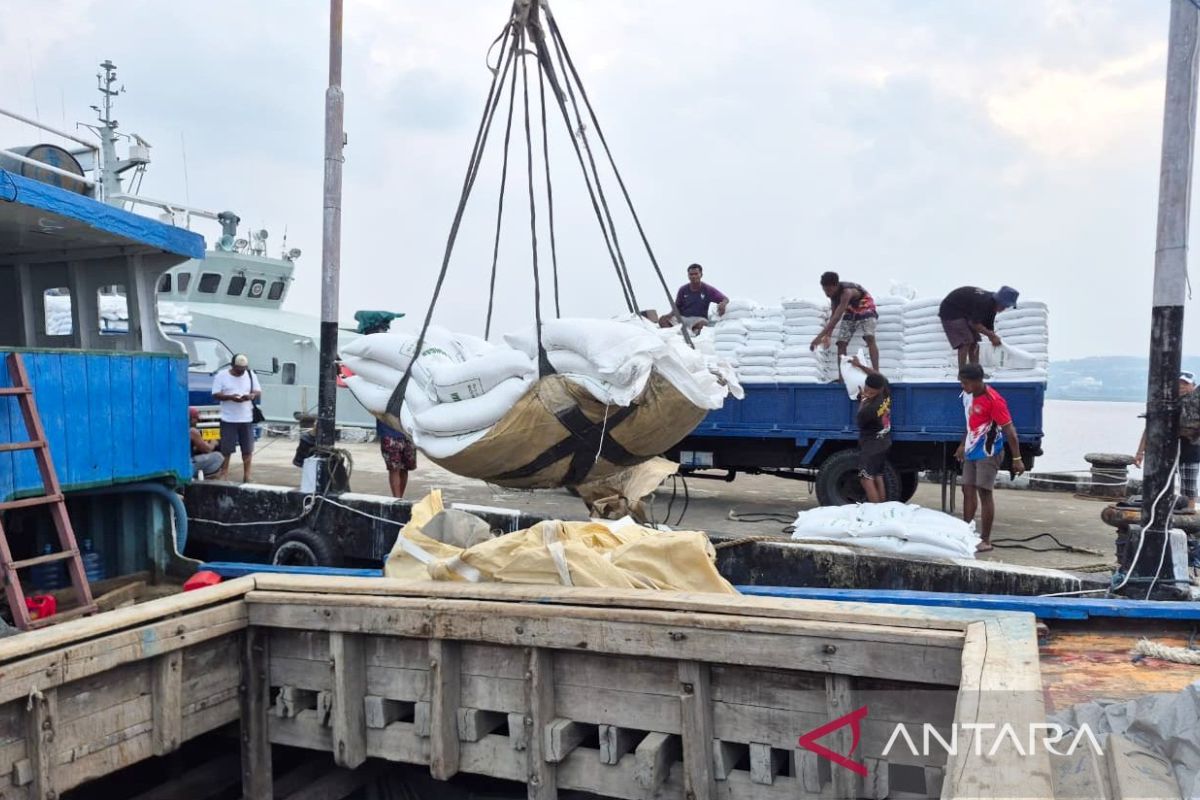
In the rice food aid programme for the July-September 2026 period, the National Food Agency (Bapanas) has tasked Perum Bulog to distribute 997.2 thousand tonnes of Government Food Reserves (CPP) to 33.24 million food aid recipients (PBP). Each recipient receives an allocation of 10 kilograms (kg) of rice per month, totalling 30 kg for three months. Recipients are drawn from deciles 1-4 in the National Single Social and Economic Data (DTSEN).
The government has also decided to continue rice food aid until December 2026, with an additional allocation of one million tonnes for the October-December period. Each recipient will continue to receive 10 kg of rice per month.
Regarding energy, the government stated in September 2026 that it would maintain the price of subsidised fuel amidst global oil price dynamics to ensure energy remains affordable for the public.
Source: jawawa.id (https://jawawa.id/newsitem/core-involving-msmes-can-expand-the-economic-impact-of-food-aid-1790089607)
Originally published by Antara (Indonesian) (https://www.antaranews.com/berita/5753576/core-pelibatan-umkm-perluas-dampak-ekonomi-bantuan-pangan), translated from Indonesian