
CORE: Inter-regional stock management crucial to mitigate food inflation risks
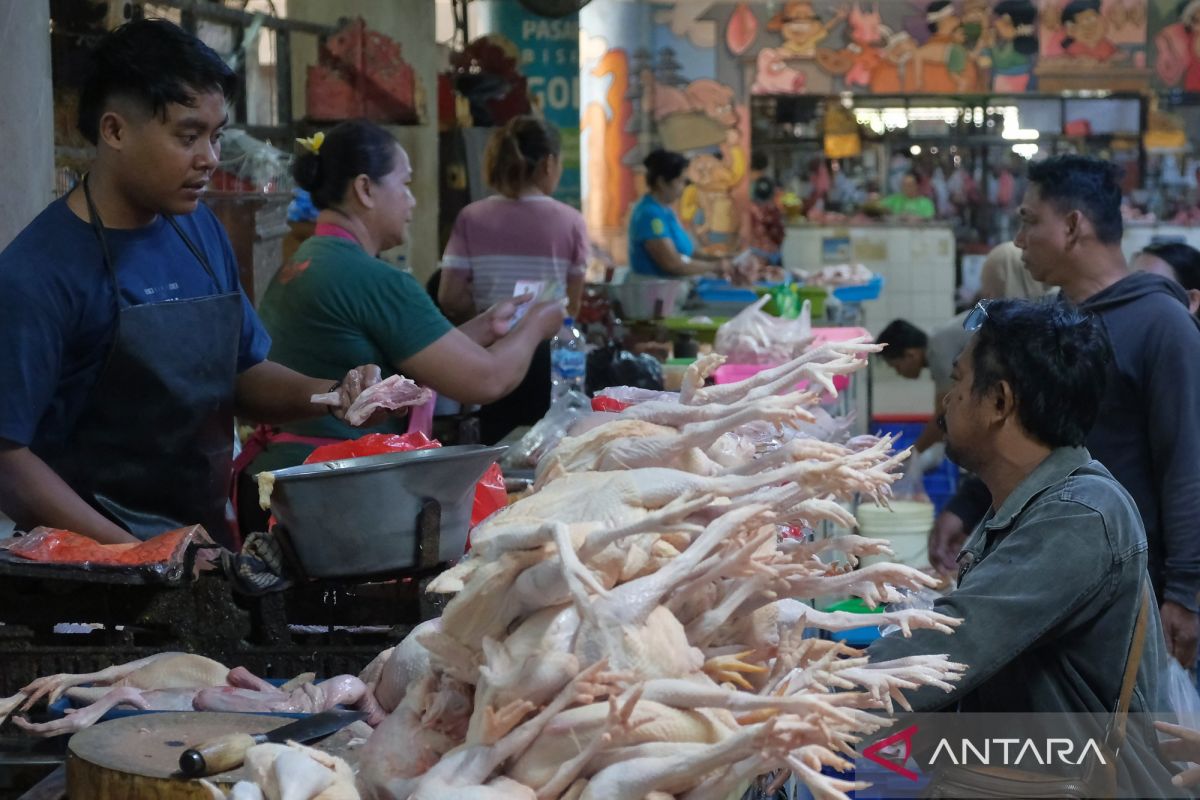
Jakarta (ANTARA) - The Executive Director of the Centre of Reform on Economics (CORE) Indonesia, Mohammad Faisal, believes that strengthening food stock and logistics management between regions is essential to mitigate the risk of food inflation amidst a potentially prolonged dry season.
According to Faisal, food production capabilities vary by region, making it necessary for stock management to connect areas with sufficient supply to those facing shortages.
“Food production, rice, and others vary between regions,” Faisal told ANTETTE in Jakarta on Friday.
He stated that such coordination must be supported by logistics management and a balance of supply and demand between regions to ensure that production disruptions in one area do not immediately lead to price pressures.
“Therefore, there needs to be logistics management and inter-regional supply and demand management to suppress inflation,” he said.
Stock management, according to Faisal, becomes increasingly important in the coming months because El Niño has the potential to extend the dry season and disrupt food productivity.
He explained that this year’s dry season could potentially last longer than normal, meaning the transition to the rainy season may occur more slowly.
He noted that the government needs to anticipate this by maintaining the productivity of staple food crops, ensuring smooth distribution, and strengthening inter-regional cooperation in stock management.
Faisal believes that inflationary pressure still needs to be closely monitored in relation to public purchasing power, even though the inflation rate in August was generally relatively low within the annual inflation cycle.
“If we link inflation to current public purchasing power, it remains a concern, even though the inflation rate in August was actually relatively not high,” he said.
Statistics Indonesia (BPS) recorded August 2026 inflation at 0.21 per cent month-on-month, while the annual rate reached 3.19 per cent, with the calendar year rate at 1.86 per cent.
Faisal assessed that the annual inflation rate remains within the 2026 inflation target range of 2.5 to 1 per cent.
Nevertheless, he noted that the composition of inflation still requires attention because price pressures continue to stem from the food group, including broiler chicken, bird’s eye chilli, fish, and cooking oil.
“This remains the largest component, so it still requires attention regarding the production and distribution of food commodities,” said Faisal.
The National Food Price Information Centre (PIHPS), managed by Bank Indonesia, recorded on Friday at 10:10 WIB that the price of red bird’s eye chilli at the retail level nationwide was Rp88,150 per kilogram and broiler eggs were Rp28,900 per kilogram.
PIHPS also recorded the price of fresh broiler meat at Rp40,100 per kilogram, bulk cooking oil at Rp20,900 per litre, and medium-quality Grade I rice at Rp16,050 per kilogram.
The Meteorology, Climatology, and Geophysics Agency (BMKG) recorded the El Niño-Southern Oscillation (ENSO) index for the June-July-August 2026 average at 2.2, indicating a very strong El Niño.
Faisal stated that El Niño conditions must be closely monitored in the coming months, as a longer dry season is feared to disrupt food production and increase price pressures.
Therefore, he believes the government needs to intervene by maintaining the productivity of staple foods, ensuring smooth distribution, and managing stocks through inter-regional cooperation.
“This needs to be a priority for the government to intervene, especially in maintaining the productivity of staple foods and their distribution, as well as conducting stock management through inter-regional cooperation,” he said.
In line with these efforts, the National Food Agency (Bapanas) is implementing Food Distribution Facilitation (FDP) to help create price stability by mobilising commodities from surplus or low-price producer regions to deficit or high-price consumer regions.
According to Bapanas data, the realisation of FDP up to July 2026 reached approximately 174.96 tonnes of various food commodities.
Bapanas has also established FDP as one of the food price stabilisation instruments for 2026 to strengthen the balance of supply between surplus and deficit regions.