
Core Inflation Rises to 2.92%: Driven by Gold Prices, Laptops, and Engine Oil
Indonesia’s year-on-year (yoy) inflation pressure moved to the 3.19% level in August 2026, triggered by inflationary pressure across all its constituent components.
Core inflation even rose to the 2.92% level (yoy) in August 2026, higher than the August 2025 record of 2.17% yoy. Core inflation is an inflation component that tends to be stable or persistent in its movement and is influenced by fundamental factors such as supply and demand, as well as external environments including exchange rates, commodity prices, and global economic developments.
“Year-on-year core inflation stands at 2.92%, with this component providing the largest contribution at 1.87%,” said Ateng Hartono, Deputy for Distribution and Services Statistics at BPS, during a press conference on Tuesday (1/9/2026).
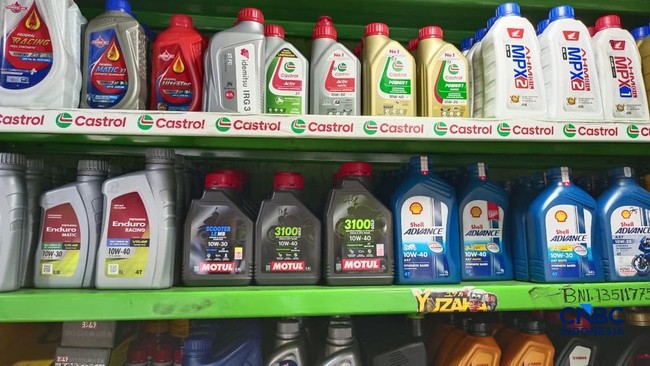
Ateng explained that for the core inflation component, commodities contributing to the year-on-year figures in August 2026 included gold jewellery, cooking oil, rice with side dishes, mobile phones, lubricants or engine oil, and laptops or notebooks.
As for the non-core inflation components, such as volatile food prices and administered prices, they experienced inflation of 4.06% yoy and 3.32% yoy, respectively.
According to Ateng, volatile food inflation was triggered by price increases in broiler chicken, rice, bird’s eye chilli, beef, and red chilli. However, the volatile food component was recorded lower than in August 2025, which stood at 4.47%.
Meanwhile, the administered prices component experienced inflation due to commodities such as petrol, air transport tariffs, machine-rolled clove cigarettes, and household fuels. The inflationary pressure on government-regulated prices was also recorded higher than the 1% seen in August 2025.