
CORE: Government Needs to Accelerate Danantara Investments in the Energy Sector
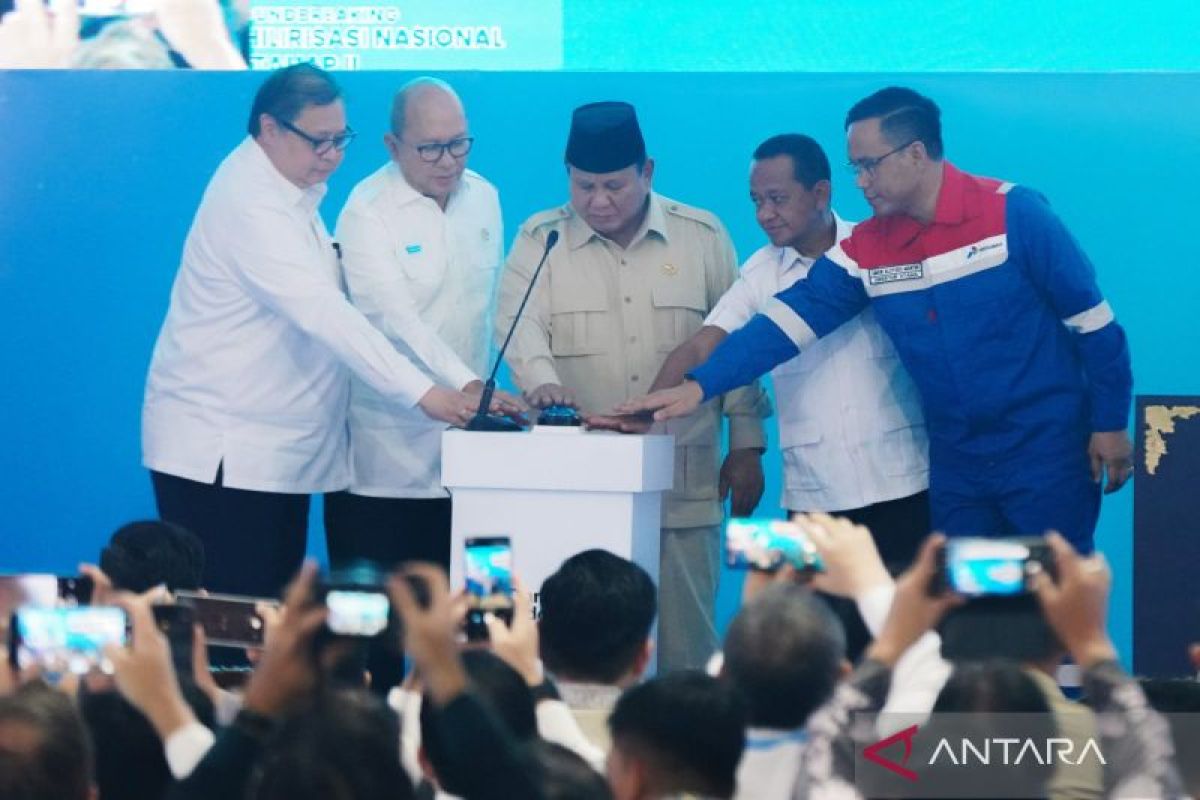
The government can maximise the momentum of the energy crisis due to this Iranian war to accelerate the construction of supporting infrastructure for energy distribution to the public. Jakarta (ANTARA) - The Center of Reform on Economics (CORE) Indonesia assesses that the government needs to accelerate the performance of the Danantara Investment Management Agency to encourage investments in the energy sector, particularly renewable energy, amid pressures from the global energy crisis. The Brief Report: Quarterly Economic Review Q1-2026 released by CORE in Jakarta on Wednesday recommends utilising the momentum of surging energy prices due to the conflict in the Strait of Hormuz to strengthen national energy resilience, including through the acceleration of energy distribution infrastructure development. “The government can maximise the momentum of the energy crisis due to this Iranian war to accelerate the construction of supporting infrastructure for energy distribution to the public,” states the report’s recommendation. One of the initiatives promoted is the acceleration of household gas network (jargas) construction as an alternative to reduce reliance on LPG imports. To date, the realisation of new jargas connections has reached around 900,000 households. According to CORE, Indonesia has significant investment potential in the upstream energy sector, but downstream sector development remains lagging. Therefore, accelerating investments on the downstream side is deemed important to strengthen domestic energy resilience. In addition, Danantara is also assessed to be able to play a strategic role in promoting renewable energy investments, such as solar power plants (PLTS), which have great potential in Indonesia. On the other hand, CORE notes that the escalation of conflict between the United States, Israel, and Iran has driven global oil prices to surge to $112 per barrel in the first quarter of 2026, far above the Indonesian Crude Price (ICP) assumption in the 2026 State Budget of $70 per barrel. This increase directly pressures the government’s fiscal space. The Ministry of Finance records that energy subsidy and compensation expenditures up to February 2026 reached Rp51.5 trillion, an annual increase of 382.6 percent. External pressures are also reflected in the decline of foreign exchange reserves to $151.9 billion in February, capital outflow of $1.1 billion in March, and the rise in government securities (SBN) yields to 7.5 percent with the spread against US Treasury widening to 243 basis points. In CORE’s simulation, the state budget deficit could widen from the baseline of Rp689 trillion or 2.68 percent of GDP to Rp801 trillion if oil prices are around $100 per barrel. Even, the deficit could increase to Rp914 trillion or 3.55 percent of GDP if oil prices remain at $112 per barrel.