
CORE: Government Must Prepare Fiscal Mitigation Measures for Merah Putih Village Cooperative Programme
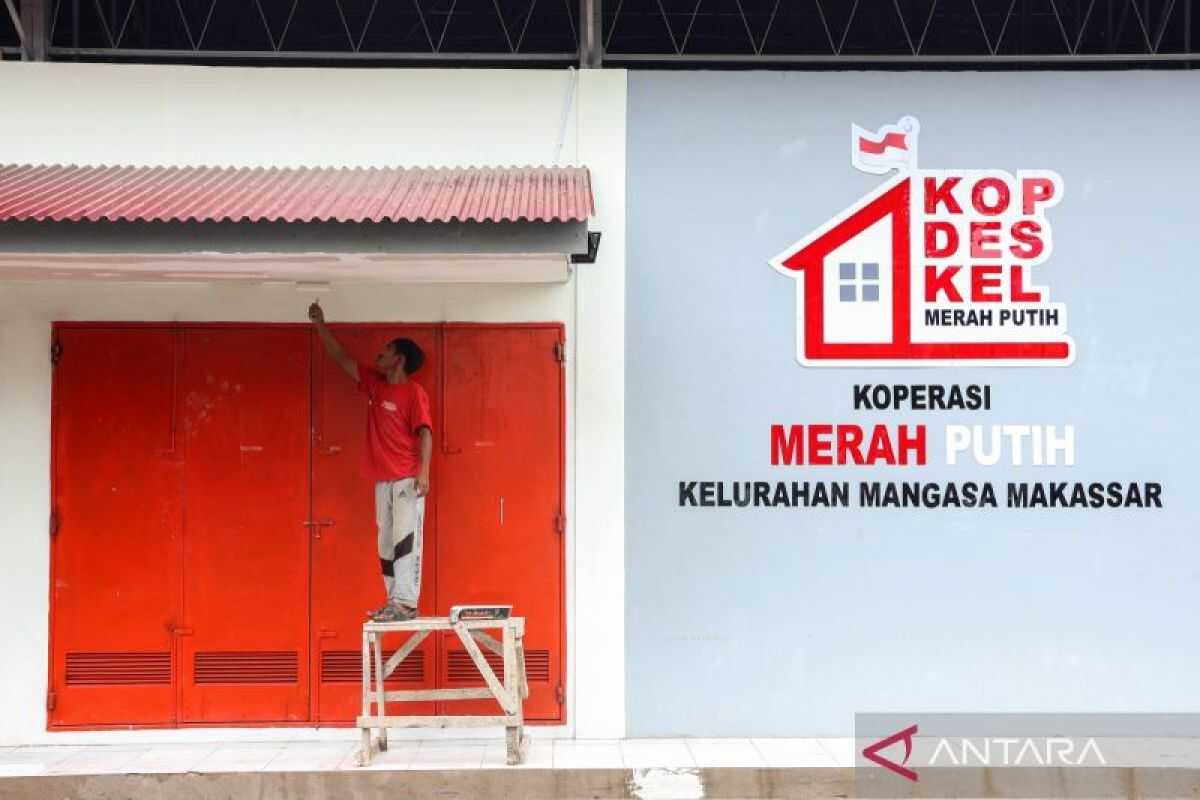
Jakarta (ANTARA) - Economist Yusuf Rendy Manilet of the Center of Reform on Economics (CORE) has argued that the government needs to prepare fiscal mitigation measures for the implementation of the Koperasi Desa Merah Putih (KDMP) programme.
Speaking to ANTARA in Jakarta on Wednesday, Yusuf explained that the decision to allocate more than half of the village budget to a single physical programme risks creating a one-size-fits-all approach, even though villages have highly diverse economic characteristics.
The government has allocated 58.03 per cent of the 2026 Village Fund budget to the construction of KDMP facilities, amounting to Rp34.57 trillion out of a total allocation of Rp60.57 trillion. The remaining Rp25 trillion has been allocated to the regular Village Fund.
This policy is regulated under Minister of Finance Regulation (PMK) Number 7 of 2026, signed by Finance Minister Purbaya Yudhi Sadewa and effective from its promulgation on 12 February 2026.
According to Yusuf, the direct implication of this policy is a village liquidity shock. With only around 42 per cent of the budget remaining, villages will struggle to fund basic services such as direct cash transfers (BLT), stunting prevention, and food security programmes. The risk is that the construction of cooperative assets will be prioritised over social spending.
Yusuf therefore underscored the urgency of fiscal risk mitigation by the central government.
“This includes performance evaluation schemes and corrective mechanisms should the KDMP prove unproductive, so that villages do not bear a long-term fiscal burden from policy designs that do not match local capacity,” he said.
Beyond fiscal risks, Yusuf also reminded the central government to ensure that the KDMP is integrated with local supply chains and functions as an off-taker for village products.
In this way, the funds invested in the KDMP can genuinely circulate within the local economy.
For village governments, Yusuf recommended taking rigorous steps to recalibrate remaining budgets by prioritising human resource development and social safety nets.
This measure aims to maintain community purchasing power so that village economic infrastructure, including the KDMP, can function optimally.