
CORE: Government Committed to Maintaining 2027 Draft Budget Deficit Below 3 Percent
The Center of Reform on Economics (CORE) Indonesia assesses that the government remains committed to maintaining the deficit below 3 percent in the 2027 Draft State Revenue and Expenditure Budget (RAPBN).
Economist Dipo Satria Ramli of CORE Indonesia expressed strong appreciation for the government’s commitment to keeping the figure under 3 percent, regardless of the various pros and cons, calling it a very positive step during an online discussion in Jakarta on Friday.
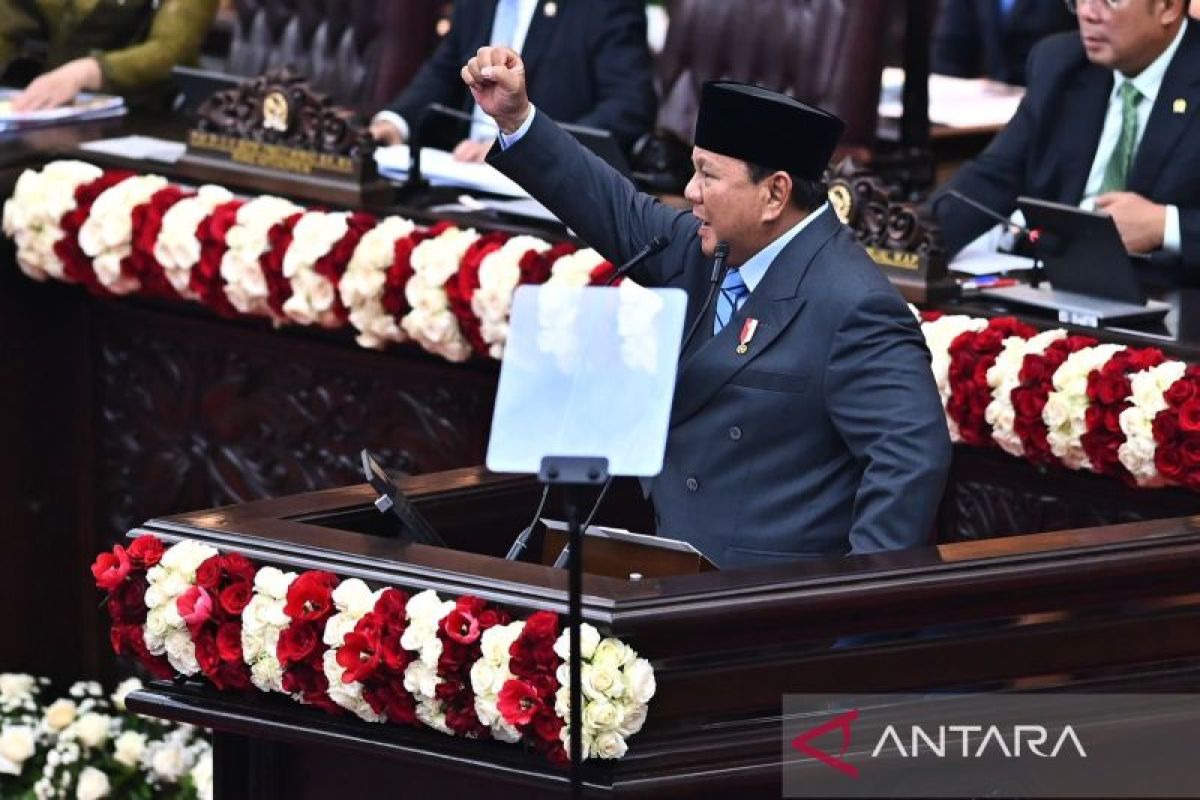
President Prabowo Subianto, during the delivery of the Government’s Introductory Statement on the Bill concerning the 2027 Fiscal Year State Budget and its Financial Note, stated that the deficit in the 2027 RAPBN is targeted at 2.40 percent of Gross Domestic Product (GDP), down from the 2026 State Budget figure of 2.68 percent of GDP. Budget financing for 2027 is planned at Rp671.2 trillion, a decrease from the 2026 State Budget financing plan of Rp689.1 trillion.
Dipo remarked that the President’s confirmation of a deficit below 3 percent is actually a very good thing. President Prabowo also conveyed that state expenditure for 2027 is planned at Rp4,097.2 trillion, an increase from Rp3,842.7 trillion in the 2026 State Budget. Meanwhile, state revenue is estimated to reach Rp3,426 trillion, up from Rp3,153.6 trillion in the 2026 State Budget. The Head of State also emphasised that state revenue will be optimised further, with revenue leakages minimised and spending efficiency continued.
Dipo assessed that the government is prioritising growth through increased state spending next year. He noted that the figure of over Rp4,000 trillion is fantastic and very aggressive. He highlighted how Indonesia’s fiscal spending is quite high compared to countries in the Organisation for Economic Co-operation and Development (OECD), which tend to be cautious. Dipo observed that many OECD countries are currently very careful with fiscal spending, prioritising direct subsidies and public welfare, whereas Indonesia is still implementing indirect programmes through mediums such as village cooperatives and free nutritious meals rather than direct social assistance or universal basic income.