
CORE Economist Urges Investment in Flexible Plants for Sugar and Bioethanol
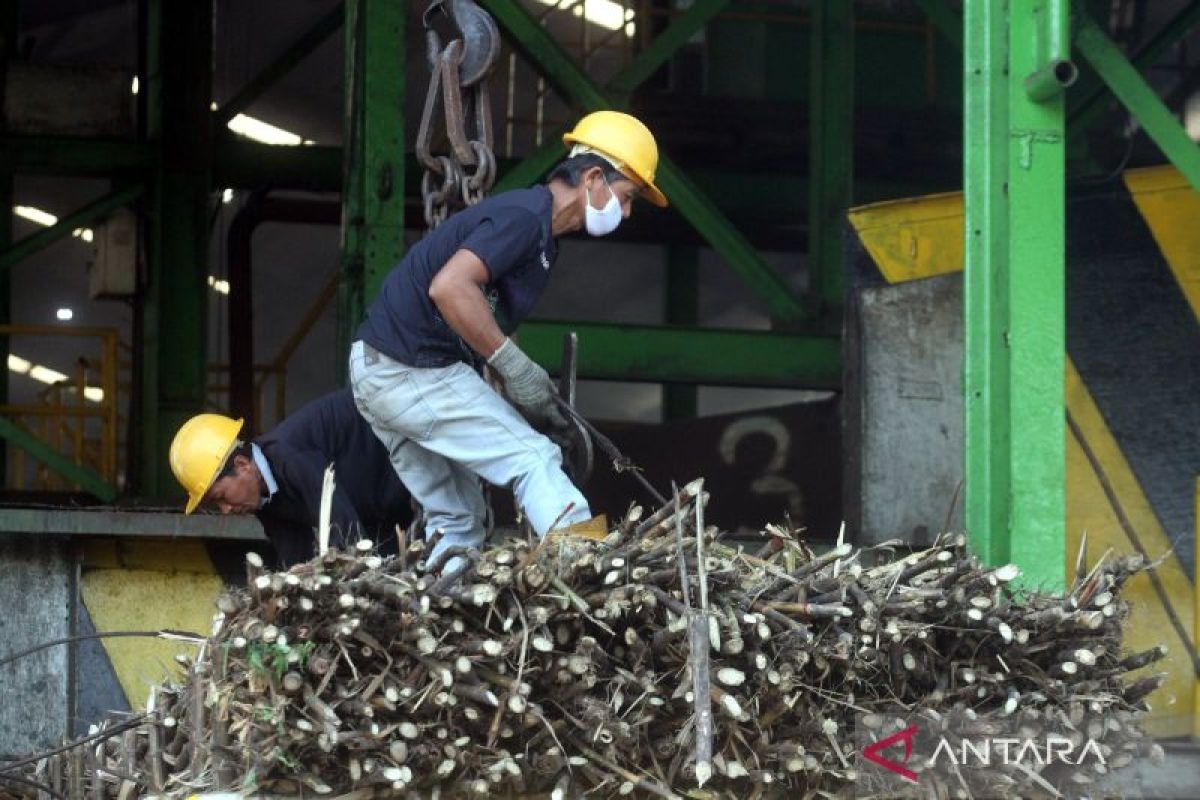
Jakarta (ANTARA) - Yusuf Rendy Manilet, an economist at the Center of Reform on Economics (CORE) Indonesia, has urged investment in the construction of plants capable of flexibly producing both sugar and bioethanol, so that the industry can be more adaptable to market changes.
Speaking to ANTARA by telephone in Jakarta on Friday, Yusuf said a flexible plant model would give industry players room to adjust their production composition according to raw material supply conditions and market demand.
“Investment in plants that are flexible enough to produce either sugar or ethanol is also important so that the industry can adjust to market conditions,” he said.
The statement came amid government efforts to accelerate bioethanol development as part of a roadmap to increase the ethanol blend in petrol, beginning with a limited E5 mandate before scaling up to E10.
President Prabowo Subianto has targeted the construction of 30 to 50 bioethanol plants to reduce dependence on petrol imports while strengthening national energy resilience.
According to Yusuf, bioethanol development should begin by optimising the use of sugarcane molasses as a feedstock, while improving sugarcane productivity through the use of superior seed varieties, improved irrigation systems, and support for farmers.
He assessed that bioethanol development has the potential to deliver economic benefits, including foreign exchange savings through reduced fuel imports, job creation in the plantation and processing industries, and the opening of new markets for sugarcane farmers.
However, Yusuf cautioned that sugarcane remains the main raw material of the national sugar industry, which to this day has been unable to meet domestic demand.
“If most of the sugarcane is diverted to ethanol production because of its higher economic value, the raw material supply for sugar could be disrupted and potentially push up sugar prices,” he said.
In his view, using sugarcane molasses as a bioethanol feedstock is more ideal because it does not directly compete with sugar production.
Even so, he noted that the current supply of molasses remains limited, meaning that greater bioethanol utilisation will still require a strategy to guarantee feedstock supply.
In addition, Yusuf said the government needs to build an ecosystem that supports bioethanol development, ranging from feedstock supply certainty and pricing schemes to market certainty, so that investment in the sector can be sustainable.
Meanwhile, Minister of Energy and Mineral Resources Bahlil Lahadalia said the bioethanol mandate will be implemented in stages.
In the initial phase, the government will require the use of petrol with an ethanol blend of 10-20 per cent, before increasing it gradually, in line with the implementation of the biodiesel mandate, which has now reached B50.
Bahlil said bioethanol will be developed using various local feedstocks, such as sugarcane, cassava, and maize.
“That will be managed jointly, both with Danantara, as well as Pertamina and other private parties,” Bahlil said.
The Ministry of Energy and Mineral Resources has announced that a limited five per cent ethanol-blended petrol (E5) mandate will take effect from July 2026.
Eniya Listiani Dewi, Director General of New, Renewable Energy and Energy Conservation at the ministry, said the policy will initially be applied only in certain regions because ethanol feedstock supply remains limited.
The regions where E5 will first be implemented include Jakarta, West Java, Central Java, the Special Region of Yogyakarta, East Java, Bali, and Lampung.
Source: jawawa.id (https://jawawa.id/newsitem/core-economist-urges-investment-in-flexible-plants-for-sugar-and-bioethanol-1784908460)
Originally published by Antara (Indonesian) (https://www.antaranews.com/berita/5664976/core-dorong-investasi-pabrik-produksikan-gula-dan-bioetanol), translated from Indonesian