
CORE assesses soybean subsidy effective in easing production cost pressures
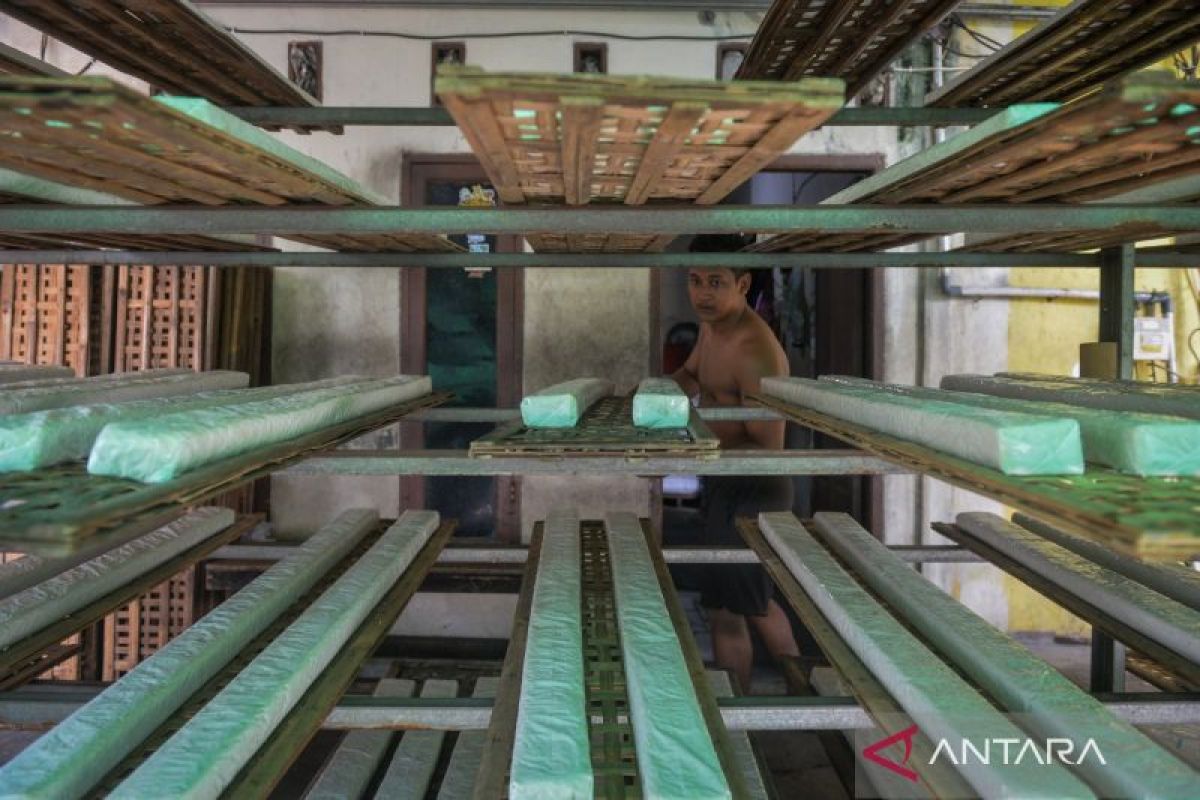
Jakarta (ANTARA) - Center of Reform on Economics (CORE) Indonesia researcher Eliza Mardian assesses the soybean subsidy policy decided by the government as an effective short-term measure to ease production cost pressures for tofu and tempeh businesses. “This subsidy is quite effective as a short-term measure to cushion shocks because it is targeted and channelled via Bulog directly to the artisans,” Eliza told ANTARA in Jakarta on Wednesday. According to her, tofu and tempeh entrepreneurs have been facing thin business margins, so the raw material subsidy can help alleviate production costs. She said the assistance can help entrepreneurs maintain production volumes and product quality, as well as prevent reductions in the size or quality of tofu and tempeh. Eliza assesses that the distribution mechanism through state logistics firm Perum Bulog is relatively better than a general subsidy because it can reduce the risk of leakage to unintended parties. “This distribution mechanism via Bulog is relatively better than a general subsidy because it reduces the risk of leakage to non-target parties,” she stated. The government, through the Coordinating Ministry for Food, has decided to provide a soybean subsidy of Rp2,000 per kilogramme through Bulog for 250,000 tonnes in the initial phase, with a total budget of approximately Rp500 billion. The subsidy will be directed straight to tofu and tempeh entrepreneurs so that raw material prices become lower. Eliza mentioned that the soybean subsidy has the potential to restrain price increases in processed soybean products, which are an affordable source of protein for lower-middle-income communities. According to her, the reduction in input costs can help maintain people’s purchasing power while supporting social food security amid inflationary pressures. “This intervention also plays a role in restraining specific food inflation pressures on processed soybean commodities, supporting the purchasing power of lower-middle-income groups, and maintaining social stability amid global price volatility,” she said. However, Eliza cautioned that the subsidy’s effectiveness remains limited to a three-month horizon and carries the risk of a price rebound that could emerge after the subsidy period ends. Over the long term, she believes the government needs to prioritise increasing domestic production, diversifying import sources, and improving soybean value chain efficiency. Eliza said soybean farming productivity needs to be boosted through research on superior varieties adaptive to tropical climates. According to her, soybean yields need to be pushed from around 1.5 tonnes per hectare to 2.5 tonnes to 3 tonnes per hectare or more. In addition, she believes the government needs to provide incentives to farmers through input subsidies, business credit, insurance, and guaranteed prices. “Expansion of planting areas through the optimisation of dry land or crop rotation systems must also be integrated into a coordinated national programme, with the target of gradually reducing import dependency,” Eliza said. Furthermore, she also pushed for diversifying soybean import partners to countries such as Brazil, Argentina, and Canada, accompanied by currency hedging and long-term contracts. According to her, supply chain efficiency also needs to be improved through investment in modern warehouses, reduction of post-harvest losses, and the adoption of processing technology for tofu and tempeh MSMEs. “Supporting policies such as integration into the national food security strategy, public-private partnerships, and promotion of diversification of cheap alternative protein sources are also important complements so that demand pressure does not rely solely on soybeans,” she noted.