
Copper Seen as New Chapter in Indonesia's Mineral Resource Development
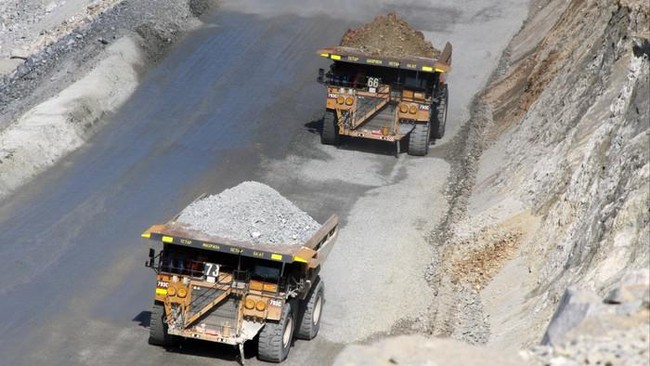
Indonesia is entering a new chapter in the management of its mineral resources. The challenge is no longer merely producing commodities, but ensuring that strategic minerals can serve as the foundation of industrial resilience, create added value, and strengthen national economic sovereignty.
One increasingly strategic mineral is copper. It is a vital material for a wide range of industries, from electricity and transmission networks to electronics, electric vehicles and new renewable energy. As global electrification and the energy transition accelerate, control over copper resources and supply chains has become an essential part of a nation’s mineral security.
For Indonesia, majority ownership through MIND ID in PT Freeport Indonesia (PTFI) serves as a strategic instrument to strengthen national control over copper resources whilst ensuring that their development delivers greater benefits to the domestic economy.
These efforts do not stop at copper mining and refining. PTFI has also developed the Precious Metal Refinery (PMR) in Gresik, which refines anode slime — a by-product of copper concentrate processing — into precious metals.
The PMR has a production capacity of around 50 tonnes of gold and 200 tonnes of silver per year. The facility extends Indonesia’s mineral value chain whilst opening up greater opportunities for the use of processed output in the domestic market.
The benefits of this integration became visible in February 2025, when PTFI delivered 125 kilogrammes of 99.99% purity gold bars produced by the PMR to PT Aneka Tambang Tbk (ANTAM), valued at approximately Rp207 billion. PTFI and ANTAM had previously also agreed on purchases of up to 30 tonnes of gold per year.
Selly Adriatika, Head of Institutional Relations at MIND ID, said the integration forms part of MIND ID’s strategy to build mutually reinforcing mineral value chains among Holding Members.
“MIND ID does not view each asset and company as a standalone entity. We integrate the resources and capabilities of Holding Members so they can support one another, allowing processed mineral output to be continuously developed as part of the national industrial supply chain and to generate added value at home,” she said, quoted on Tuesday (8/9/2026).
She added that the integration between PTFI and ANTAM is also relevant to domestic market needs. Data from the World Gold Council shows that demand for gold bars and coins in Indonesia reached 31.6 tonnes in 2025, whilst jewellery gold consumption reached 16.6 tonnes. Combined demand from the two segments totals around 48.2 tonnes, approaching the PMR PTFI’s gold production capacity.
According to Selly, strengthening the value chain has become increasingly important as demand for strategic minerals grows. For this reason, PTFI’s development is directed not only at increasing production, but also at reinforcing the links between mining, processing, refining and downstream industries within Indonesia.
In this context, the accelerated recovery of Grasberg production and optimisation of the PTFI Gresik Smelter hold strategic significance. Both not only determine copper production capacity, but also expand the potential of by-product minerals and derivative products to be processed and generate added value in Indonesia.
“What MIND ID is doing today is part of the journey to build a sovereign mining industry, in which the natural wealth we possess can be managed and developed to the fullest for the interests of the nation. Indonesia’s resources must be a strength for today’s generation whilst serving as a foundation for generations to come,” she said.
“Through control of strategic assets, downstream processing, and integration among Holding Members, MIND ID continues to ensure that Indonesia’s minerals do not stop as commodities, but grow into an industrial force and a source of national economic growth,” Selly concluded.