
COP31 in Turkey Begins: Can the World Move Beyond Climate Promises?
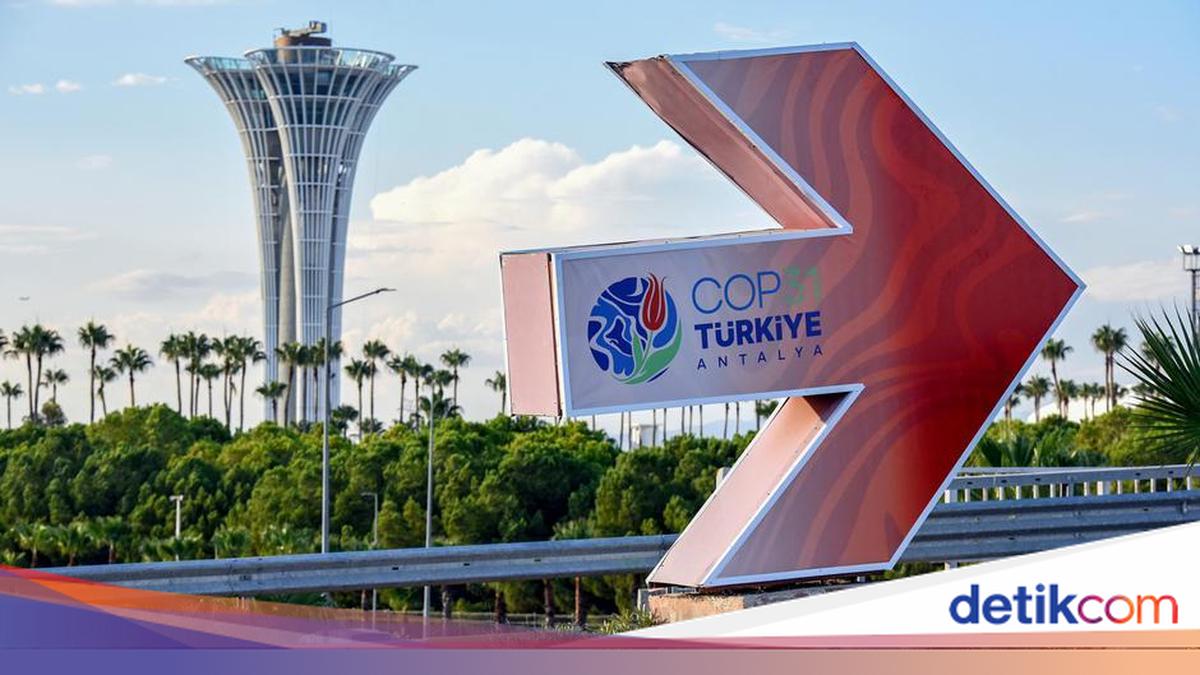
Accompanied by pounding music and a range of visual effects, a promotional video for Antalya delivers a clear message: Turkey, host of the 31st UN Climate Change Conference (COP31), wants to present itself as cool, stylish, modern and environmentally conscious.
President Recep Tayyip Erdoğan and his wife, Emine Erdoğan, also appear in the video. The Turkish First Lady describes climate change as “one of the clearest manifestations of the burden human activity places on our planet”.
From 9 to 20 November, delegates from almost every country in the world are gathering in Antalya, a city on the Mediterranean coast, to seek solutions to the climate crisis. Turkey is the official host, while Australia is leading the negotiations. But the challenges they will face over the 12 days are far more serious than the impression conveyed by the promotional campaign.
Severe drought, extreme heat, wildfires and record-low water levels along Europe’s major rivers marked the summer across the continent.
At the end of August, a series of flash floods triggered by rock and ice avalanches in Nepal and Tibet swept away entire villages, killing more than 1,400 people and leaving thousands more missing. Climate experts have linked the disasters to melting ice and rising global temperatures.
Globally, carbon emissions continue to rise. The UN has concluded that it is no longer possible to limit the increase in average global temperatures to 1.5 degrees Celsius above pre-industrial levels, the target agreed at COP21 in 2015.
The global effort to move away from polluting fossil fuels such as coal, oil and gas is once again a central focus in Antalya. Countries have yet to reach a consensus on whether a rapid transition away from these leading sources of global warming is necessary, or how it should be carried out.
Climate negotiations alone are not enough
Despite numerous setbacks, the world has made some progress as a result of the 2015 Paris Agreement.
David Victor, a climate expert at the University of California San Diego, notes that before the agreement was reached, the planet was on course for average warming of between 3 and 3.5 degrees Celsius.
If all current climate pledges are fully implemented, the UN’s latest projections show that warming could reach 2.6 degrees Celsius. That would represent significant progress, although warming on that scale would still affect the entire world.
“There is no doubt we can do more,” Victor said. However, he cautioned against placing excessive expectations on this year’s summit.
All COP agreements must be approved unanimously. That means a single country can block a major resolution. The challenge is compounded by ongoing wars, trade conflicts and other economic problems overshadowing this year’s negotiations.
“It’s like a giant Christmas tree covered with decorations from everyone. The tree is already struggling under the weight, but people keep adding new decorations,” Victor said. “We have to see it for what it is: a place where people discuss a range of issues.”
Smaller alliances to drive change
Rather than waiting for all COP member countries to reach agreement, Victor sees greater potential for change in groups of partners he calls “clubs”.
These are smaller alliances of governments and businesses working together to advance practical solutions in sectors including aviation, shipping and electric vehicles.
“The Paris process is important. It must continue,” he told DW. “But all the real work will be done through these groups of partners.”
One example of this approach is the first International Conference on Transitioning Away from Fossil Fuels, held in Santa Marta, Colombia, in April.
Colombia and the Netherlands invited representatives from 57 countries and key sectors to discuss how to accelerate the world’s transition away from coal, oil and gas. The meeting followed the failure to reach agreement on a similar plan at the 2025 climate summit, after several oil-producing countries objected.
Building new momentum for decarbonisation
Against a backdrop of trade conflicts and an ongoing energy crisis, Turkey and Australia, the COP31 hosts, have included green industrialisation and the clean energy transition on their agenda.
One of their targets is to raise electricity’s share of global energy consumption to 35% by 2035, from around 20% today.
A recent analysis by the International Energy Agency (IEA) found that faster electrification could cut energy bills for fuel-importing countries by more than US$400 billion (Rp7.25 quadrillion) in 2035 compared with 2025.
The idea is particularly appealing to regions dependent on imported fossil fuels, including Germany and the European Union.
Ahead of COP31, German Environment Minister Carsten Schneider said Germany and the EU wanted to build fresh momentum for “the global phase-out of fossil fuels”.
In a statement, Schneider added that this would not only benefit the climate, but also give many countries an opportunity to strengthen their economies and reduce their dependence on energy imports.
However, oil-producing countries such as Saudi Arabia have little interest in an agreement that could undermine their business models. At several recent UN climate conferences, these countries have repeatedly obstructed final agreements that included plans to phase out fossil fuels.
Even China could oppose the proposal, despite having massively expanded its use of wind and solar power over the past 20 years.
The major economic power has traditionally resisted external demands, proposals or interference in its national energy policy decisions.
Climate finance remains far below what is needed
Every country in the world is affected by climate change. Losses and damage caused by extreme heat, drought and storms amount to hundreds of billions of dollars. The worst effects are felt by vulnerable countries in the Global South and by island nations threatened by rising sea levels.
This makes financing a crucial issue. Developing countries are demanding greater support to protect their populations from the effects of global warming. At the 2024 UN climate conference in Baku, Azerbaijan, industrialised countries agreed to provide at least US$300 billion a year in climate finance by 2035.
However, the source of this funding remains fiercely contested. At the same time, several major developed countries, particularly the US, are cutting their development aid.
The German government allocated only €4.7 billion (around Rp91.7 trillion) from its 2025 budget to international climate finance, down from €6.1 billion (around Rp119 trillion) in 2024.
“The level of financial support for developing countries is still far below what is needed,” said Jan Kowalzig, a climate expert at Oxfam Germany.
Failure to honour funding pledges risks eroding developing countries’ trust. As a result, Germany and other industrialised countries could also lose the diplomatic influence they rely on to shape climate policy.
Concrete action will be the measure of COP31’s success
Cosima Cassel, a climate diplomacy expert at the independent Berlin-based think tank E3G, believes Turkey’s efforts to accelerate electrification amid an oil crisis could succeed.
For Cassel, the success of the tough negotiations in Antalya will depend on whether major agreements are backed by genuine political will.
In the case of electrification, that means a serious commitment to expanding electricity grids and battery storage capacity, while removing the obstacles that are holding back the wider use of electricity.
Source: jawawa.id (https://jawawa.id/newsitem/cop31-in-turkey-begins-can-the-world-move-beyond-climate-promises-1794221609)
Originally published by detikcom (https://news.detik.com/dw/d-8745276/cop31-di-turki-dimulai-bisakah-dunia-bergerak-melampaui-janji-iklim), translated from Indonesian