
COP31 Fails to Reach Agreement as Australian Minister Faces Calls to Resign
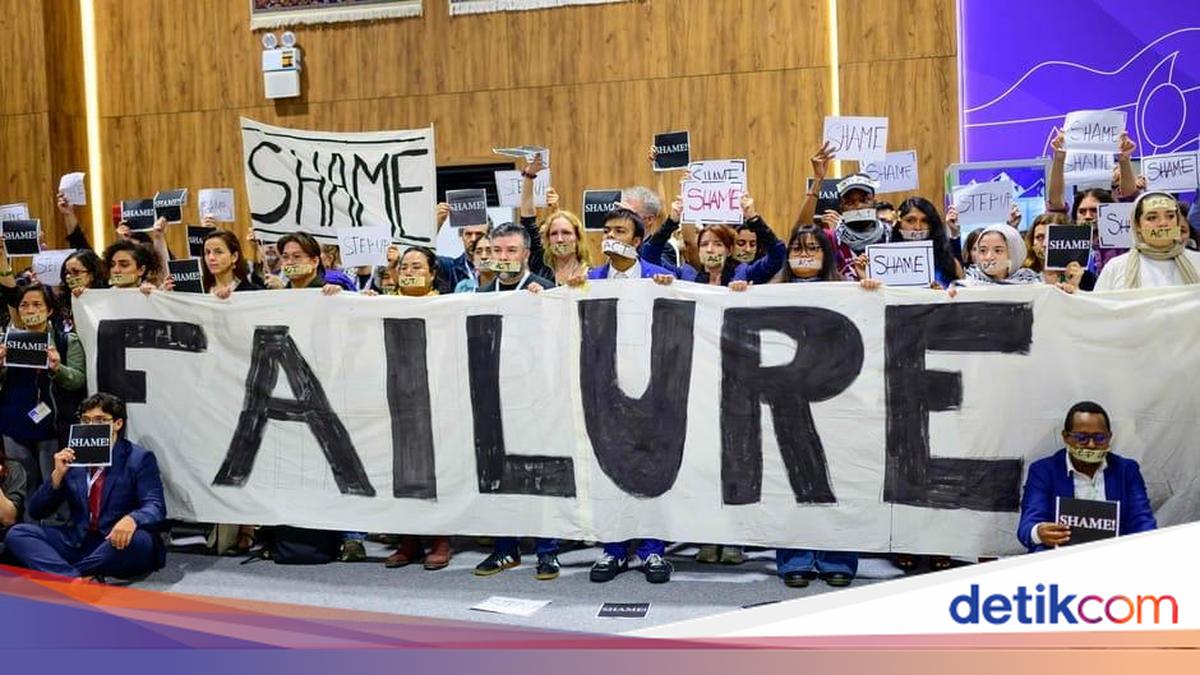
The failure of the UN Climate Change Conference (COP31) in Antalya, Türkiye, has triggered recriminations in Australia. Climate Change and Energy Minister Chris Bowen, who led the negotiations, has been urged to resign. Pacific island nations, meanwhile, voiced deep disappointment that the world had once again failed to take collective action to tackle global warming.
For the first time since the climate conference in Copenhagen in 2009, COP negotiations ended without a final agreement.
The European Union and several other countries rejected the draft agreement because it did not identify fossil fuels as a primary cause of global warming. The issue was dropped amid pressure from Saudi Arabia and other oil-producing countries.
The failure drew particular attention because COP31 was the first climate conference since the UN Environment Programme confirmed that global temperatures are expected to exceed the 1.5°C threshold. Scientists have long warned that warming beyond that limit will worsen the effects of extreme weather.
The lack of an agreement has also heightened doubts about the ability of international forums such as COP to deliver concrete action on the climate crisis.
Türkiye hosted COP31 in Antalya, but leadership of the conference was shared with Australia. Australian Climate Change and Energy Minister Chris Bowen served as president of the COP31 negotiations.
The failure to reach an agreement made Bowen a target of political criticism at home.
“This energy minister must resign because he has been a complete failure,” Australian opposition leader Angus Taylor told reporters on Monday (23 November).
“Chris Bowen is responsible for this failure. He must resign,” Taylor said.
Bowen had earlier acknowledged that the talks had been unable to bridge the sharp differences among participating countries.
“Unfortunately, we did not manage to reach agreement on the final decision. And that is disappointing,” Bowen said.
He said the conference had taken place amid “the most complicated and tense geopolitical circumstances”, as surging energy prices and the effects of the war in the Middle East made it harder to secure a deal.
In Australia’s parliament, other opposition members also questioned why Prime Minister Anthony Albanese had not dismissed Bowen, particularly as Australia had spent about A$182 million on COP31.
Albanese did not directly answer whether he would ask Bowen to resign.
“We believe climate change is real. We believe in the science,” Albanese said.
“Whether it is a matter of environmental security or national security, we are acting in Australia’s national interest,” he added.
Why did COP31 end without an agreement?
COP31 negotiations began on 9 November 2026, with representatives from more than 190 countries in attendance.
More than 92,000 people registered to attend the conference, provisionally making COP31 the largest UN climate conference in history.
But the large number of participants did not guarantee an agreement.
Differences between countries kept negotiations going until Sunday (22 November), more than 49 hours beyond the official schedule. COP31 became the longest climate conference on record.
Tensions had emerged even before the conference began. Australia, which has been active in promoting efforts to tackle global warming, had competed with Türkiye to host COP31.
The United States also did not send a delegation to the conference.
At COP30 in Belém, Brazil, last year, participating countries managed to reach an agreement. However, that deal also contained no commitment to phase out fossil fuels.
In the latest negotiations, oil-producing countries again opposed including a commitment to phase out the use of coal, oil and gas.
Türkiye and Australia had sought a compromise through a proposal to increase the electrification of the global economy to cut emissions and strengthen energy security. That proposal also failed to secure agreement.
COP31’s failure has further raised questions about the effectiveness of international cooperation in addressing the climate crisis.
COP31 failure prompts calls to reform climate negotiations
The failure to reach an agreement at COP31 has not only caused disappointment but also prompted calls to improve the UN climate negotiation process, which critics say is becoming increasingly incapable of producing joint decisions.
Former US vice-president and climate activist Al Gore condemned the influence of oil-producing countries in blocking an agreement.
“It is outrageous that a handful of petrostates have veto power over even mentioning fossil fuels,” Gore said on X, according to AFP.
Gore said the COP negotiating process “needs major reform”, noting that most countries had genuinely sought to reach an agreement.
Simon Stiell, executive secretary of the UN Framework Convention on Climate Change (UNFCCC), also acknowledged that the outcome fell well short of expectations.
“The outcome is clearly not what we hoped for today,” Stiell said. “The world cannot afford more failures like this.”
Ireland’s Climate Minister, Darragh O’Brien, whose country holds the rotating presidency of the Council of the European Union, said the bloc would not accept an agreement that ignored the main cause of global warming.
“We will not support a final decision that does not even mention fossil fuels, the main cause of climate change,” O’Brien said.
“Nor will we accept a COP that simply greenwashes fossil fuels,” he added.
According to AFP, the deadlock has led some countries to seek alternatives outside the COP process. Around 60 countries attended the first dedicated conference on phasing out fossil fuels last April.
Several countries have also announced their own plans to move away from coal, oil and gas.
China and India continue to back climate cooperation
China, the world’s largest carbon dioxide emitter, also expressed disappointment with the outcome of COP31.
However, the Chinese government cautioned against allowing the conference’s failure to undermine confidence in international cooperation.
Chinese Foreign Ministry spokesman Guo Jiakun said the COP31 outcome “should not make us lose confidence in the multilateral process”.
Guo stressed that tackling climate change was “a shared endeavour of all humanity”.
He said the world’s shift towards low-carbon development was also an “irreversible” trend.
India expressed a similar view. The head of India’s COP31 delegation, Bhupender Yadav, said his country had engaged actively and constructively in negotiations with conference leaders and other participating nations.
“Although we still have concerns about some elements of the draft final decision, we remained committed to dialogue and constructive engagement until the end, in order to build consensus,” Yadav said.
Pacific nations disappointed as threat of submergence grows
The deepest disappointment came from Pacific island nations facing the direct threat of climate change.
For these countries, rising sea levels are not merely an environmental issue but a threat to their territory and the lives of their people.
“We have been let down by all parties,” the Marshall Islands delegation said in an official statement at COP31.
Tuvalu, another Pacific island nation highly vulnerable to rising sea levels, also criticised the negotiating process.
Last October, Tuvalu hosted a pre-COP31 meeting to highlight the threat rising seas pose to the country. But hopes for concrete action from participating nations have yet to be realised.
The Tuvalu government highlighted a lack of engagement and transparency in drafting the final agreement. Tuvalu Climate Minister Maina Talia also deplored what she described as some countries’ dismissal of evidence of climate change.
“It is disappointing to listen to those who question the credibility of the signs of climate change,” Talia said.
She also expressed concern about countries’ weak commitment to putting the world back on track to meet targets for limiting global temperature rises.
Source: jawawa.id (https://jawawa.id/newsitem/cop31-fails-to-reach-agreement-as-australian-minister-faces-calls-to-resign-1795492420)
Originally published by detikcom (https://news.detik.com/dw/d-8766972/cop31-gagal-capai-kesepakatan-menteri-australia-didesak-mundur), translated from Indonesian