
COP31 a Chance to Strengthen Sustainable Electricity and National Energy Security
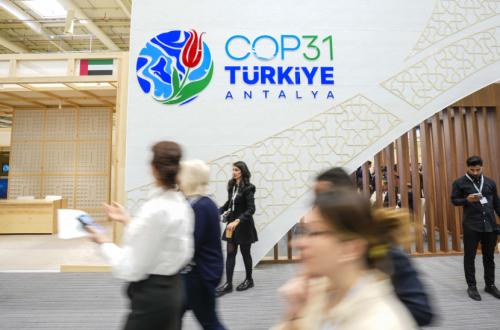
JAKARTA — Transforming the national electricity sector is key to strengthening energy security, improving industrial competitiveness and promoting sustainable economic growth. The UN Climate Change Conference (COP31) in Antalya, Turkey, offers Indonesia a strategic opportunity to expand international cooperation and accelerate an energy transition that not only cuts carbon emissions but also delivers tangible economic benefits to the public.
Abra Talattov, head of energy and food at the Institute for Development of Economics and Finance (INDEF), said the energy transition should be an integral part of the country’s economic transformation strategy.
“The energy transition must not be understood merely as replacing fossil-fuel power plants with renewable energy. More broadly, it should be an instrument to strengthen energy independence, boost industrial productivity, create new jobs and expand public access to reliable, affordable electricity. In this context, the electricity sector has a strategic role as a driver of national economic growth,” Abra said in a statement on Monday (23 November 2026).
Abra welcomed state-owned electricity company PT PLN (Persero)’s use of COP31 to strengthen collaboration and mobilise international funding for clean energy development. PLN reportedly secured funding commitments of around US$2.9 billion from several international partners to support the acceleration of the energy transition and the strengthening of electricity infrastructure.
“This international financing is a positive signal for the prospects of investment in Indonesia’s clean energy sector. The next challenge is to ensure these commitments are quickly translated into bankable projects, with clear investment returns and measurable economic benefits. Energy-transition financing must also be designed so that it does not place excessive pressure on electricity supply costs or PLN’s financial health,” Abra said.
Abra also highlighted the major opportunity to develop renewable energy under the 2025–2034 Electricity Supply Business Plan (RUPTL), which targets an additional 69.5 gigawatts (GW) of power generation capacity. Of this, 76 per cent, or 53 GW, is to come from new and renewable energy and energy storage systems.
“This target is a major opportunity for Indonesia to build a clean energy industrial ecosystem, from manufacturing solar panels, batteries and power plant components to developing grid technologies. However, capacity expansion must go hand in hand with realistic electricity demand growth, transmission network readiness and system flexibility. Without integrated planning, accelerating investment could increase the cost burden on the electricity system, potentially affecting tariffs or the government’s need for subsidies and compensation,” Abra stressed.
According to Abra, a fundamental challenge for Indonesia’s energy transition is balancing three priorities: environmental sustainability, affordable electricity tariffs and PLN’s financial continuity.
“We must ensure the energy transition does not create a dilemma between decarbonisation ambitions and people’s ability to pay for electricity. PLN also needs sufficient financial headroom to fund infrastructure development, network modernisation and improved supply reliability. Therefore, reforms to electricity tariffs, subsidies and compensation must be carried out carefully and transparently, and be based on cost efficiency, so that public interests, fiscal sustainability and PLN’s financial health can advance together,” he said.
Abra also said strengthening electricity transmission and distribution networks must be a top priority to support the integration of renewable energy. In line with the global electrification agenda highlighted at COP31, clean power generation needs to be matched by investment in networks, energy storage and digital technologies.
“The challenge of the energy transition is not simply how much renewable generation capacity is built, but how effectively that energy can be delivered to and used by the public and businesses. Strengthening interregional electricity connections, developing smart grids and deploying energy storage technologies will determine whether renewable energy can be integrated successfully. More reliable electricity infrastructure is also a prerequisite for industrial estates, mineral downstreaming, electric vehicles and new centres of economic growth,” Abra said.
Abra also sees potential in innovative financing instruments, including carbon trading, to improve the economics of clean energy projects. PLN’s cooperation with the Global Green Growth Institute (GGGI), supported by Norway at COP31, is one example of carbon finance based on verified emissions reductions.
“Carbon finance can provide supplementary funding to accelerate renewable energy projects that have long faced financial viability challenges. However, its implementation must ensure environmental integrity, transparent emissions accounting and certainty over economic benefits. Indonesia must ensure that the economic value of emissions reductions can also be used to strengthen domestic investment and accelerate the development of the national clean energy industry,” Abra said.
In closing, Abra said the success of the energy transition should ultimately be measured by its impact on people’s quality of life, in line with PLN’s “Empower All” tagline.
“Electricity is not merely an energy commodity; it is a foundation for improving quality of life and economic productivity. The spirit of ‘Empower All’ must be realised through electricity that is cleaner, more reliable and affordable, and that can create economic opportunities for all sections of society. The energy transition will truly succeed when its benefits are reflected not only in lower carbon emissions, but also in the growth of national industry, more employment opportunities, stronger economic competitiveness and improved wellbeing for Indonesians,” Abra said.
Source: jawawa.id (https://jawawa.id/newsitem/cop31-a-chance-to-strengthen-sustainable-electricity-and-national-energy-security-1795438355)
Originally published by Republika (https://ekonomi.republika.co.id/berita/toyfuh487/cop31-jadi-momentum-perkuat-listrik-berkelanjutan-dan-ketahanan-energi-nasional), translated from Indonesian