
Coordinating Ministry Launches Garuda Programme in NTT to Accelerate Extreme Poverty Eradication
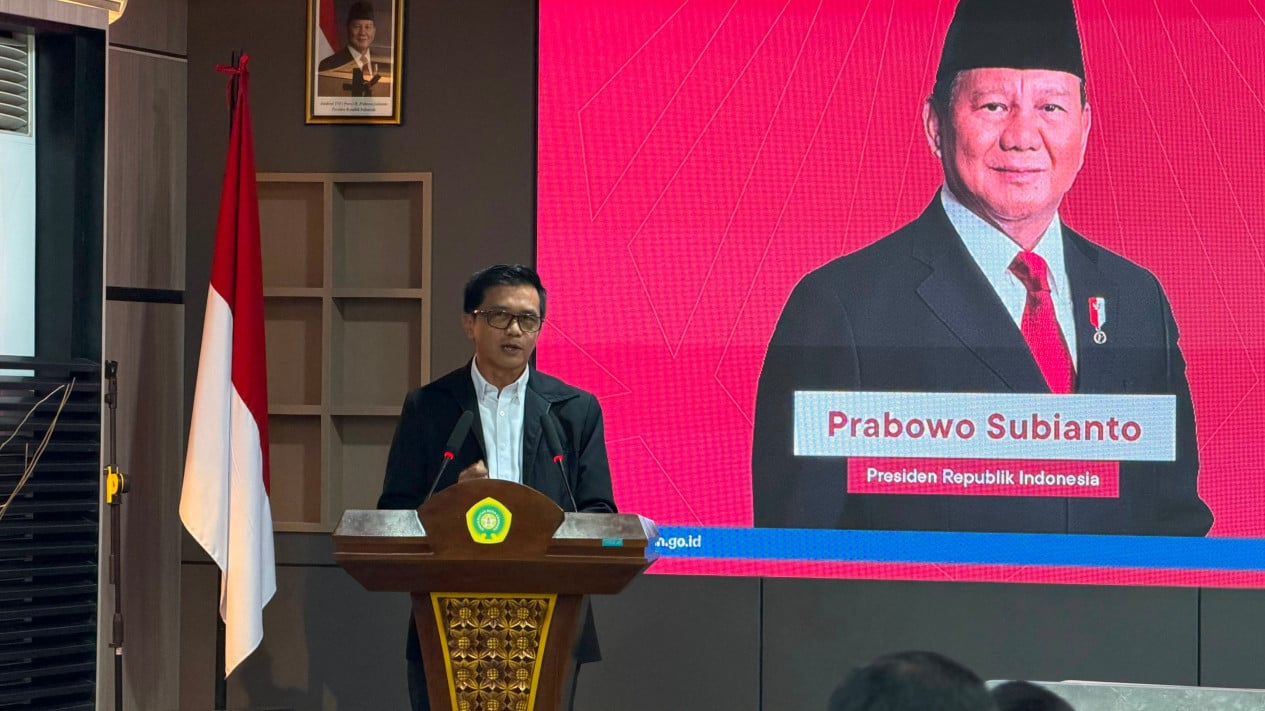
The Coordinating Minister for Community Empowerment, represented by Deputy for Coordination of Empowerment of Villages, Disadvantaged Regions and Specific Regions, Abdul Haris, attended the Coordination Meeting on the Optimisation of Poverty Alleviation and the Elimination of Extreme Poverty (OPPKPKE), whilst also launching the Garuda Programme in Kupang, East Nusa Tenggara Province (NTT).
The event was attended by the Deputy Minister of Higher Education, Science and Technology, officials of the NTT Provincial Government, district and city governments across NTT, universities, and representatives of relevant ministries and agencies.
Abdul Haris affirmed that achieving the target of zero per cent extreme poverty by 2026 and reducing the national poverty rate to 5 per cent by 2029 can only be realised through strong synergy between central and regional governments with well-targeted policies.
According to him, poverty indicators must underpin policy formulation so that budgets genuinely deliver an impact on community welfare.
NTT is a priority province because it has the fifth-largest number of poor residents in Indonesia. Of the 3,442 villages in NTT, 876 are priority poverty villages with poverty rates above 20 per cent, particularly in East Sumba Regency, Kupang Regency, South Central Timor Regency, and Southwest Sumba Regency.
Meanwhile, Kupang City, Manggarai Regency, and Alor Regency have been designated as barometer regions for achieving the zero per cent extreme poverty target by 2026.
In the field of education, it was reported that the Smart Indonesia Programme (PIP) in NTT has reached 475,975 students. However, tens of thousands of students have yet to benefit from the programme.
The government emphasised the importance of reducing school dropout rates and optimising the People’s School Programme as an effort to break the intergenerational cycle of poverty.
“Education is the most effective instrument for breaking the intergenerational cycle of poverty. A child who attends school today is a family that escapes poverty tomorrow,” said Abdul Haris in a written statement on Thursday, 9 July 2026.
On that occasion, he also officially launched the Garuda Programme in NTT Province as a model of community empowerment based on local potential to improve community welfare.
The programme emphasises that poverty alleviation cannot rely on social assistance alone, but must be reinforced by empowerment capable of enhancing skills, opening up business opportunities, and creating sustainable sources of income.