
Coordinating Ministry for Human Development and Culture and Farmers: Nicotine Threshold Discourse Not Yet a Priority
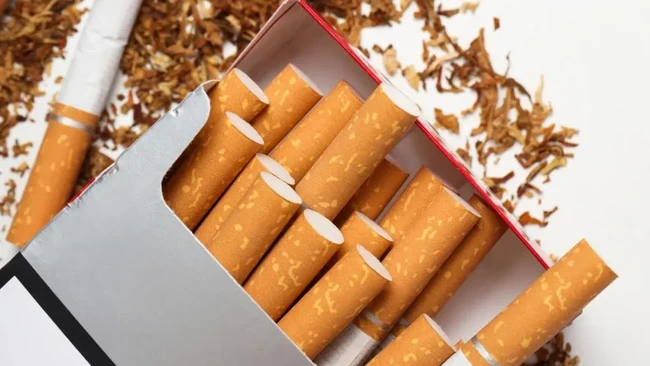
Tobacco farmers from across Indonesia have firmly rejected draft rules limiting nicotine and tar levels currently being prepared by the Coordinating Ministry for Human Development and Culture (Kemenko PMK). The rejection was conveyed in person by tobacco farmer representatives from Central Java, East Java and West Java, who visited the Kemenko PMK building on Jalan Medan Merdeka Barat, Central Jakarta, on Tuesday (21/7).
Suwarno, a tobacco farmer from Jember, East Java, stressed that the draft rules limiting nicotine levels to below 1% and tar to below 10% would be highly detrimental to farmers.
“We ask the government to withdraw this regulation that harms farmers. We ask policymakers to cancel this regulation and not let it be implemented,” said Suwarno, Chairman of the Indonesian Tobacco Farmers Association (APTI) Jember branch, quoted last weekend, Thursday (30/7).
In Jember, tobacco is a flagship commodity that contributes not only to economic development but also to local demographics and culture. Thousands of workers are involved in tobacco production, from nurseries through to export.
“Jember has the Besuki Na-Oogst and Kasturi varieties that farmers rely on. If this draft nicotine limit is forced through, everyone involved in the tobacco business and the fabric of life in Jember will be affected,” said Suwarno.
In response to the protest and the farmers’ aspirations regarding the draft rules on nicotine and tar limits, Kemenko PMK issued a statement saying the deliberation process would not take place in the near future.
Kemenko PMK, represented by Head of Communications Bureau Syarip Hidayat, Head of the Legal, Organisational and Administrative Affairs Bureau Budi Prasetyo, and Nancy Dian Anggraeni as Assistant Deputy for Health Capacity and Resilience, pledged that the policy drafting process would be carried out carefully, based on data and scientific evidence, and in a balanced manner — taking into account public health, economic sustainability, labour protection, farmers’ welfare and other national interests.
“The process of drafting the nicotine and tar limits is still a long one. It has only just entered the public consultation stage. This draft rule is not solely the domain of the Coordinating Minister; it also involves coordination with other ministries such as the Ministry of Industry and the Ministry of Trade. So it is still far off — still in the inter-ministerial coordination phase,” said Syarip.
The setting of nicotine and tar thresholds for tobacco products, Syarip continued, will not be established in the near future, contrary to information circulating among farmers. The substance of the nicotine and tar regulation, he said, will still be reviewed and discussed comprehensively through coordination across ministries, agencies, regional governments, industry and the public.
“We are trying to accommodate various interests, both health and economic. And people’s livelihoods must not be destroyed. We are striving for a win-win solution. So the concept is regulation and limitation,” Syarip added.
At the same forum, Chairman of the APTI National Board Agus Parmuji cautioned that the draft nicotine and tar thresholds must not sacrifice farmers. Although the deliberation process will not take place soon, the continued circulation of the draft rules has left farmers worried and pessimistic about their economic future.
“The people must not be sacrificed. Kemenko PMK must not lose control during the drafting process. Do not forget that farming does not depend on how long a regulation takes to make. Every day, we farmers in the fields must keep planting and earning a living to meet our daily needs. So do not let our farmland be destroyed. There are 2.5 million tobacco farmers across Indonesia whose livelihoods would die with this draft rule on nicotine and tar limits,” said Agus.
Kemenko PMK representatives signed a letter of agreement when meeting the farmer representatives, namely Assistant Deputy for Capacity Improvement Nancy Dian Anggraini and Head of the Communications and Meetings Bureau Budi Prasetyo, on 21 July.
The letter stated that the regulation of nicotine and tar thresholds will not be discussed or set in the near future. It also noted that the substance of the nicotine and tar regulation will still be reviewed and discussed comprehensively through a coordination mechanism involving ministries, agencies, regional governments, industry and the public.