
Coordinating Ministry for Food Promotes Cattle-Palm Oil Integration System to Curb Imports
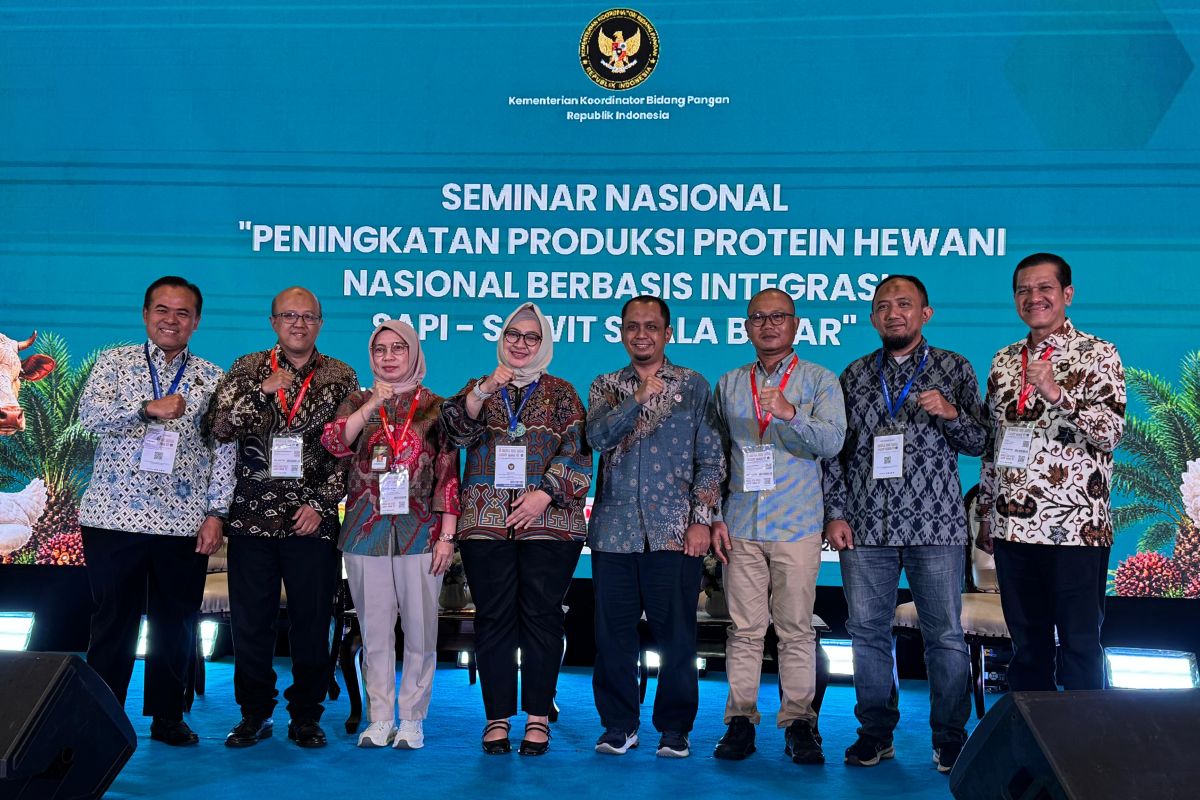
Jakarta (ANTARA) - The Coordinating Ministry for Food is encouraging the development of the Cattle and Oil Palm Integration System (SISKA) as a strategy to increase national animal protein production while simultaneously reducing dependence on beef and milk imports.
Widiastuti, the Deputy for Food and Agricultural Business at the Coordinating Ministry for Food, stated that public demand for animal protein continues to rise, whereas domestic milk production currently only meets approximately 20 per cent of national needs.
“SISKA serves as a local resource-based solution capable of strengthening food security while supporting national animal protein independence,” Widiastuti said in an official statement received in Jakarta on Thursday.
According to her, the cattle and oil palm integration concept utilises plantation waste, such as palm kernel cake, fronds, and palm leaves, as livestock feed, supplemented by the use of grass growing within the plantation areas.
This scheme is considered capable of increasing livestock business efficiency by reducing feed costs by up to 40 per cent.
In addition to increasing efficiency, SISKA is also seen as having the potential to strengthen the national cattle population through the utilisation of available oil palm plantation land.
Indonesia currently possesses approximately 16.38 million hectares of oil palm plantations. If half of this land area were utilised for the integration programme, the potential additional population could reach around 2.73 million cattle for both fattening and breeding activities.
Widiastuti noted that increasing the domestic cattle population is vital to strengthening the national animal protein supply amidst high beef demand.
She mentioned that Indonesia’s beef imports are projected to reach approximately 297,000 tonnes by 2026, necessitating continuous efforts to boost domestic production.
Besides supporting the animal protein supply, the cattle and palm oil integration programme also presents opportunities to increase farmer income through business diversification.
Cattle manure produced from this integration system can also be utilised as organic fertiliser, thereby helping to reduce the use of chemical fertilisers and herbicides in plantations.
However, she continued, the development of SISKA still faces several challenges, including investment needs, regulatory support, and the necessity for synergy between the government, plantation companies, cooperatives, and the community.
According to her, collaboration among all stakeholders is required so that the cattle and oil palm integration can expand more widely and provide economic benefits to both farmers and livestock breeders.
“We invite all stakeholders to collaborate in making cattle-palm integration a driver of prosperity for farmers and breeders, while accelerating the achievement of national protein self-sufficiency,” she said.
Source: jawawa.id (https://jawawa.id/newsitem/coordinating-ministry-for-food-promotes-cattle-palm-oil-integration-system-to-curb-imports-1781796034)
Originally published by Antara (Indonesian) (https://www.antaranews.com/berita/5613681/kemenko-pangan-dorong-sistem-integrasi-sapi-sawit-untuk-tekan-impor), translated from Indonesian