
Coordinating Ministry for Food prioritises strengthening sustainable palm oil upstream sector
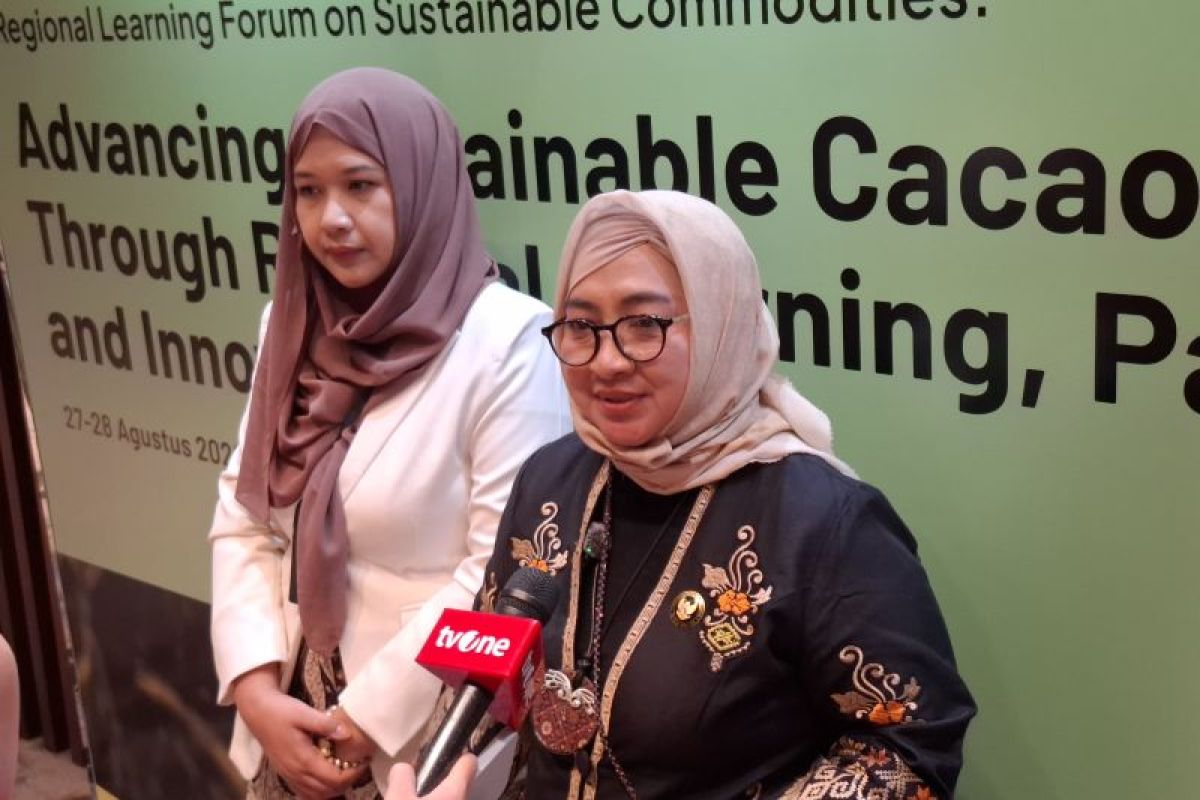
Jakarta (ANTARA) - The Coordinating Ministry for Food is prioritising the strengthening of the upstream palm oil sector through the replanting of old and damaged trees and the implementation of good agricultural practices to increase productivity.
Deputy for Food and Agriculture Business Coordination at the Coordinating Ministry for Food, Widiastuti, said the government is also evaluating regulations considered to hinder increases in production, productivity, and farmer welfare.
“Because the upstream sector is important. There will be no good downstream sector if the upstream sector is not good. That is why we are focusing on the upstream side first,” Widiastuti said at the “Regional Learning Forum on Sustainable Commodities” in Jakarta on Friday.
According to her, the structuring of the upstream sector is carried out, among other things, through the replanting of old and damaged plants by implementing good agricultural practices (GAP).
Data from the Coordinating Ministry for Food records that ageing plants and low productivity remain challenges in the upstream palm oil sector.
Productivity of large-scale plantations ranges from 4-6 tonnes of crude palm oil (CPO) per hectare per year, while smallholder plantations produce around 2-3.5 tonnes per hectare per year.
Meanwhile, the Directorate General of Plantations at the Ministry of Agriculture recorded national CPO productivity in 2025 at 3.606 tonnes per hectare, an increase from 3.529 tonnes per hectare in 2024.
However, the government in 2025 recorded that the area of non-producing or damaged plants reached 665,112 hectares.
The condition of old and damaged plants is one of the government’s concerns in strengthening the upstream sector, especially through the replanting programme to maintain productivity and supply to the downstream sector.
“And this is for structuring the upstream sector while still prioritising replanting for old plants, damaged plants with GAP principles which are expected to increase supply to the downstream sector,” Widiastuti said.
In the implementation of the smallholder palm oil replanting (PSR) programme, the government recorded that as of 27 July 2026, the realisation of technical recommendations had reached 23,688 hectares.
The government is accelerating the identification of prospective recipients, land verification, and assistance to optimise the implementation of the programme.
In addition to replanting, the government through the Ministry of Agriculture is strengthening intensification through balanced fertilisation, control of plant pest organisms, improvement of water management, mechanisation, digitalisation of cultivation, and the use of certified superior seeds.
The government considers the use of seeds to be one of the important factors for productivity because errors in choosing seeds can affect plantation performance over a span of 25-30 years.
Furthermore, Widiastuti said that improving upstream governance is also important for Indonesian commodities traded in international markets.
The government is also paying attention to resolving land legality issues, strengthening supply chain traceability, and implementing Indonesian Sustainable Palm Oil (ISPO) standards in improving sustainable palm oil governance.
“Commodities traded globally will soon have their upstream structuring improved so that market acceptance is easier,” she said.
According to Widiastuti, strengthening the palm oil sector continues to be carried out because the commodity plays a role in supporting national food and energy self-sufficiency and serves as raw material for the oleochemical industry and biofuels.
Therefore, the government is directing productivity increases to go hand in hand with improved governance and the application of sustainability principles in the palm oil sector.
The Coordinating Ministry for Food places the use of quality seeds, technical assistance, and optimisation of existing land as part of measures to increase palm oil productivity.
Source: jawawa.id (https://jawawa.id/newsitem/coordinating-ministry-for-food-prioritises-strengthening-sustainable-palm-oil-upstream-sector-1787899961)
Originally published by Antara (Indonesian) (https://www.antaranews.com/berita/5715008/kemenko-pangan-prioritaskan-penguatan-hulu-sawit-berkelanjutan), translated from Indonesian