
Coordinating Ministry for Food Development Thematic Villages to Achieve Food Self-Sufficiency
The Coordinating Ministry for Food is developing the Thematic Village programme as a strategy to strengthen national food self-sufficiency by encouraging every village to optimise its specific commodity potential and available resources.
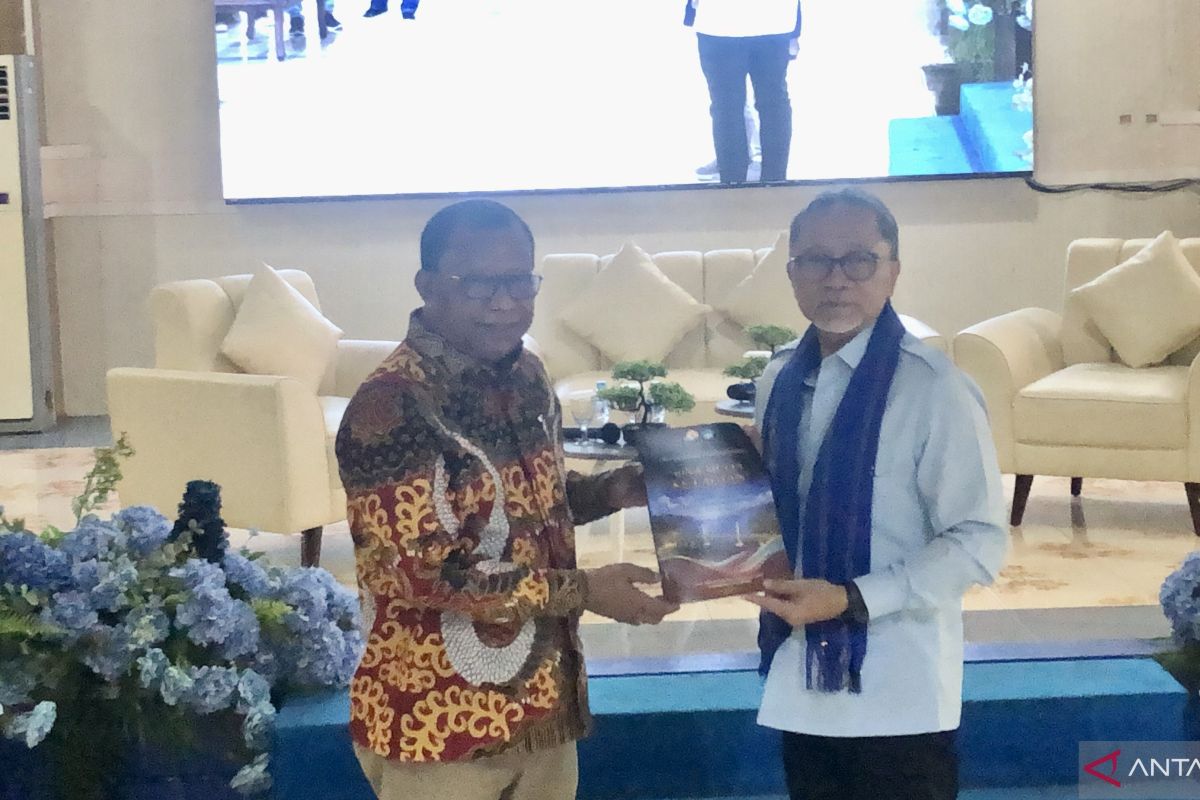
Speaking in Ambon on Thursday, the Coordinating Minister for Food, Zulkifli Hasan, stated that the development of thematic villages is directed so that villages do not merely act as recipients of programmes, but are capable of producing food independently according to their respective regional advantages.
“We are developing every village to be food self-sufficient through the thematic village programme, whether that involves tourism, fish, rice, and so on,” said Zulkifli Hasan during a visit to Pattimura University (Unpatti) in Ambon, Maluku.
He noted that the government is gradually preparing tens of thousands of villages to serve as the pillars of food security from the smallest level of government.
This development is tailored to village potential, including agricultural commodities, fisheries, aquaculture, and other sectors that can support food needs and boost the local economy.
According to the Minister, efforts to achieve food self-sufficiency are also vital to protecting the sustainability of domestic farmers and food entrepreneurs.
“If we import, our farmers become victims because they will suffer losses. Their businesses will not be profitable. Therefore, food self-sufficiency is essential to protect our farmers,” he said.
In the development of Thematic Fisheries and Aquaculture Villages, the government is encouraging the use of technology that can be applied according to regional conditions. One such method is the Mini Recirculating Aquaculture System (RAS), a fish farming system with water circulation that can save water and land usage. Commodities such as catfish and tilapia are among the options being developed to meet the public’s protein needs.
Production from these thematic villages will eventually be linked to government nutrition fulfilment programmes, including supplying food requirements for the Nutrition Fulfilment Service Units (SPPG).
He stated that this development requires cross-sector collaboration, including universities that possess research, technology, and human resource capacities.
In the context of archipelagic regions like Maluku, collaboration with Pattimura University is considered crucial to strengthening the development of fishing villages, aquaculture, and food and protein supply chains, particularly in eastern regions and frontier, outermost, and remote (3T) areas.
“Universities must be places for discussing and critiquing policy. We must learn quickly, because the nation’s problems require rapid solutions,” he said.
He emphasised that the development of thematic villages is not only oriented towards increasing production but also towards building a food ecosystem from upstream to downstream, ensuring that community production has a market and provides economic value.
With this approach, villages are expected to become integrated food production bases, simultaneously strengthening national food availability and reducing dependence on foreign supplies.
The government will continue to encourage the gradual expansion of this programme across tens of thousands of villages, adjusting to the characteristics, resource potential, and food requirements of each region.
Source: jawawa.id (https://jawawa.id/newsitem/coordinating-ministry-for-food-development-thematic-villages-to-achieve-food-self-sufficiency-1788426580)
Originally published by Antara (Indonesian) (https://www.antaranews.com/berita/5724181/kemenko-bidang-pangan-kembangkan-desa-tematik-untuk-kemandirian-pangan), translated from Indonesian