
Coordinating Ministry for Food and Unpatti Explore Blue Carbon Economic Value Development
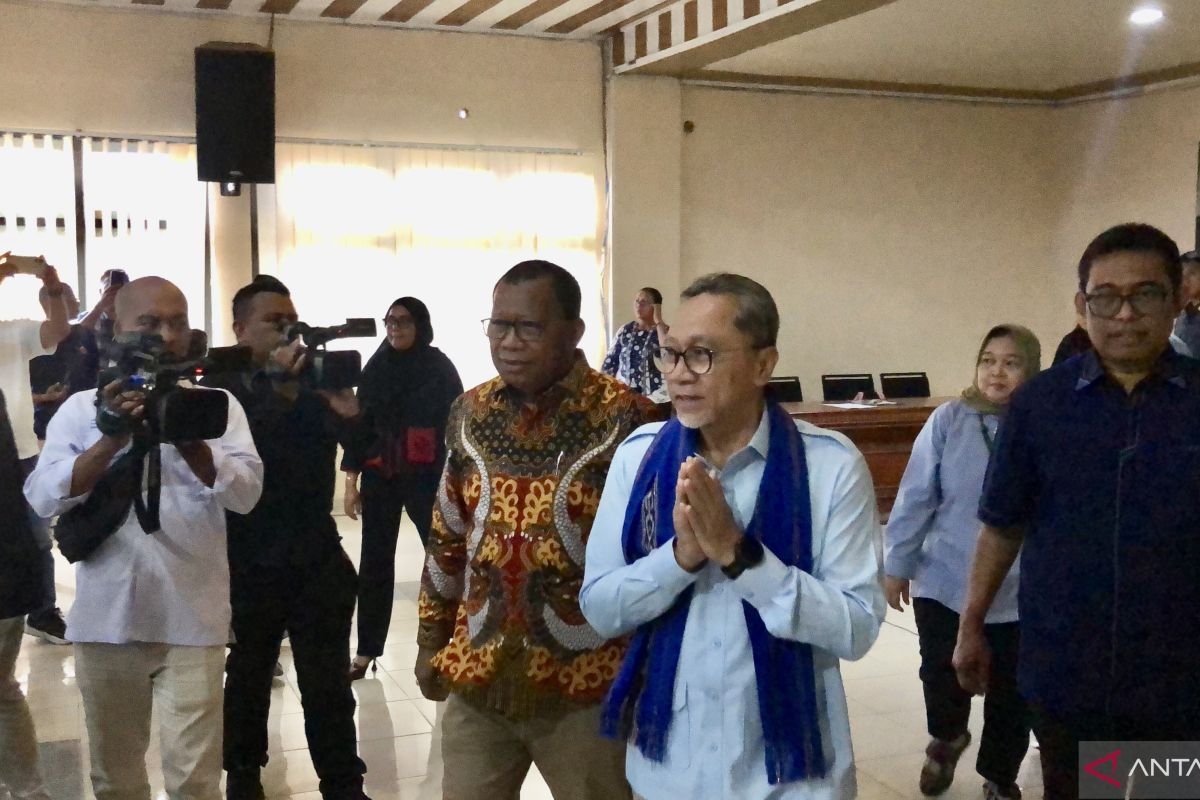
Ambon (ANTARA) - The Coordinating Minister for Food, Zulkifli Hasan, stated that the Coordinating Ministry for Food, in partnership with Pattimura University (Unpatti) Maluku, is exploring the development of studies on the economic value of blue carbon. This effort is intended to optimise Indonesia’s coastal and marine potential while simultaneously increasing economic benefits for the community.
According to Zulkifli in Ambon on Thursday, the development of blue carbon is part of the government’s agenda, which focuses not only on food security but also on addressing environmental issues through measurable and accountable carbon economy schemes.
“The government also has the task of handling environmental issues. We are developing the economic value of marine carbon, or blue carbon, and certainly require cooperation with universities, such as Unpatti,” he said.
Blue carbon refers to carbon absorbed and stored by coastal and marine ecosystems, particularly mangroves, seagrass meadows, and tidal marshes. These ecosystems are capable of storing carbon longer than many terrestrial ecosystems, making them a vital instrument in climate change mitigation and the development of a conservation-based economy.
He explained that Indonesia possesses significant carbon economic potential, originating not only from forested areas but also from coastal and marine ecosystems such as mangroves, seagames, and tidal marshes, which can absorb and store high amounts of carbon.
Therefore, he noted, the management of this potential must be directed to provide tangible benefits for communities living around forest, coastal, and marine areas.
Zulhas acknowledged that carbon trading in Indonesia has not previously operated optimally. However, the government is now continuously pushing for strengthened governance so that these mechanisms can generate economic value that can be felt by the community without neglecting oversight aspects.
“The budget is substantial, amounting to Rp22 trillion. If it goes directly to the community or individuals, it is difficult to monitor; therefore, we are working with universities so that it can be supervised and measured,” he said.
He assessed that universities play a crucial role in supporting data collection, research, and the verification of carbon potential, ensuring that programme implementation is scientifically accountable.
The exploration of cooperation with Unpatti, he continued, is expected to strengthen studies regarding the carbon storage capacity of Maluku’s coastal ecosystems, which are known for their vast mangrove expanses and marine territories.
Through this approach, the government aims to ensure that the development of the carbon economy not only contributes to the reduction of greenhouse gas emissions but also opens new income opportunities for coastal communities through the sustainable management of natural resources.