
Coordinating Ministry for Downstreaming Judged to Need to Cut Investment Barriers
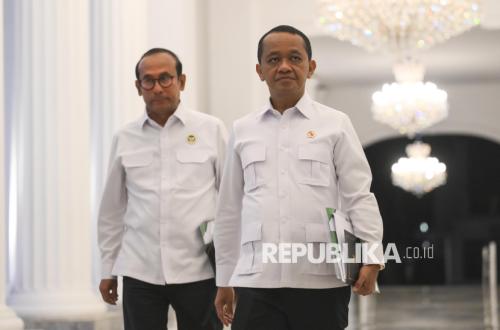
The formation of the Coordinating Ministry for Downstreaming and Energy Transition is deemed to require the ability to cut various investment barriers that have slowed the development of industry and downstreaming. These issues include licensing, certainty of raw materials, energy availability, infrastructure, financing, and market access.
Professor Muhammad Bachtiar Nappu, an energy expert and Professor at Hasanuddin University (Unhas), stated that the success of the new coordinating ministry cannot be measured solely by changes in institutional structure. According to him, the primary metric is the ability to eliminate bottlenecks that hinder investment realisation.
“Fundamentally, downstreaming is not just about building smelters or factories. Downstreaming requires an ecosystem. That ecosystem includes raw materials, energy, infrastructure, financing, technology, labour, regulation, and market access,” Bachtiar said when contacted on Tuesday (6/10/2026).
He noted that these issues are currently scattered across various ministries and agencies, which can cause investors to face different problems at each stage of a project. For instance, an investor might obtain industrial permits but lack certainty regarding raw materials. In other cases, raw materials may be available, but energy prices are not competitive. Problems can also arise when electricity supply is available, but the transmission network cannot support industrial zone requirements.
Therefore, Bemma Bachtiar believes the strategic function of the Coordinating Ministry for Downstreaming and Energy Transition lies in its ability to integrate cross-sectoral decision-making. However, he noted that coordination does not mean all authority should be centralised within the coordinating ministry. Technical ministries must still perform check-and-balance functions, while the Coordinating Ministry ensures that inter-agency policies do not conflict.
“If you ask about the measure of success, do not look at how many coordination meetings are held. The measure is how many investment bottlenecks are successfully removed, how long it takes from planning to financial close, and how much added value truly remains in Indonesia,” he said.
Bachtiar also assessed that the plan to develop 100 gigawatt peak (GWp) Solar Power Plants (PLTS) needs to be positioned as part of an industrialisation strategy, rather than merely an addition to renewable energy capacity. He suggested that industrial zones could serve as demand centres or load centres for clean energy. The government could first map the energy needs of industrial zones and then prepare the most competitive energy systems to meet those needs.
The construction of solar plants around industrial zones, Bachtiar added, must be supported by adequate transmission networks, energy storage systems, and other power plants to maintain supply reliability. “Renewable energy is not only an instrument for emission reduction but also a factor in industrial competitiveness because energy costs can be lower,” he said.
Integrating clean energy with downstreaming is increasingly important because Indonesian products will face global market demands for low-carbon products. With a cleaner energy supply, Indonesia not only has the opportunity to increase the added value of commodities such as nickel, steel, and aluminium but also to strengthen its position as a producer of low-carbon products.
Bachtiar identified several indicators to assess the effectiveness of the Ministry over the next one to two years. These include investment realisation, increased domestic added value, energy competitiveness, job quality, and the time required to execute projects from the planning stage to commercial operation.
“If investors still have to go from one institution to another and from one ministry to another, that does not solve the problem, but rather adds to it. Therefore, coordination through this new Coordinating Ministry must be able to produce real economic value,” said Bachtiar.
Similar views were expressed by Imaduddin Abdullah, Director of the Institute for Development of Economics and Finance (INDEF) Green Transition Initiative (GTI). He believes the formation of the new coordinating ministry opens opportunities to strengthen coordination in the agendas of energy transition, downstreaming, and green industrialisation.
“The formation of this coordinating ministry is an opportunity for Indonesia to advance in the fields of energy transition and downstreaming,” said Imaduddin.
According to Imaduddin, one agenda requiring cross-sectoral coordination is the 100 GWp solar power programme. This programme requires the alignment of industrial policy, energy planning, spatial planning, infrastructure development, and investment.
In addition to the energy transition, he believes the presence of the Coordinating Ministry can be used to improve downstreaming strategies. This is because the success of downstreaming depends on several cross-ministerial decisions that must proceed in tandem. Investment licensing, raw material certainty, production facility construction, energy availability, and market access, according to Imaduddin, need to be prepared as a single policy series.
“Investment has been placed, but production capacity, state revenue, and job creation have not yet reached expectations. Downstreaming requires targeted cross-ministerial support, from licensing and energy to market access. When one link in the chain lags behind, the benefits are not optimal,” he said.
Consequently, Imaduddin believes the role of the coordinating ministry as a policy orchestrator is vital to ensure that various policies related to downstreaming and energy transition do not operate in isolation.
Source: jawawa.id (https://jawawa.id/newsitem/coordinating-ministry-for-downstreaming-judged-to-need-to-cut-investment-barriers-1791352506)
Originally published by Republika (https://ekonomi.republika.co.id/berita/tmievl522/kemenko-hilirisasi-dinilai-perlu-pangkas-hambatan-investasi), translated from Indonesian