
Coordinating Minister Zulkifli Hasan: Waste Segregation is Key to Waste-to-Energy Management
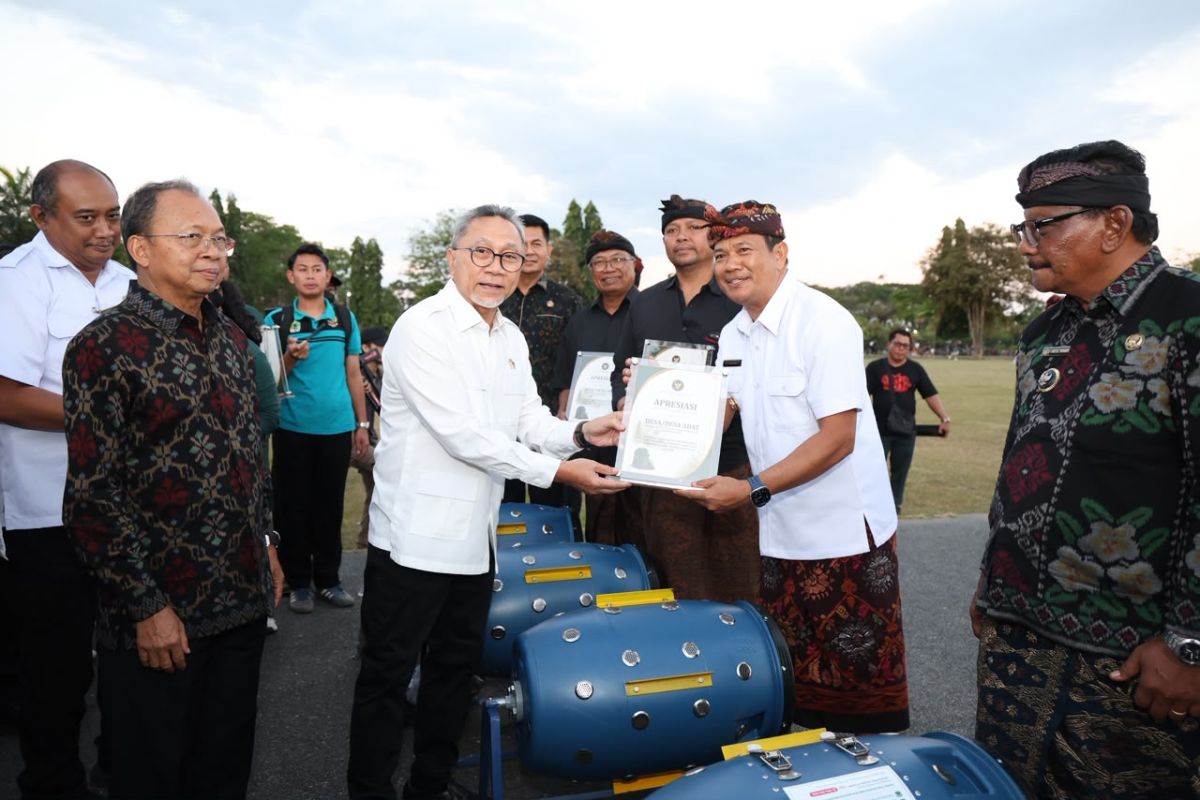
Coordinating Minister for Food Zulkifli Hasan has stated that waste segregation at the source is the key to ensuring that waste management, including the development of Waste-to-Energy (PSEL) facilities, runs effectively. He noted that waste processing technology cannot operate optimally without a change in public behaviour regarding waste separation at home. “Segregating waste is no longer a choice, but a necessity. If waste is separated from the household, organic waste can be utilised as compost or animal feed, while inorganic waste can be recycled or processed into energy,” Zulhas said in an official statement received in Jakarta on Wednesday. The minister made these remarks while leading the Declaration of the Bali Waste Segregation Movement at the Bali Waste Segregation Alert Parade at Puputan Margarana Field, Denpasar, Bali, on Tuesday. The movement is part of the support for the National Movement for a Safe, Healthy, Clean and Beautiful Indonesia. Zulhas stated that waste segregation at the source forms a crucial foundation for strengthening upstream waste management, including supporting the development of a PSEL facility in Bali. The government is continuing to push for the acceleration of waste management solutions in Bali, including the handling of the Suwung Final Processing Site and the development of the PSEL facility. The Bali Provincial Government previously recorded that the volume of waste in the province reaches approximately 3,400 tonnes per day, with the largest contributor being Denpasar City at around 1,000 tonnes per day. The government is targeting the Greater Denpasar PSEL facility, which has a processing capacity of up to 1,200 tonnes of waste per day, to be operational by 2027 as an effort to reduce waste accumulation while generating energy. Zulhas stressed that the successful utilisation of waste processing infrastructure is supported by active community participation through the habit of separating waste from the household. “This is the key to effective waste management,” he said. He appreciated the Bali Provincial Government for having a Governor’s Regulation to encourage waste segregation at the source. However, Zulhas assessed that the implementation of the policy still requires continuous supervision and assistance so that the community can carry out waste segregation consistently. The event was attended by Bali Governor I Wayan Koster, members of the Bali Provincial Leadership Coordination Forum, representatives from the Ministry of Environment, and regents and mayors from across Bali. On the occasion, the government also presented awards to 10 villages and traditional villages in Bali deemed successful in implementing source-based waste management. The awards are expected to encourage the expansion of a waste segregation culture as the foundation of a circular economy and sustainable waste management.