
Coordinating Minister Yusril: Strengthening Professional Organisations is a Key Part of the Legal System
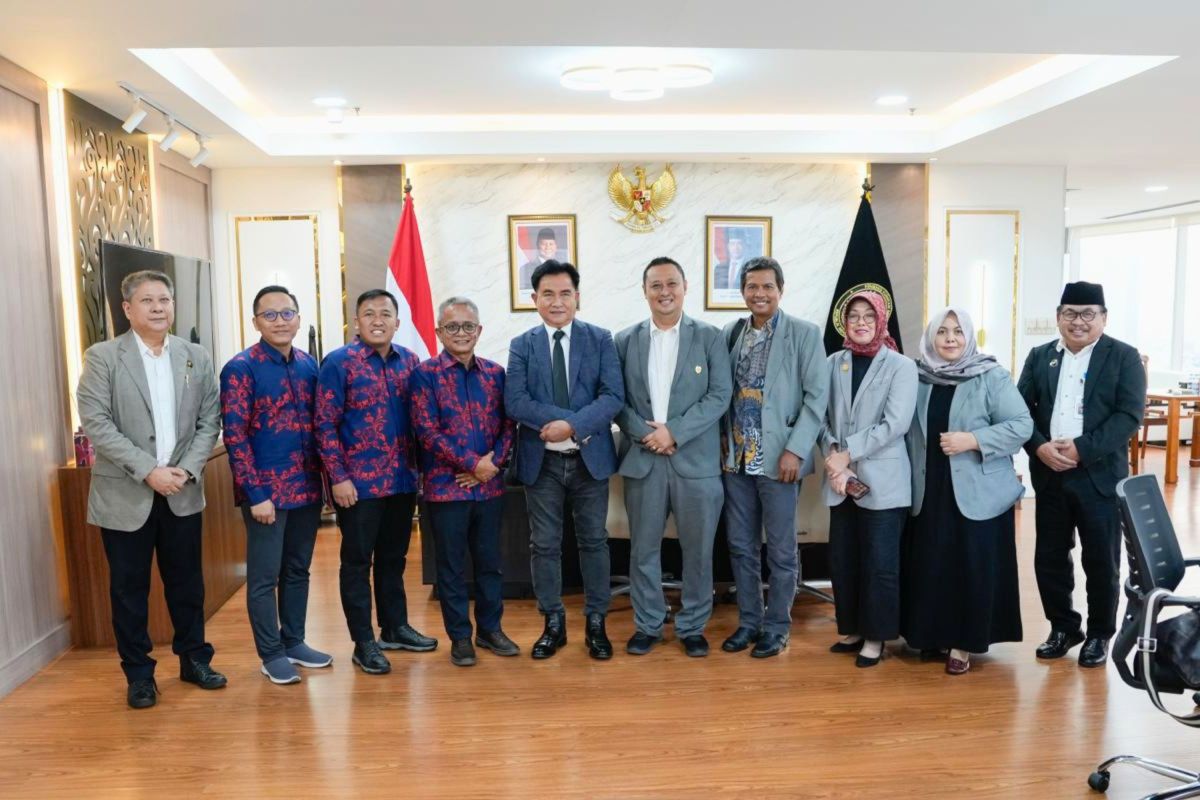
Coordinating Minister for Law, Human Rights, Immigration, and Corrections Yusril Ihza Mahendra has stressed that strengthening professional organisations is an essential component of the national legal system, particularly in maintaining the quality, competence, and integrity of professionals.
During an audience with the Central Board of the Indonesian Pharmacists Association (IAI) in Jakarta on Tuesday (28/4), he explained that in the context of Constitutional Court (MK) rulings, there is an affirmation of the separation between state administrative authority and the domains of professional science and ethics.
“Professional organisations have a unique character because they carry out state functions in regulating and supervising professional practices,” said Yusril, as confirmed in Jakarta on Wednesday.
Furthermore, Yusril stated that the government is aligning regulations, including the resolution of a Government Regulation as a derivative of the Health Law, to ensure alignment with the MK rulings.
It was noted that one emerging policy direction involves the establishment of a single professional organisation body to ensure uniformity of standards, effective supervision, and mitigation of risks in professional practices.
He also emphasised that in international practice, professional organisations are generally recognised as singular representatives of a country.
According to the Coordinating Minister, this is deemed important for maintaining Indonesia’s credibility and position in global forums, including in the field of pharmacy.
In addition, he highlighted the role of collegiums as scientific institutions that must remain independent in developing competency standards, guidelines, and conducting technical supervision and evaluation.
“This independence is key to guaranteeing the quality of education and public safety,” he stated.
He further affirmed the importance of organising supervision mechanisms and enforcement of professional codes of ethics in an accountable manner by professional organisations.
He added that the state still plays a role in administrative aspects but does not take over authority in scientific and ethical domains, which are the purview of the profession.
The core of Constitutional Court Ruling Number 111/PUU-XXII/2024 is the affirmation of the independence of collegiums within the structure of medical and health professional organisations.
Meanwhile, Constitutional Court Ruling Number 182/PUU-XXII/2024 strengthens the independence of collegiums and affirms the role of professional organisations in Indonesia’s health ecosystem.
Both rulings are considered to have significant implications for legal aspects, professional governance, and policies in the health sector.
Noffendri emphasised the importance of comprehensive understanding from the Coordinating Ministry for Law and Human Rights (Kemenko Kumham) Imipas so that professional organisations’ steps remain aligned with constitutional provisions, government policies, and principles of legal certainty.
He also hopes that the audience serves as a space for dialogue to obtain clarifications and convey various perspectives related to the implementation of these MK rulings.
“Through this audience, we hope to discuss directly, obtain comprehensive clarifications, and ensure that the steps we take are aligned with constitutional provisions and government policies,” said Noffendri.
The audience activity took place in a constructive and dialogic atmosphere, with the hope of strengthening synergy between the government and professional organisations in guiding the implementation of MK rulings and promoting better professional governance moving forward.