
Coordinating Minister: Transport Transformation Key to Addressing Development Challenges
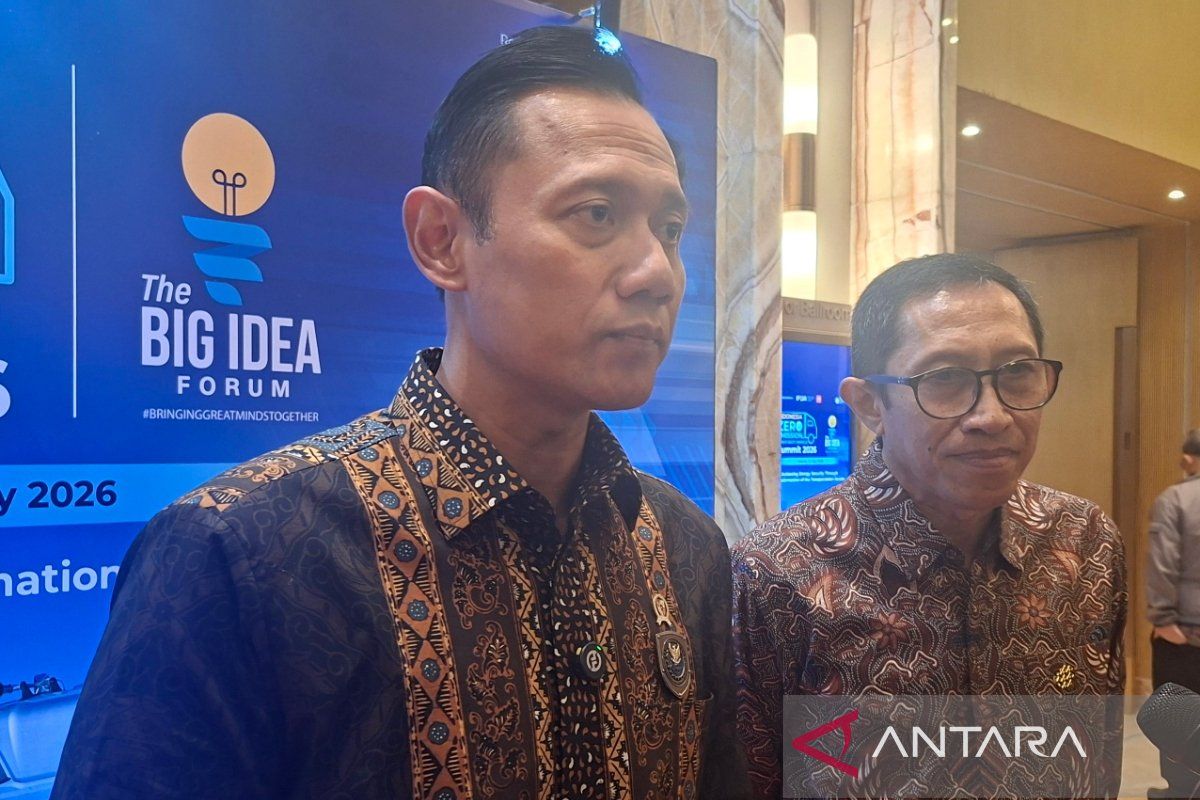
Jakarta (ANTARA) - Coordinating Minister for Infrastructure and Regional Development Agus Harimurti Yudhoyono (AHY) has affirmed that transforming the transport sector is an essential part of answering Indonesia’s future development challenges.
“On one hand, Indonesia needs high economic growth to improve public welfare. On the other hand, that growth will increase energy demand and environmental pressure. That is why transforming the transport sector is key to ensuring that energy security, economic competitiveness, and sustainability can advance hand in hand,” he said in a statement in Jakarta on Friday.
The Indonesian government continues to strengthen various strategies to achieve energy self-sufficiency, ranging from increasing the biodiesel blend, encouraging exploration and raising crude oil lifting, building refineries and energy storage facilities, to expanding the use of renewable energy.
These measures form an important foundation for strengthening national energy security and reducing dependence on energy imports.
However, Indonesia’s energy self-sufficiency challenges do not stop on the production side. Over the past five years, national diesel consumption has risen by 24.5 per cent, while domestic diesel production has only been able to meet around 51.6 per cent of national demand.
This situation has also burdened the government’s fiscal space, with diesel subsidies and compensation totalling Rp415.84 trillion between 2019 and 2024.
According to WRI Indonesia Country Director Nirarta Samadhi, discussion of electric vehicles has so far been largely linked to efforts to reduce greenhouse gas emissions. In fact, for Indonesia, the strategic benefits are far broader.
“Our modelling shows that without significant changes in transport technology, Indonesia’s diesel demand could reach around 87.5 million kilolitres by 2040,” he said.
He noted that domestic production capacity is estimated at 26.5 million kilolitres.
“This means that increasing energy supply alone will not be enough. We must also begin managing energy demand, and transforming freight transport is one of the most important strategies for achieving Indonesia’s energy self-sufficiency,” he said.
To drive the transformation of the logistics sector, WRI Indonesia initiated the Indonesia Freight Decarbonization Accelerator (IFDA), launched in 2025.
As a cross-sector platform for decarbonising heavy transport, the IFDA has involved 42 companies from the logistics ecosystem in various studies, discussion forums, and implementation support for zero-emission heavy vehicles, including through the Corporate Assistance Programme (CAP) held in April 2026.
In addition, through the IFDA, WRI Indonesia has also developed the Truck Route Assessment & Charging Evaluation (TRACE), a platform that helps government and industry players evaluate route readiness, charging requirements, and infrastructure development priorities before investments are made.