
Coordinating Minister Muhaimin: Extreme Poor Population Decreases to 2.2 Million People
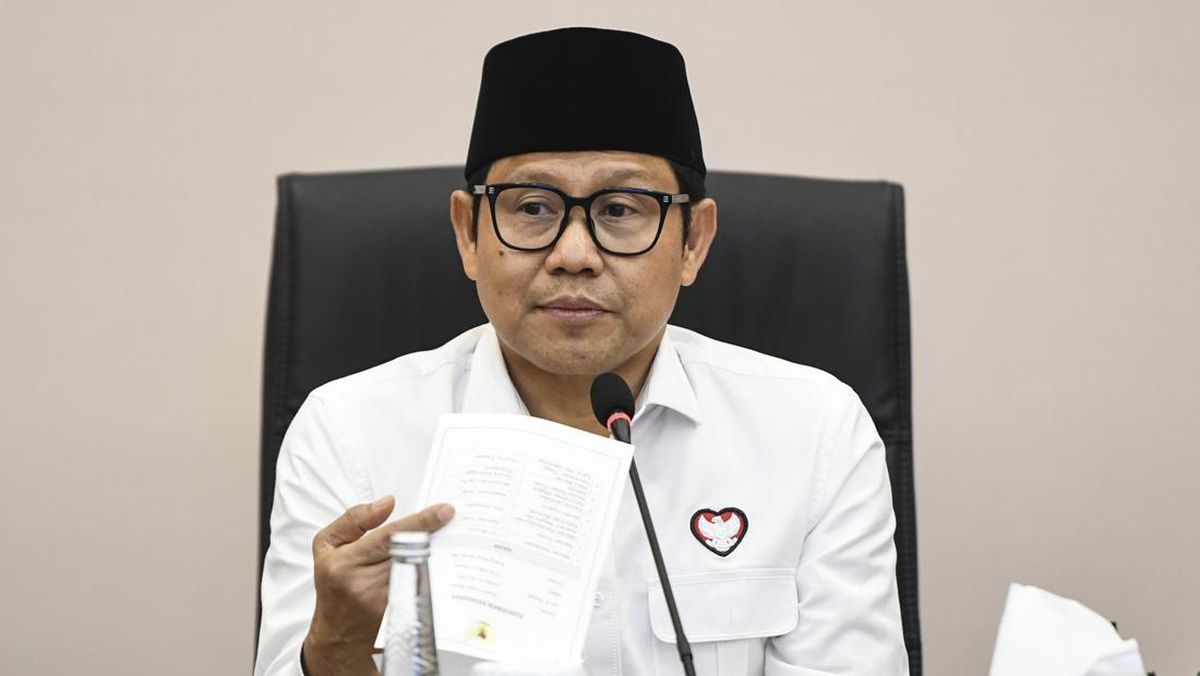
Coordinating Minister for Community Empowerment, Muhaimin Iskandar, has reported a decline in the number of people living in extreme poverty in Indonesia.
He made this statement during the Evaluation Meeting on the Implementation of Poverty Alleviation in accordance with Presidential Instruction Number 8 of 2025, attended by ministers, deputy ministers, and leaders of relevant institutions in Kuningan, Jakarta, on Monday (27/4).
In terms of numbers, the extreme poor population has decreased from 3.56 million people to 2.2 million people, meaning approximately 1.36 million extreme poor individuals have graduated to a higher status.
“Alhamdulillah, extreme poverty has successfully decreased from 1.26 percent in March 2024 to 0.78 percent in September 2025. This means around 0.48 percent of the extreme poor population has graduated. This is an achievement that we should all be grateful for,” said the man commonly known as Cak Imin in a written statement on Monday (27/4).
According to him, this achievement is the result of joint efforts across ministries, local government institutions, and support from various stakeholders.
He also explained that from the social protection perspective, social assistance has reached 8.56 million poor families or 93.6 percent of the total targets, with 56.7 percent of them receiving more than one intervention programme. Meanwhile, the development of Phase II People’s Schools (SR) has reached 69.
From the perspective of improving food security, data from the Ministry of Agriculture shows that the Farmers’ Exchange Rate (NTP) in 2025 has reached 125.35, the highest to date.
“Meanwhile, community empowerment programmes are also being expanded, with more than two million people involved in labour-intensive programmes,” he said.
In the economic sector, access to financing for actors has been strengthened. Subsequently, around two million new MSME debtors have gained access to capital, driving increased productivity and job creation.
In addition, 111,000 migrant workers have been facilitated in their placement, and 28,000 families have received assistance through the agrarian reform programme.
Muhaimin stated that progress is also evident in aspects of infrastructure and basic services.
As many as 99.4 percent of sub-districts now have community health centres, 82.3 percent of villages have basic education services, and 89 percent of sub-districts have secondary education services.
The government has also built and renovated 10,171 housing units through the Slum Area Housing Programme (BSPS) in 219 regencies/cities.
Furthermore, community-based economic strengthening has been promoted through training for 514 cooperative managers and 9,404 companions of Red and White village/sub-district cooperatives.
National priority programmes such as the Free Nutritious Meals (MBG) have reached 60.2 million beneficiaries.
“In the education sector, 61.9 million people have been covered by various education programmes, including the operation of 166 People’s Schools accommodating 14,963 students from poor families,” he said.
From the financing side, he explained that the government has allocated no less than Rp503.2 trillion through the state budget, strengthened by Rp129 trillion from regional budgets to support poverty alleviation programmes across Indonesia.
“We will continue to work hard to achieve the target of zero percent extreme poverty in 2026, and reduce the poverty rate to a maximum of five percent by 2029. This requires joint efforts, consistency, and focus on tangible results,” he said.