
Coordinating Minister for Politics, Law, and Security: Cross-Sector Synergy Key to Controlling Forest and Land Fires
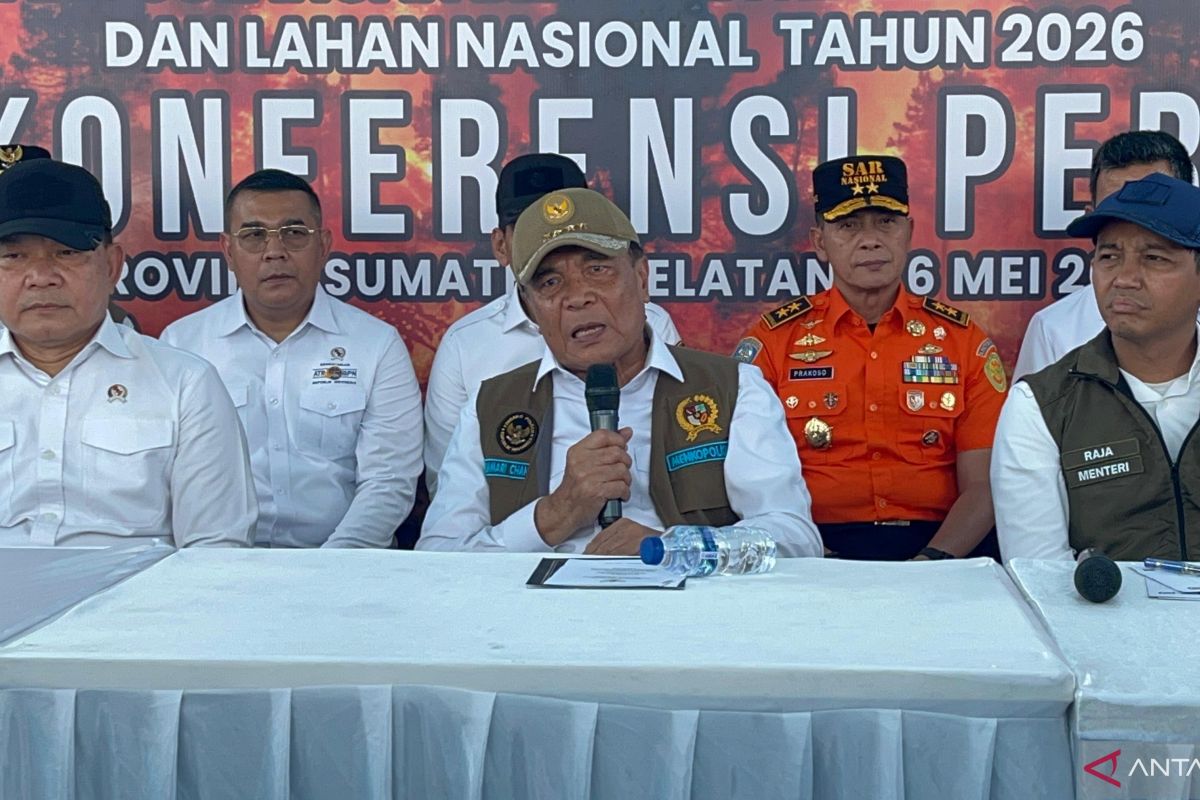
Coordinating Minister for Politics and Security Djamari Chaniago has asserted that cross-sector synergy is the primary key to controlling forest and land fires (karhutla), especially in South Sumatra, a region with high vulnerability. Speaking at a karhutla readiness roll call ahead of the 2026 dry season in Palembang on Wednesday, the Coordinating Minister stated that addressing karhutla cannot be done in isolation but requires strong coordination between the central government, local authorities, and all stakeholders. “Karhutla is a disaster that recurs every year. Therefore, we must not be complacent. Solid synergy and coordination are the key to ensuring handling is carried out quickly and accurately,” he said. According to him, preventive measures must be the top priority over responding after fires have started. Mitigation efforts are deemed more effective in reducing the extent of fires while minimising impacts on the environment, public health, and the economy. The handling of karhutla is a serious concern for President Prabowo Subianto, who has instructed that the good achievements in control be maintained and improved. South Sumatra, he continued, is a strategic region prone to karhutla due to its extensive peatlands and dry mineral soils, as well as plantation areas that could trigger fires. Data shows that the extent of karhutla in Indonesia reached 376,805 hectares in 2024, decreasing to 359,619 hectares in 2025. Meanwhile, in South Sumatra, the extent was recorded at 15,422 hectares in 2024 and dropped to 5,339 hectares in 2025. As for the period from 1 January to 30 April 2026, the extent of karhutla in South Sumatra was recorded at 79 hectares. “This decline must be appreciated, but it should not make us complacent. This achievement must be maintained through hard work and better discipline,” said Djamari.