
Coordinating Minister for Political and Security Affairs: Reclaim Digital Space to Prevent Disinformation, Slander, and Hate
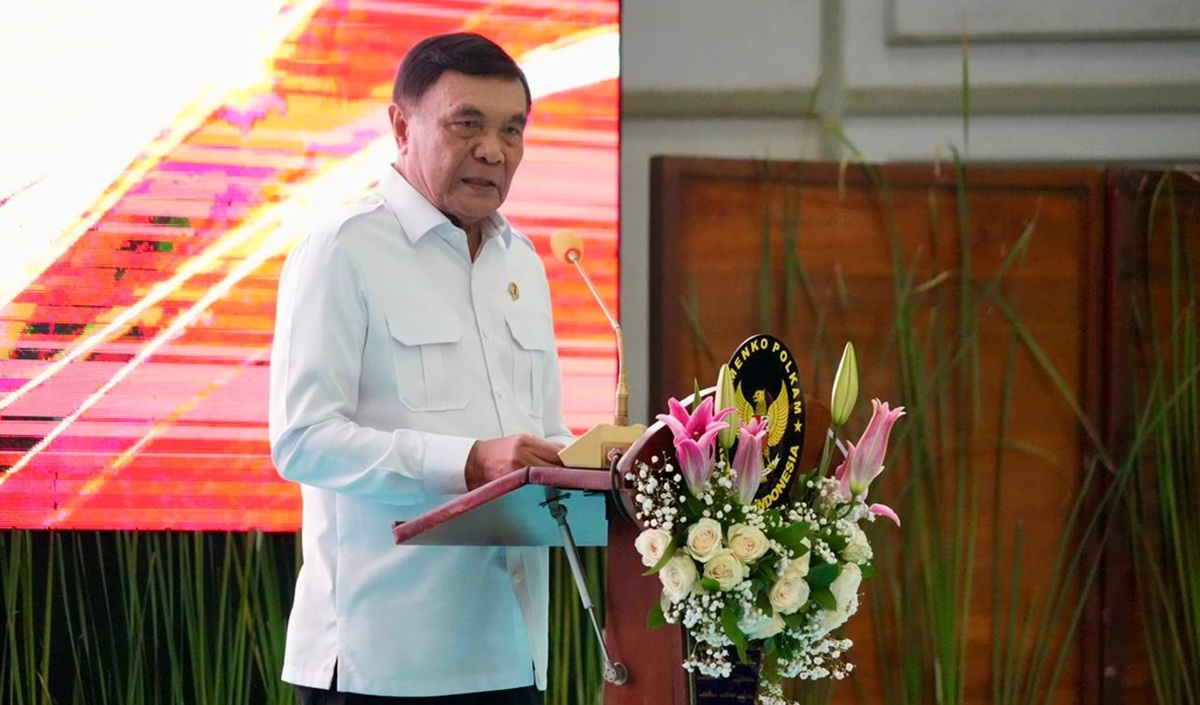
The government has issued a reminder regarding the importance of mastering digital space to prevent disinformation, slander, and hate (DFK) from negatively shaping public perception. The flow of information on social media is considered more than just a matter of communication; it also determines the mindset and character of the nation.
This message was delivered by the Coordinating Minister for Political and Security Affairs, General (Ret.) Djamari Chaniago, while opening the Public Relations Coordination Body (Bakohumas) Coordination Forum at Graha Marinir Panti Perwira, Central Jakarta, on Tuesday (1/9).
Djamari assessed that digital space has now become a vital arena for shaping public opinion and behaviour. According to him, whoever is able to manage this space will hold significant influence over the direction of information developing among the public.
“The digital field is now very strategic. I liken it to the Kurukshetra battlefield, a very large combat zone. I call digital space a field of criticism, a field where whoever can master it will win the battle. If we do not master it, it will be mastered by others for specific purposes,” he stated.
He noted that the rapid circulation of DFK, negative narratives, coarse language, and even indecent content on social media should not be taken lightly. Such content, he said, can influence how society thinks and ultimately impact the national character.
“Social media greatly influences the minds of the public. What is in the mind will influence what we do, and what we continue to do will shape character. We must not be careless so that the character of this nation becomes weak, prone to giving up, and pessimistic. We cannot surrender this country to pessimistic people,” he added.
Therefore, the government needs to strengthen its ability to manage and anticipate the flow of digital information. Djamari warned that an information space that has already been dominated by other parties will be much harder to reclaim.
“If it has already been mastered by others, it requires strenuous effort to take it back. It requires resources, tools, and budgets. Given that the strength we possess is very large, it must be well-coordinated,” said Djamari.
In this context, the management of public communication is no longer seen as merely the task of delivering government information. Referring to President Prabowo Subianto’s directives regarding the eradication of digital crime and the protection of national data, public communication is also linked to public protection, digital sovereignty, and the maintenance of national stability.
The role of public relations within ministries, agencies, and local governments is also being encouraged to evolve. Public relations officers should not merely act as publication executors but must function as strategic communication managers capable of maintaining and strengthening public trust in the government.
Djamari also called for the involvement of all elements, including the government, the TNI (Indonesian National Armed Forces), the Polri (Indonesian National Police), public relations departments of ministries/agencies, local governments, and the community, to face information challenges together.
“There is no one else. We ourselves must fight together to master the digital space to prevent DFK,” he concluded.