
Coordinating Minister for Infrastructure: Government Targets Reduction in National Logistics Costs
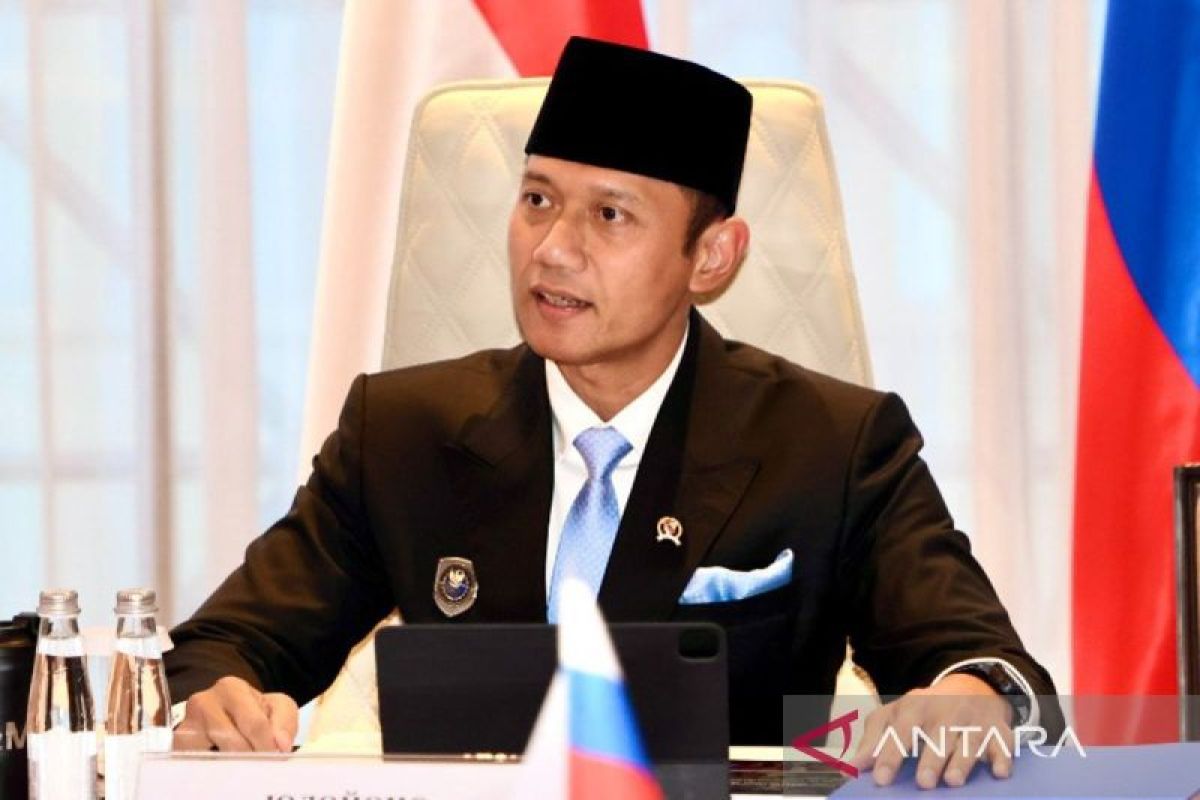
Jakarta (ANTARA) - The Coordinating Minister for Infrastructure and Regional Development, Agus Harimurti Yudhoyono (AHY), has revealed that the government aims to reduce national logistics costs to 12.5 per cent of Gross Domestic Product (GDP) by 2029. Under the leadership of President Prabowo Subianto, this effort is intended to increase economic efficiency while strengthening national competitiveness.
“Our goal is simple: to make logistics costs more efficient, strengthen inter-regional connectivity, foster investment and job growth, and ensure that the distribution of goods and public services reaches the community more effectively,” AHY stated in Jakarta on Monday.
To achieve this, Indonesia is encouraging various cooperation opportunities in human resource development, knowledge and technology transfer, and the strengthening of national transport industry capacity to better face future challenges. AHY added that amidst various global economic challenges, Indonesia must continue to create spaces for collaboration that can bolster national competitiveness. He noted that the priority is not merely who the partners are, but how every collaboration can provide tangible benefits to the public.
He emphasised that for Indonesia, the world’s largest archipelagic nation with 17,380 islands and a population of approximately 280 million, transport is not merely a means of mobility but the lifeblood that connects the people, strengthens unity, and opens access to various economic opportunities. “Indonesia is the largest archipelagic nation in the world… For us, transport is the lifeblood that unites the nation and connects all regions of the Nusantara,” said AHY.
AHY asserted that the development of connectivity in Indonesia cannot rely solely on toll roads but must be reinforced with maritime and air transport. He argued that Indonesia’s infrastructure development approach cannot be equated to continental countries that rely primarily on land networks. As an archipelagic nation, Indonesia requires a more comprehensive connectivity strategy. AHY emphasised that strengthening inter-island connectivity is key to driving equitable development and reducing national logistics costs. Without an integrated transport system, he noted, the distribution of goods and services will remain expensive and hinder economic growth across various regions.