
Coordinating Minister for Food Urges Local Governments to Increase Cheap Markets to Stabilise Prices
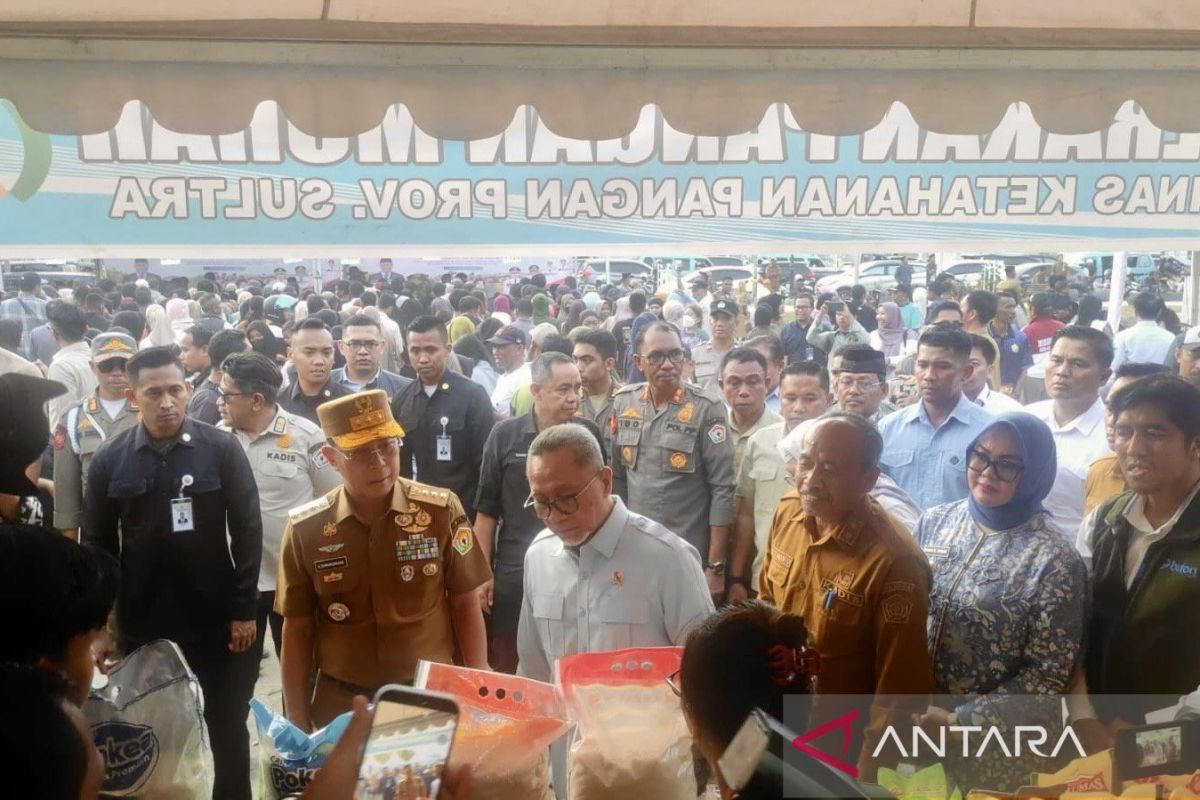
Kendari (ANTARA) - The Coordinating Minister for Food, Zulkifli Hasan, has requested all local governments to increase the frequency of ‘cheap markets’ to maintain food price stability and control regional inflation.
“Please increase the number of cheap markets, Sir. There are unexpected budgets from governors, regents, and mayors; these are very important for the people,” said Zulkifli Hasan while monitoring the implementation of a Cheap Market in Kendari, Southeast Sulawesi, on Tuesday (6/10).
Zulkifli Hasan, affectionately known as Zulhas, stated that through these cheap markets, the government can help maintain food stocks and prices for the community, even if prices occasionally differ from the general market.
According to him, even a price increase of just Rp1,000 for commodities has a significant impact on the public. Therefore, subsidies provided by local governments through cheap markets—for example, amounting to Rp500—are considered unlikely to burden the Regional Revenue and Expenditure Budget (APBD), yet they provide a significant impact on public welfare while helping to curb the rate of inflation.
“In these weeks, Bulog has begun distributing all food assistance,” he said.
He also emphasised that the agricultural and food sectors play a vital role in national sovereignty. In accordance with the directives of the President of the Republic of Indonesia, the national food sector must be directed towards self-sufficiency.
“Food self-sufficiency is not merely about meeting domestic needs, but concerns the honour of the nation and all elements of government, from regional heads to the ranks of the TNI and Polri,” said Zulhas.
He noted that Indonesia previously relied heavily on imports to meet large food requirements, such as importing 4.5 million tonnes of rice, 6 million tonnes of sugar, 13 million tonnes of wheat, and millions of tonnes of soybeans in 2024.
High import figures, he continued, indirectly bring prosperity to farmers in other countries, while local farmers fall behind and remain in the first to fourth decile categories.
“If they are not provided with rice and cash assistance, they cannot afford to send their children to school. Yet, there are 160 million farmers and fishermen, according to the Minister of Agriculture. If there is a disruption to Indonesia, they are the first to be affected. We cannot ignore them,” he said.
Furthermore, he stated that in 2025, the national agricultural sector had shown good achievements, and it is believed that this year will be even better. Based on data from the Food and Agriculture Organization (FAO) and the World Bank, the Farmer Terms of Trade (NTP) has reportedly increased from 116 to 129 per cent.
This increase, he said, reflects improved welfare, where rice and maize farmers are now deemed better able to meet their children’s educational needs and possess better purchasing power.
“With increased welfare, farmers are expected to become more creative and productive,” he added.
He also highlighted the importance of modernising the agricultural sector through mechanisation and technological efficiency, such as the use of agricultural tools and machinery (alsintan) and more modern fertilisation techniques.
The massive use of technology and mechanisation in other food-producing countries, according to him, serves as both a challenge and a benchmark for Indonesia to continue closing the gap to achieve high-competitiveness agricultural efficiency and productivity.
Source: jawawa.id (https://jawawa.id/newsitem/coordinating-minister-for-food-urges-local-governments-to-increase-cheap-markets-to-stabilise-prices-1791330859)
Originally published by Antara (Indonesian) (https://www.antaranews.com/berita/5774513/menko-pangan-minta-pemda-perbanyak-pasar-murah-untuk-stabilitas-harga), translated from Indonesian