
Coordinating Minister for Food says free meals programme involves 148,000 local food suppliers
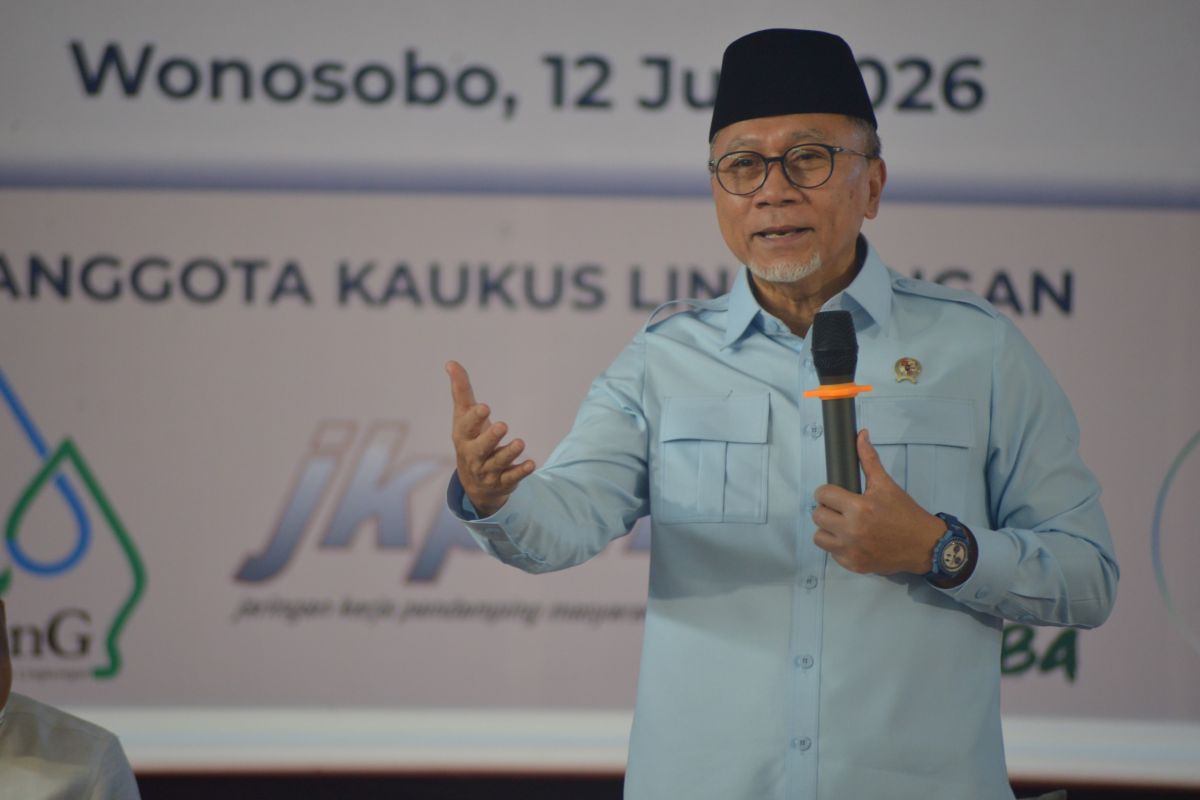
Local food must become the economic strength of villages.
Jakarta (ANTARA) - Coordinating Minister for Food Zulkifli Hasan has stated that the Free Nutritious Meals (MBG) programme has involved around 148,000 local food suppliers and will continue to be strengthened through synergy with the Red and White Village/Neighbourhood Cooperatives (KDMP) in order to expand the absorption of community produce.
“Currently, the MBG programme has involved around 148,000 suppliers consisting of village-owned enterprises (BUMDes), Red and White Village/Neighbourhood Cooperatives, farmer groups, livestock farmer groups, and MSME actors,” said Zulhas in an official statement received in Jakarta on Monday.
The statement was delivered during the Civil Society Dialogue on Food Security and Environmental Sustainability in Wonosobo, Central Java, attended by civil society organisations, forest farmer groups, academics, regional governments, and various stakeholders.
The dialogue discussed the development of local food, social forestry, and the strengthening of village economies through various inputs from civil society organisations, forest farmer groups, academics, and regional governments.
According to Zulhas, Indonesia does not rely solely on rice, but also possesses a diversity of local foods that need to be continuously developed so as to provide added value for the community.
“Local food must become the economic strength of villages. Therefore, the government encourages community produce to be absorbed by the MBG programme and KDMP so that the benefits are directly felt by farmers, livestock breeders, and MSME actors,” he said.
He said strengthening local food is part of efforts to achieve food self-sufficiency while building a sustainable village economic ecosystem.
The government, he continued, continues to encourage the raw material needs of the MBG programme to be met from local production so that the economic benefits can be felt more widely by village communities.
Zulhas explained that synergy between MBG and KDMP will strengthen the national food supply chain whilst opening up a sustainable market for local food commodities.
“The availability of water, fertile soil, and a well-preserved ecosystem is the primary capital for the sustainability of national food production,” he said.
Furthermore, the Coordinating Minister for Food also emphasised that food security must go hand in hand with efforts to preserve the environment so that the productivity of the food sector can be maintained in the long term.
The government hopes that cross-stakeholder collaboration can accelerate the realisation of a resilient and sustainable national food system whilst improving community welfare.
The National Nutrition Agency (BGN) recorded in April 2026 that the Free Nutritious Meals (MBG) programme has become one of the drivers of regional economies through the absorption of local agricultural, livestock, and fishery products.
In West Java, for example, the presence of around 6,200 Nutrition Fulfilment Service Units (SPPG) is estimated to create a circulation of funds of around Rp6 trillion per month in the region.
According to BGN, around 70 per cent of each SPPG’s budget is allocated for purchasing raw materials, with around 95 per cent of that coming from local agricultural, livestock, and fishery products.
This scheme is expected to strengthen the market for community produce whilst increasing economic circulation at the village level.
Source: jawawa.id (https://jawawa.id/newsitem/coordinating-minister-for-food-says-free-meals-programme-involves-148-000-local-food-suppliers-1783925708)
Originally published by Antara (Indonesian) (https://www.antaranews.com/berita/5647001/menko-pangan-sebut-mbg-libatkan-148-ribu-pemasok-pangan-lokal), translated from Indonesian