
Coordinating Minister for Food Accelerates KDKMP Operations, Addressing Two Key Issues
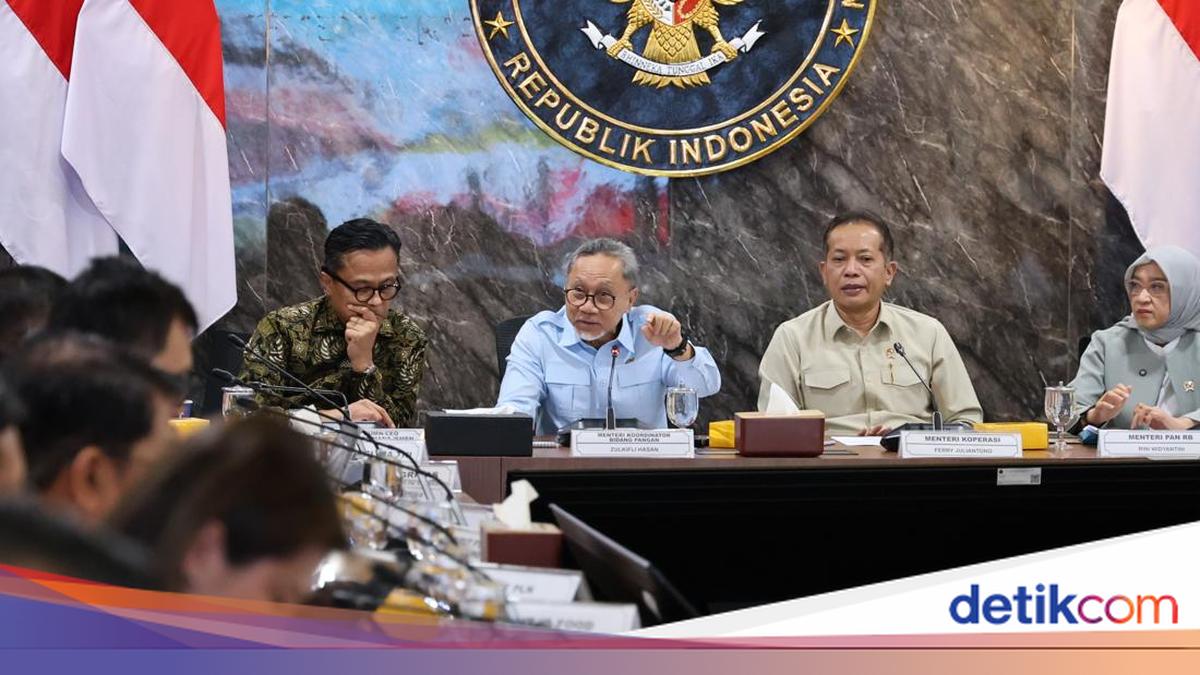
The Coordinating Minister for Food of the Republic of Indonesia, Zulkifli Hasan (Zulhas), has coordinated the resolution of manager placements and service cooperation with State-Owned Enterprises (SOEs) to ensure that the Merah Putih Village/Sub-district Cooperatives (KDKMP), which have already been constructed, can begin operations immediately. These two matters were the primary focus of a limited coordination meeting at the ministerial level regarding the KDKMP.
The acceleration of KDKMP operations is further strengthened by Presidential Regulation Number 82 of 2026 concerning the Governance of Merah Putih Village/Sub-district Cooperatives. Within this framework, Zulhas is coordinating follow-up actions across ministries, SOEs, and relevant agencies to ensure that the readiness of buildings is accompanied by the placement of managers and the availability of goods and services for the community.
To date, the physical construction of 26,569 KDKMP units has reached 100% completion. The five provinces with the highest number of completed units are East Java (5,907 units), Central Java (5,788 units), West Java (2,299 units), North Sumatra (1,427 units), and Aceh (1,317 units).
According to Zulhas, the completion of buildings must be immediately followed by the readiness of management, supply of goods, and services. Therefore, the government is discussing obstacles in manager placement while simultaneously accelerating cooperation with parties that will provide services within the KDKMS.
PT Agrinas Pangan Nusantara has signed 28,891 KDKMP manager employment contracts. The managers are scheduled to begin their duties on 1 October 2026, with employment status based on Fixed-Term Employment Agreements (PKWT) for two years under PT Agrinas Pangan Nusantara.
Salaries for managers follow the provisions of their placement region, with a range reported in the meeting between Rp 6.8 million and Rp 8.3 million per month.
Responding to complaints from prospective managers placed far from their domiciles, Zulhas explained that the number of managers recruited at this time exceeds the number of cooperatives ready to operate. The government will undertake placement adjustments once the initial recruitment process is complete and more nearby cooperatives are ready.
“The number of managers is indeed high, while the number of cooperatives is not yet that large. Therefore, those currently placed far from their domiciles will be adjusted once the cooperatives are completed,” said Zulhas in a written statement on Wednesday (30/9/2026).
Based on placement data, 71.91% of managers are placed within a maximum radius of 50 kilometres (km) from their domicile, and 88.28% remain within their home province. Cases of distant placement will be addressed during the adjustment process.
“For example, someone living in Depok but placed in Gorontalo—that is certainly very far,” explained Zulhas. “After they are accepted, they will be adjusted to the cooperative closest to their domicile.”
Regarding services, Zulhas coordinated follow-up cooperation for KDKMP with SOEs, financial institutions, and relevant ministries. The planned cooperation includes the distribution of SPHP rice and food assistance with Bulog; LPG with Pertamina Patra Niaga; subsidised fertiliser with Pupuk Indonesia; and sugar, premium rice, and basic necessities with ID FOOD.
KDKMP is also being prepared to provide banking services through Himbara banks, micro-finance through PNM, logistics services with Pos Indonesia, and over-the-counter and limited over-the-counter medicines through Kimia Farma. These partnerships will be formalised through agreements with each respective party.
“This cooperative is not a supermarket, but government infrastructure to support the distribution of subsidies, food assistance, 3kg LPG, fertiliser, financial services, electricity payments, and various other community needs,” said Zulhas.
Through the resolution of manager placements and service cooperation, the government is encouraging the completed KDKMP units to immediately fulfil their function as centres for economic activity and community services in villages and sub-districts, ensuring the benefits can be felt by the public immediately.