
Coordinating Minister Bahlil and Industry Minister believed capable of translating President's vision
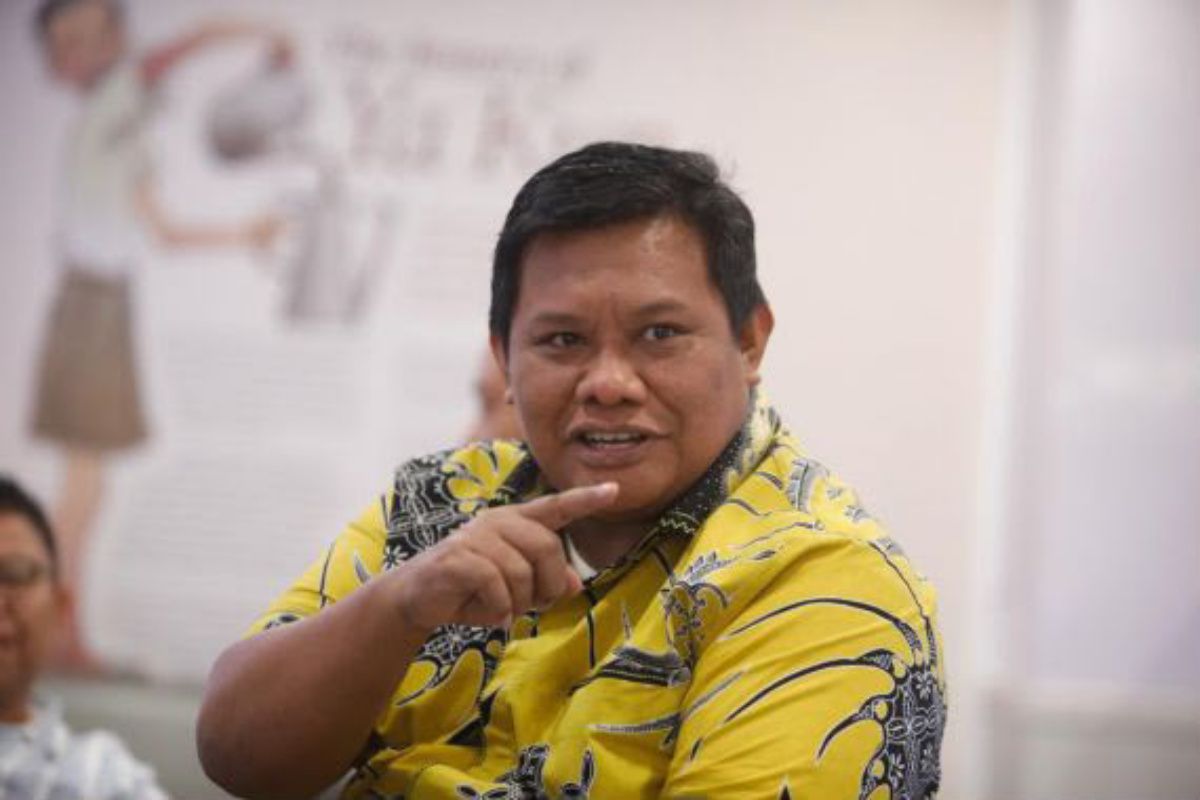
Jakarta (ANTARA) - The Secretary for Economic Policy of the Golkar Party, Abdul Rahman Farisi, has welcomed the appointment of the Coordinating Minister for Downstreaming and Energy Transition, Bahlil Lahadalia, and the Minister of Industry, Muhammad Sarmuji, believing both are capable of translating the President’s vision regarding the economy.
“Downstreaming under the coordination of Minister Bahlil has immense potential to drive added value from the resources we possess,” Abdul Rahman stated in Jakarta on Friday.
He believes there is significant room for synergy between downstreaming and industrialisation. Downstreaming under Minister Bahlil’s coordination, according to him, can further expand the processing of raw materials into semi-finished and finished products, whether based on mineral, agricultural, or fishery resources.
Furthermore, the policy direction of Minister of Industry Muhammad Sarmuji aims to position industry as an engine of economic growth and job creation.
According to Abdul Rahman, this direction is closely linked to the downstreaming agenda coordinated by the Coordinating Minister for Downstreaming and Energy Transition, Bلقة Bahlil Lahadalia. The synergy between the two is considered a key strength in translating the economic vision of President Prabowo Subianto.
“Minister Sarmuji is ready to hit the ground running to translate President Prabowo’s vision by positioning industry as one of the locomotives of economic growth and job creation. This aligns with the downstreaming agenda under the coordination of Minister Bahlil,” he said.
Abdul Rahman views the strengthening of industry as a vital part of Indonesia’s economic structural transformation towards higher value-added economic activities. This process is characterised by the development of processing industries, capital accumulation, technology transfer, and increased productivity.
He noted that the development of technology-intensive and labour-intensive industries can proceed in tandem. Technology-based industries play a role in increasing productivity and competitiveness, while labour-intensive industries contribute significantly to job creation.
“In my view, technology-intensive and labour-intensive industries can be developed simultaneously. In this way, increased productivity and added value can go hand in hand with the expansion of employment opportunities,” he added.
On the other hand, Abdul Rahman believes that strengthening import-substitution industries could be a policy space that complements the downstreaming agenda under Sarmuji’s leadership at the Ministry of Industry.
“In addition to industries growing from downstreaming, I see great opportunities for import-substitution industries to be developed. Indonesia has a large domestic market and an available workforce that can serve as capital to strengthen national production capacity,” he said.
According to Abdul Rahman, the development of both pathways can be complementary. Downstreaming increases the added value of domestic resources, while import-substitution industries can strengthen the national production base and reduce dependence on foreign products.
Abdul Rahman assessed that this collaboration could contribute to the government’s efforts to achieve the 8 per cent economic growth target set by President Prabowo.
“Minister Bahlil, with the downstreaming agenda, and Minister Sarmuji, with industrial strengthening, are part of interconnected economic chains. I believe their synergy can be a vital strength in translating the President’s vision: higher growth, stronger industry, and broader employment opportunities,” concluded Abdul Rahman.
Source: jawawa.id (https://jawawa.id/newsitem/coordinating-minister-bahlil-and-industry-minister-believed-capable-of-translating-presidents-vision-1790988814)
Originally published by Antara (Indonesian) (https://www.antaranews.com/berita/5769446/menko-bahlil-dan-menperin-diyakini-dapat-terjemahkan-visi-presiden), translated from Indonesian