
Coordinating Minister: Art serves as a recovery space for children affected by disasters
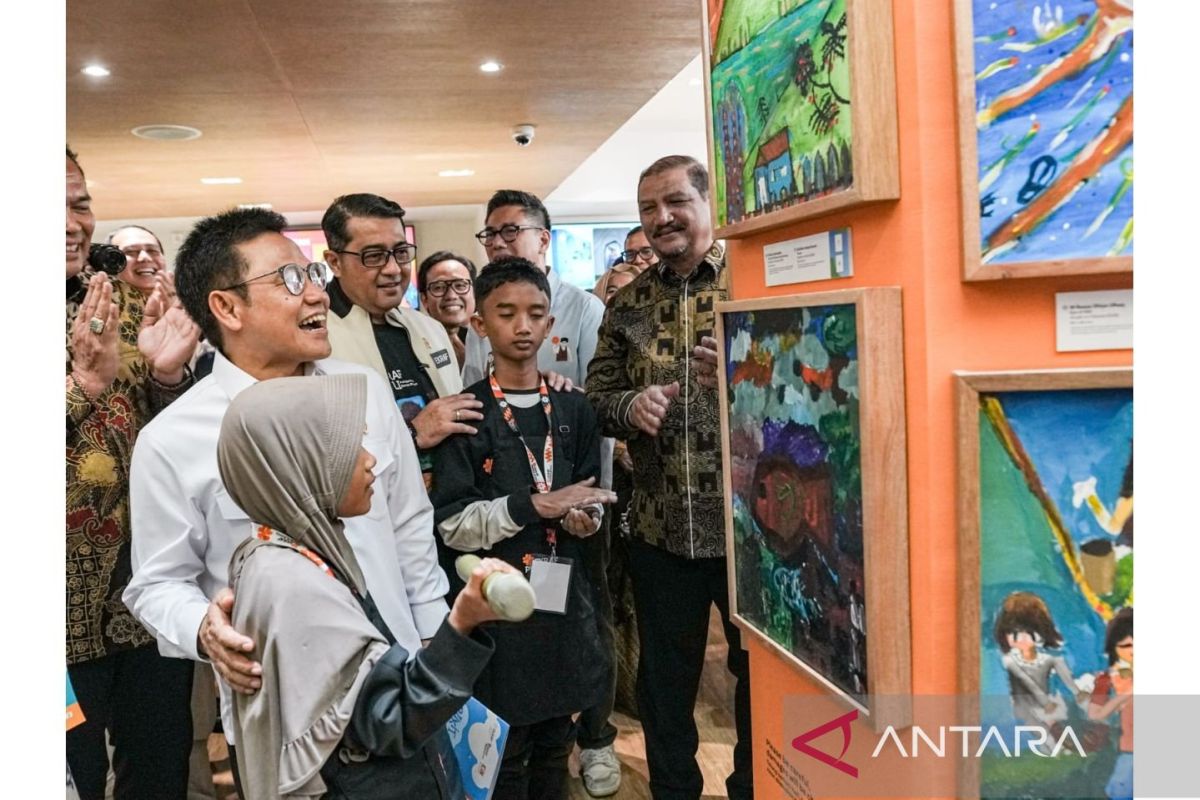
The Coordinating Minister for Community Empowerment, Abdul Muhaimin Iskandar, has expressed his appreciation for an art exhibition that serves as a recovery space for 200 children affected by disasters in Aceh Tamiang Regency and Pariaman City.
“Extraordinary; children born from difficult circumstances can produce extraordinary works. I hope these works increase your spirit to continue enhancing your artistic potential and become part of Indonesia’s creative progress,” said Minister Muhaimin Iskandar during the opening of the painting exhibition for children from Aceh Tamiang and Pariaman in Jakarta on Tuesday (29/9).
According to him, post-disaster recovery should not only focus on repairing houses, the environment, and public facilities. Children also require a space to process their experiences, express their feelings, and rebuild their self-confidence after facing difficult situations.
Therefore, Muhaimin Iskandar views painting as an effective approach for the psychosocial recovery of children affected by disasters. Through creative activities, children are provided with a safe space to pour out stories and experiences that are sometimes difficult to convey through words.
He believes that from such recovery spaces, broader empowerment potential can grow. He is confident that children’s creativity can continue to be developed so that it serves not only as a means of expression but also as preparation to enter the creative economy ecosystem in the future.
The Coordinating Ministry for Community Empowerment (Kemenko PM) is ensuring that various programmes from ministries and agencies can be coordinated to produce policies that have a direct impact on the community.
In this context, he noted that the creative economy needs to be positioned as part of the effort to increase the added value of the nation’s children’s works. “The creative economy is now one of the strengths that can drive economic growth, create jobs, and increase welfare. Therefore, the works of the community need to receive both a space for appreciation and access so that they can continue to develop and possess added value,” said Muhaimin Iskandar.