
Coordinating Minister Airlangga: B50 Will Eliminate Indonesia's Dependence on Diesel
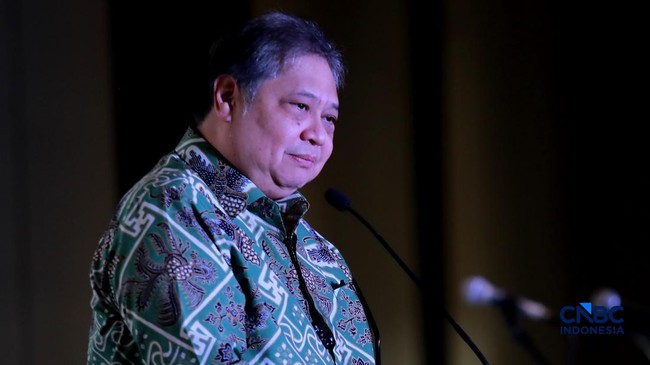
The government continues to push for economic transformation through downstreaming and industrialisation to achieve energy self-sufficiency, strengthen energy access, and accelerate the energy transition. One of the main instruments to realise this agenda is the Increased Use of Domestic Products (P3DN) through the Domestic Component Level (TKDN) policy. “We see that global uncertainty and unpredictability are still ongoing. Therefore, it is important for Pertamina to seek sources of energy diversification. Thanks also to the implementation of B50 and the completion of the RDMP in Balikpapan, dependence on diesel will be eliminated. So we can produce it ourselves,” said Coordinating Minister for Economic Affairs Airlangga Hartarto at the P3DN Summit in Jakarta, Wednesday (22/7/2026).
Furthermore, the government remains consistent in protecting people’s purchasing power and supporting productive sectors through the provision of Pertalite and Diesel, including setting a special diesel price of Rp15,000 per litre for fishing vessel fleets of 30-200 GT. “Because the infrastructure for the economy is firstly energy, secondly energy, thirdly energy. Whether it is industry or digitalisation, everything requires energy first, then electricity infrastructure, only then can we build industry and others. So Pertamina is the bedrock of Indonesia,” said Menko Airlangga.
Regarding the P3DN agenda, Airlangga expressed high appreciation for Pertamina’s domestic product spending target allocation, which exceeds Rp500 trillion. However, he highlighted that capital expenditure allocations in the oil and gas and petrochemical sectors are still dominated by foreign machinery, electrical components, and engineering services. Therefore, Airlangga encouraged synergy between relevant ministries and institutions for industrial engineering to reclaim the domestic portion of Engineering, Procurement, and Construction (EPC) work. He also stressed that strategic projects, such as the Andaman Project off the coast of Aceh, should use Aceh as a laying-down area to maximise the multiplier effect and local employment. “We want this work to be taken up by Indonesian engineers. We also have prepared various tools; Indonesia already has wellheads, valves, pressure vessels, and chemical products. So it is hoped that the capability and multiplier effect of the project can truly be utilised by the domestic industry,” said Menko Airlangga.
Furthermore, Menko Airlangga underlined that Indonesia’s competitiveness is currently supported by several advantages, including competitive energy prices, workforce availability, and a growing AI ecosystem. These advantages have driven high investment interest in Indonesia, including in various Special Economic Zones (KEK), most of which are already occupied. “So this is an opportunity we can only harvest in the next 3 to 4 years. After that, the world will change again. Therefore, we must take advantage of it and work hard. The key is the capability of engineering and capital goods in Indonesia,” he concluded.