
Coordinating Minister AHY: Transport Decarbonisation Not Just About Cutting Emissions, But Indonesia's Future
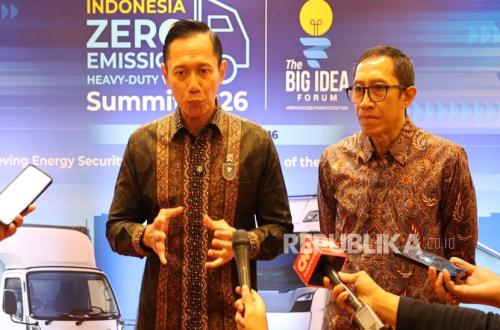
Coordinating Minister for Infrastructure and Regional Development Agus Harimurti Yudhoyono (AHY) has stressed that decarbonising the transport sector is not solely an environmental agenda. It is also part of the government’s efforts to maintain national energy security, reduce logistics costs, and protect public welfare amid global economic uncertainty.
Speaking at the Indonesia Zero Emission Heavy Duty Vehicle (IZEHDV) Forum in Jakarta on Thursday, AHY noted that ongoing geopolitical conflicts are disrupting global energy supply chains, driving up oil prices and impacting the cost of basic necessities. Therefore, Indonesia must strengthen its energy independence to avoid becoming increasingly vulnerable to external shocks. “Amidst a world full of uncertainty, Indonesia must have the spirit to realise energy self-sufficiency,” he said.
Energy security, he explained, is the foundation for ensuring that economic growth continues, industries develop, and the welfare of over 280 million people improves with a sufficient, affordable, and uninterrupted energy supply. However, AHY cautioned that rising energy demand is accompanied by increased carbon emissions, which affect environmental quality and public health. He called for a responsible transition to new and renewable energy, stating, “What we do today is not only to meet current development needs but also a form of responsibility to our future generations. Development must not stop, but we must also preserve the earth we inherit.”
He detailed that approximately 55 percent of Indonesia’s carbon emissions originate from the energy sector. Of that figure, around 22 percent comes from the transport sector, with land transport contributing roughly 89 percent of those emissions. Although heavy-duty vehicles number only about three million units, they account for approximately 31 percent of the transport sector’s carbon emissions. Consequently, the government is promoting various decarbonisation measures, including improving energy efficiency, accelerating vehicle electrification, and developing a national electric vehicle industry, including electric trucks and buses.
“Vehicle electrification requires policy support, public education, and appropriate incentives. At the same time, we want the domestic electric vehicle industry to continue growing, providing broader economic benefits,” AHY said. Beyond electrification, the government is expanding the use of B50 biodiesel as part of its strategy to reduce dependence on imported fuel. The greater the domestically sourced energy supply, the less vulnerable Indonesia is to global oil price fluctuations driven by international geopolitical situations.
AHY also reaffirmed the government’s commitment to addressing the long-standing problem of Over Dimension Over Loading (ODOL) vehicles, which pose a serious threat to national transport safety. He noted that ODOL practices not only increase the risk of fatal traffic accidents but also accelerate road infrastructure damage, requiring tens of trillions of rupiah annually for repairs. “ODOL vehicles endanger road users and cause enormous road damage. Every year, the government must allocate more than Rp 40 trillion for the preservation of roads damaged by vehicles exceeding their dimensions and load,” he revealed.
He stressed that handling ODOL must be carried out gradually, firmly, and fairly, involving all stakeholders from the Ministry of Transportation, Ministry of Industry, the National Police, to business actors. As a long-term solution, the government is developing more efficient logistics transport modes, such as optimising railway logistics lines and increasing maritime logistics capacity to reduce reliance on road transport. “When we can reduce ODOL vehicles, we not only cut carbon emissions but also reduce accident rates, save road repair costs, and create a more efficient and competitive national logistics system,” he stated, adding that this ultimately serves the public interest by lowering logistics costs and stabilising consumer prices.