
Coordinating Minister AHY: North Java sea wall to be combined with mangroves
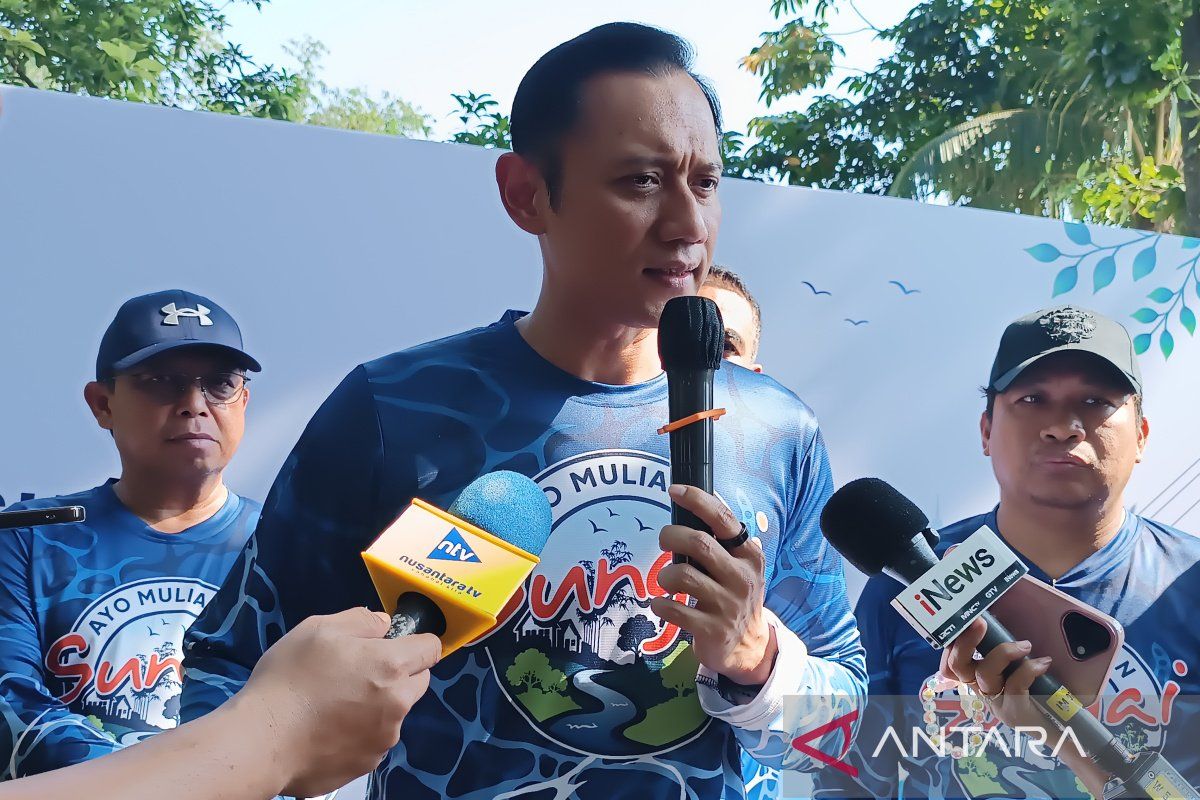
Jakarta (ANTARA) - The Coordinating Minister for Infrastructure and Regional Development, Agus Harimurti Yudhoyono (AHY), stated that the construction of sea walls on the North Coast (Pantura) of Java will be combined with mangrove trees as a nature-based solution.
“The problem of flooding is not only caused by upstream issues but also downstream; this is what we are strengthening through a hard infrastructure approach,” said Minister AHY in Bogor, West Java, on Friday.
According to him, the construction of a giant sea wall is necessary to anticipate flooding issues resulting from rising sea levels.
He noted that every year, the North Coast of Java experiences land subsidence of 5 to 20 centimetres (cm) due to tens of millions of people extracting groundwater.
To address this, the government is currently working to build a giant sea wall along the North Coast of Java, spanning more than 500 kilometres, which will be implemented in stages.
AHY stated that the development of the giant sea wall will be accompanied by the planting of mangrove trees, which serve as natural sea barriers.
“We are designing the construction of sea walls in addition to coastal embankments. We are combining them with mangroves because this is a nature-based solution. Mangroves are highly effective when used in combination,” AHY remarked during the inauguration of the ‘Ayo Muliakan Sungai’ (Let’s Honour Our Rivers) movement.
Previously, AHY revealed that the government is finalising the design for the giant sea wall.
“Indonesia is maturing the development plan for the Giant Sea Wall as part of a broader coastal protection agenda, primarily in the North Coast region of Java. This step is not merely about providing physical protection, but also about maintaining the pulse of community life, protecting livelihoods, and ensuring the sustainability of social and economic ecosystems in coastal areas,” said AHY.
He added that climate change has become a real challenge facing Indonesia.
Flooding, landslides, extreme weather, as well as the threats of rising sea levels and land subsidence in several coastal areas, require measured and long-term mitigation measures.
According to him, the project opens wide opportunities for international collaboration, ranging from coastal engineering, sea protection and barrier technology, operation and maintenance systems, to joint research and development.