
Coordinating Food Ministry Prepares 10 Steps to Accelerate Soybean Self-Sufficiency
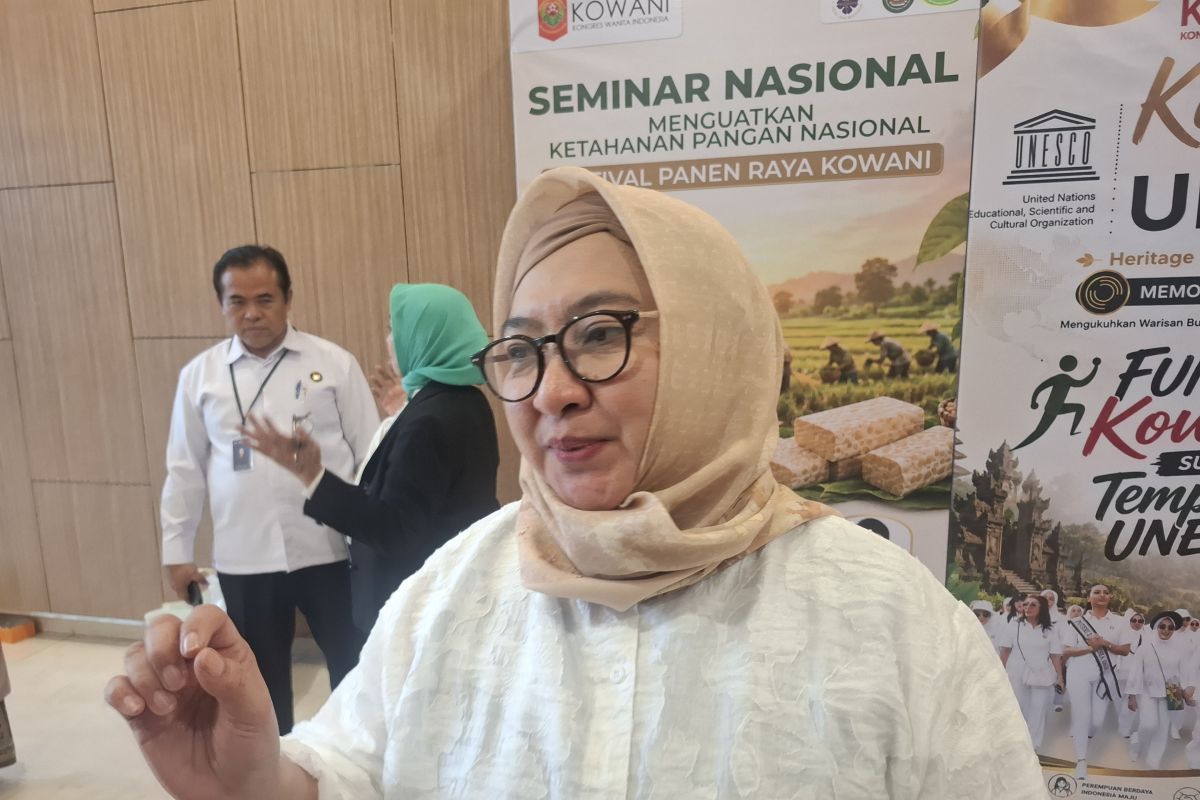
The Coordinating Ministry for Food has prepared 10 key measures to accelerate soybean self-sufficiency, ranging from land provision and superior seeds to market certainty and protection of domestic production from imported soybeans. Widiastuti, Deputy for Food and Agriculture Business Coordination at the ministry, stated that increasing soybean production requires strengthening from upstream to downstream so that the raw material needs of the food industry can be increasingly met from domestic sources. “The key is that the land must be available, superior seeds must be available, fertiliser must be sufficient, agricultural machinery must be supportive, irrigation must have adequate water, human resources must be clear, financing, downstream processing, market certainty as the absorption side, and protection from imported soybeans,” she said during a National Seminar on Strengthening National Food Security in Jakarta on Monday. The 10 steps consist of land provision, superior seeds, fertilisers and pesticides, agricultural machinery, irrigation, human resources and mentoring, financing, downstream processing, market certainty, and protection of domestic production from imported soybeans. The government is targeting the development of 50,000 hectares of soybean planting area in 2026. The planting schedule in the ministry’s presentation is spread from January to November, while the recorded planting realisation has reached 2,956 hectares. Coordinating Food Ministry data shows that soybean production in 2025 reached 78,693 tonnes, with an average production from 2021-2025 of 227,622 tonnes. Meanwhile, soybean production in 2026 recorded up to May reached 7,691 tonnes from a harvested area of 5,048 hectares. She noted that land limitations are one of the challenges in soybean development because the crop can use areas also needed by other food commodities, including rice. “The position is indeed that we need land. Soybean land and rice food land can be in the same place. So the land area is indeed limited,” she said. Increasing production, Widiastuti continued, cannot rely solely on expanding planting areas but also requires superior seeds, sufficient fertiliser and water, mechanisation, financing, farmer mentoring, and guaranteed absorption of harvests. In the programme to strengthen seed independence, breeding activities at the end of 2025 were carried out on an area of 1,420 hectares and produced 5,680 tonnes of seed candidates, of which 3,550 tonnes were certified seeds. According to Widiastuti, the government is not only focusing on expanding planting areas but also ensuring seed availability so that production can be sustainable. “After the seeds are obtained, they must be grown again. In the second semester, there will be more, and so on,” she said. The ministry’s soybean balance sheet shows that average net domestic production from 2022 to 2026 was 190,223 tonnes, or 8.14% of the average requirement of 2,620,294 tonnes. During the same period, average soybean imports reached 2,459,519 tonnes, or 93.58% of the national requirement. Most soybeans are used by industry and the hotel, restaurant, and catering sectors, including for the production of tofu, tempeh, and soy sauce. Beyond production issues, Widiastuti highlighted the challenge of farmer regeneration, as around 70% of farmers are reportedly over the age of 45. She said the use of technology and agricultural digitalisation is needed to bridge the generational gap while making farming more attractive to the younger generation. Widiastuti also said the Coordinating Ministry for Food, through its seed working group, is reviewing a potential revision of Government Regulation No. 21 of 2005 on the Biosafety of Genetically Engineered Products. “We, at the Coordinating Ministry for Food, in the Seed Working Group, are also addressing the revision or adjustment of PP 21 of 2005, which has been in place for quite a long time regarding Biosafety for Genetically Engineered Products,” she revealed. On the same occasion, the Chairperson of the Indonesian Hotel and Restaurant Association (PHRI), Hariyadi BS Sukamdani, said that soybean self-sufficiency requires the involvement of the government, farmers, research institutions, the community, and businesses. “We have started pioneering towards self-sufficiency. Hopefully, we can carry this out together, and the government opens opportunities for all members of society, including the private sector, to take part,” said Hariyadi. He said PHRI supports increasing national soybean production because the commodity is closely related to the sustainability of the tempeh industry as a distinctive Indonesian food. According to him, increasing domestic soybean production is also important to reduce dependence on imports, which currently dominate the raw material supply for tempeh. In addition to strengthening food security, this effort is considered capable of supporting the development of tempeh as a culinary identity of Indonesia while increasing the added value of the tourism sector through hotels and restaurants. “The stronger the domestic soybean supply, the greater the opportunity to develop tempeh as a value-added food product as well as an ambassador of Indonesian culture internationally,” he said.