
Cooperatives Must Connect Farmers to Consumers, Ministry Says
Jakarta (ANTARA) - The Ministry of Cooperatives has said cooperatives must be able to connect value chains from upstream to downstream, spanning farmers, fishers and consumers.
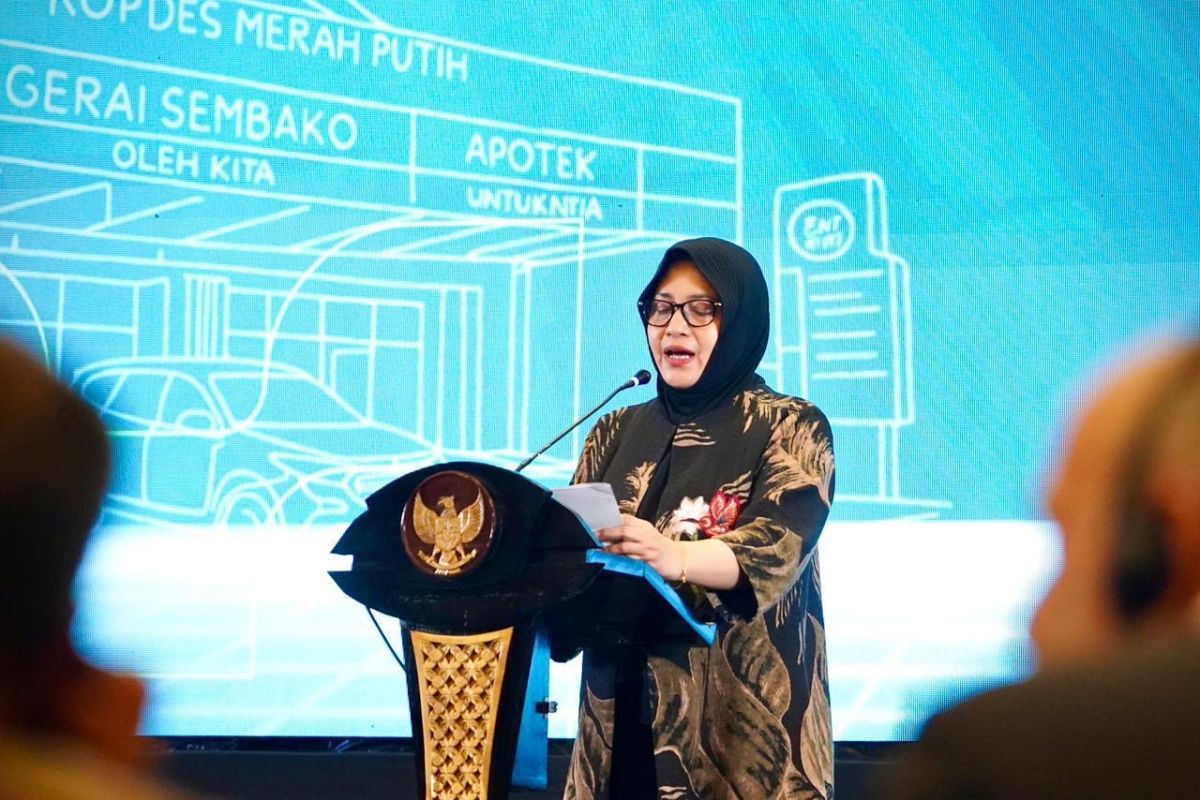
Destry Anna Sari, Deputy for Talent Development and Cooperative Competitiveness at the Ministry of Cooperatives, said the future role of cooperatives is no longer limited to that of a business entity or savings and loan institution, but rather as a driver of an integrated economic ecosystem.
“Cooperatives serve as the link between farmers, fishers, micro, small and medium enterprises, processing industries, financing institutions, markets, and consumers,” Destry said during a webinar organised by the National Research and Innovation Agency (BRIN) in Jakarta on Tuesday.
According to her, Indonesia possesses enormous economic potential in its natural resources, human resources, and economic potential spread across various regions. However, she assessed that this potential has not yet fully generated optimal added value because problems remain in the interconnectedness between economic chains.
Destry said economic development is not sufficient if directed only at increasing production; it must also ensure that every link in the economic chain is interconnected.
She noted that various development programmes have so far run in a fragmented manner. Some parties build production facilities, warehouses, outlets or processing facilities, but these are not yet fully connected within a single economic ecosystem.
“Communities do not need programmes that stand alone. Communities need an ecosystem capable of creating added value from upstream to downstream,” she said.
According to Destry, this ecosystem-based approach is one of the directions for developing the Red and White Village/Neighbourhood Cooperatives (KDKMP), which are directed not only as village economic institutions but as nodes connecting various community economic activities.
Through KDKMP, the government encourages village and neighbourhood cooperatives to play a role in strengthening supply chains, including acting as offtakers or buyers of community production, particularly agricultural and fisheries commodities.
Cooperatives are also expected to help provide financing access for village business actors and open up wider market access so that community products do not stop at the production stage but can enter processing and distribution.
With this role, cooperatives are expected to address classic problems faced by small producers, such as limited capital, uncertainty of buyers, distribution access, and low product added value.
Destry added that the government continues to drive the transformation of cooperatives so they become modern, professional, productive and data-driven through strengthening human resources, digitalisation, governance, financing access, and talent development.
She affirmed that the future success of cooperatives will be measured not only by the number of cooperatives established, but by their ability to connect various economic potentials to increase productivity and public welfare.