
Cooperatives Minister Invites Students to Use Cooperatives as Vehicle for Collective Business and Economic Innovation
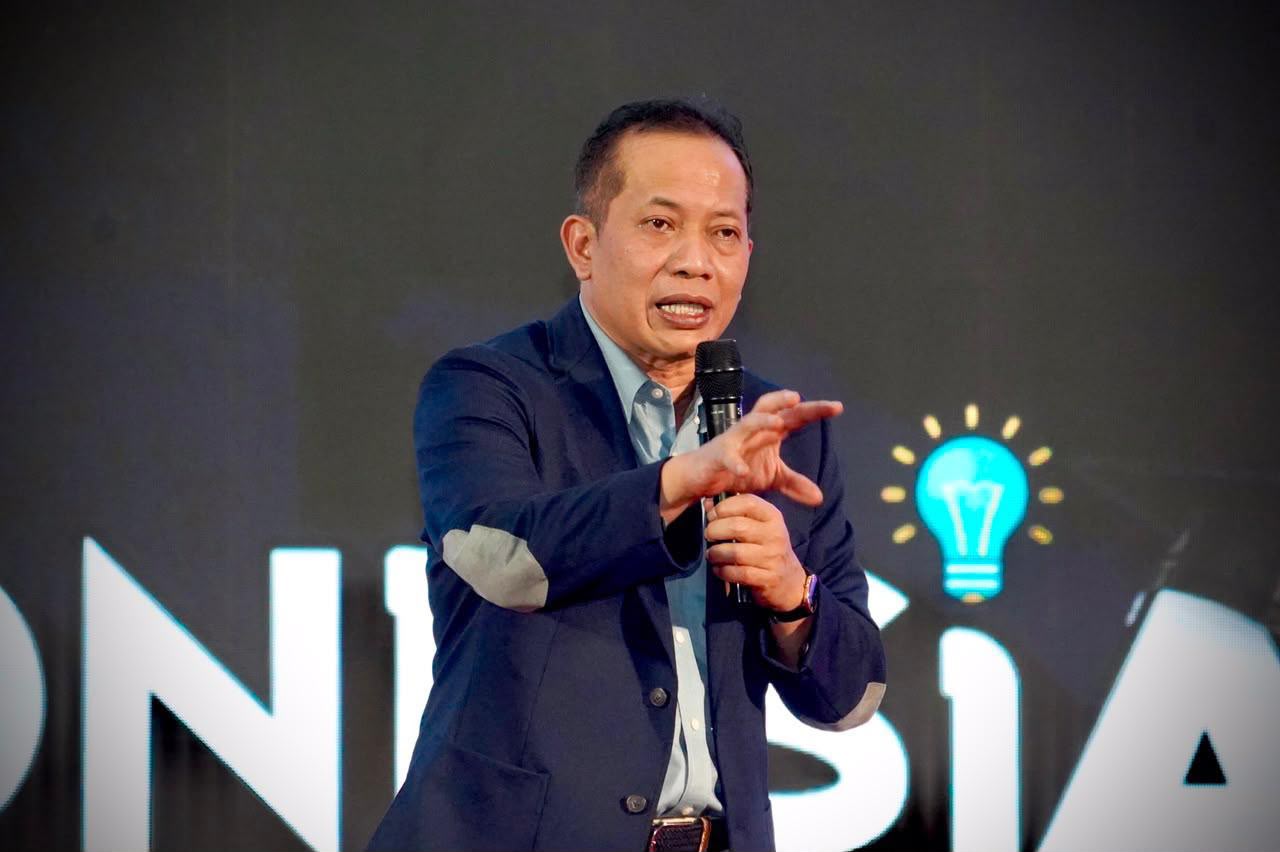
The Ministry of Cooperatives (Kemenkop) has affirmed that the Red and White Village/Urban Village Cooperative programme (KDKMP) can be directed to support students and the younger generation in making cooperatives a vehicle for collective enterprise, job creation and a driver of regional economies. Campus-based student cooperatives can become business laboratories for students.
KDKMP is a game changer in the national economic transformation, particularly in villages. The programme is designed not merely as a policy instrument, but as a revolution changing how cooperatives play a role in improving community welfare.
Cooperatives Minister Ferry Juliantono emphasised that KDKMP was not born from a formal academic paper, but from real needs on the ground.
“President Prabowo Subianto’s strong determination to transform villages into stronger and more competitive entities can only be achieved through cooperatives,” Ferry said in his remarks at the ‘Indonesia Punya Kamu’ talkshow at Andalas University, themed ‘Think Bigger, Build Together: Students and the Future of Indonesian Cooperatives’, in Padang on Tuesday (15/9).
Ferry added that KDKMP will become a distribution centre for subsidised goods as well as an offtaker for village MSME products. As such, village cooperatives will not only function as distributors, but also as engines of the local economy. Under its mandate, KDKMP will also act as an extension of the government in channelling social programmes such as social assistance (bansos), Direct Cash Assistance (BLT), the Family Hope Programme (PKH) and others.
The Ministry of Cooperatives is committed to continuing to promote the digitalisation and governance of cooperatives so that they move beyond savings and loans into production, distribution and the creative industries. He encouraged cooperatives in Padang, particularly in campus environments such as Andalas University, to become places for self-development so they can grow further.
He stressed that the revival of cooperatives is a historic task that must be connected across generations. He expressed hope that Bung Hatta’s ideals can be carried forward by students and the younger generation, so that cooperatives once again become a main pillar of the Indonesian economy.
“We will hand over the baton of cooperative development so that Bung Hatta’s ideals continue to be realised in our country, into the hands of the younger generation and all students,” he concluded.
Meanwhile, Andalas University Rector Efa Yonnedi expressed appreciation for the government’s hard work to support equitable economic distribution down to the villages. As academics, Andalas University is committed to continuously developing innovation and research in support of all government programmes related to improving competitiveness and the people’s economy.
He emphasised that Andalas University has produced tangible innovations that can serve as supporting instruments for these government programmes. One example is organic ink made from gambier plants, which in 2024 was produced at up to one million bottles and used at more than 60 per cent of polling stations across Indonesia. In addition, health biotechnology research has yielded more than 35 reagent products, including rapid tests for tuberculosis and HIV that are now available on marketplaces and in the e-catalogue.
“Andalas University is committed to being a partner and supporting government programmes in line with our capacity as members of the higher education community. We will continue to guide Indonesia towards becoming a developed nation by 2045 through research and innovation that benefits the nation’s independence,” he concluded.