
Cooperatives Minister Discusses Work Plan and 2027 Budget with Indonesian Parliament
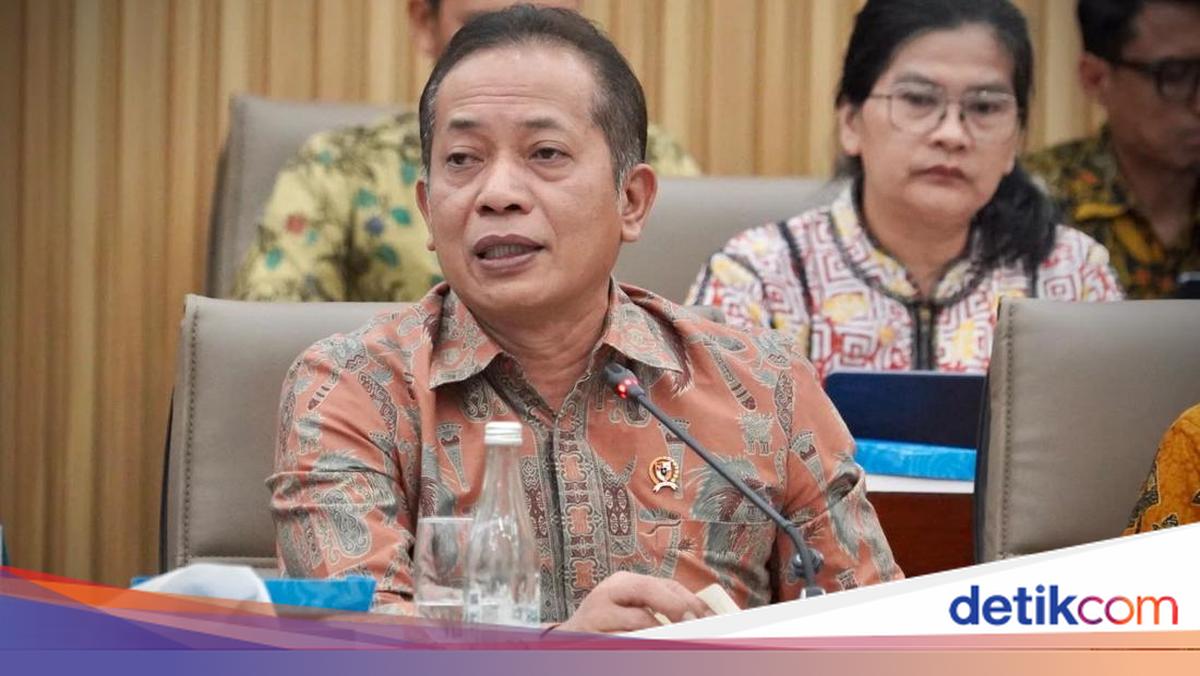
The Minister of Cooperatives, Ferry Juliantono, expressed his appreciation to Commission VI of the House of Representatives (DPR RI) for their consistent support and oversight of the Ministry of Cooperatives’ work programmes. The synergy between the two institutions is expected to continue effectively to ensure the optimal operationalisation of the Merah Putih Village/Sub-district Cooperatives (KDKMP).
Ferry explained that input and recommendations from Commission VI serve as primary guidelines for drafting and implementing the Budget Work Plan (RKA) and the Government Work Plan (RKP) for the current year and the 2027 fiscal year. “We are very pleased when the members of Commission VI provide input towards improving the cooperative assistance process, particularly regarding the operationalisation of KDKMP,” Ferry stated in a written release on Thursday (11/6/2026).
Also present at the working meeting were the Deputy Minister of Cooperatives, Farida Farichah, the Secretary of the Ministry of Cooperatives, Ahmad Zabadi, senior officials of the Ministry, and the President Director of the Revolving Fund Management Agency (LPDB) Cooperatives, Krisdianto.
During the meeting, Ferry reported on the progress of the construction and operation of KDKMM. Physical construction, including warehouses, outlets, and other equipment for 12,533 units, has been completed, while another 22,737 units are currently under construction. The Ministry of Cooperatives is determined to reach a target of operationalising approximately 30,000 KDKMP units by August 2026, following the initial operation of 1,061 units.
“By the end of 2026, we hope the number of operational Merah Putih Village/Sub-district Cooperatives will reach approximately 40,000,” he explained.
Ferry also detailed discussions regarding a proposed increase in the Ministry’s 2027 budget ceiling by Rp1.34 trillion, from an indicative ceiling of Rp542.88 billion. With this proposal, the Ministry’s budget for the 2027 RKA and RKP could increase to Rp1.89 trillion. This proposed funding would support management programme strengthening by Rp228.37 billion and cooperative programmes by Rp1.12 trillion. Ferry noted that the additional budget is essential to ensure the KDKMP programme is managed effectively.
“We hope for optimal support for this additional budget proposal. This will allow the President’s priority programmes to run effectively and provide maximum benefits to the community,” he said.
Before the members of Commission VI, he emphasised the Ministry’s commitment to ensuring that the operationalisation of KDKMP in regions where construction is complete proceeds smoothly. Consequently, monitoring and evaluation will be conducted alongside efforts to strengthen the cooperative ecosystem and institutions.
He assured that attention to existing cooperatives remains a priority, so that KDKMP and existing cooperatives can work in tandem to improve the welfare of members and the public. Furthermore, oversight of cooperatives will be increased to mitigate the risk of abuse of authority.
“The Ministry of Cooperatives will also conduct supervision and assistance for problematic cooperatives, because besides managing KDKMP, we continue to assist existing cooperatives to ensure they maintain high competitiveness,” he added.
Meanwhile, the Chairperson of Commission VI of the DPR RI, Anggia Ermarini, appreciated the hard work of the Ministry of Cooperatives in implementing the President’s instruction to establish 83,000 KDKMP institutions. She explained that the most critical stage for the Ministry to oversee currently is the operationalisation process of the KDKMP.
Therefore, she expressed her support for the Ministry to ensure the 2027 budget ceiling is increased to guarantee the smooth operation of all KDKMP. In her view, KDKMP must receive sufficient fiscal support to achieve programme targets.
“Amidst significant efficiency measures, Commission VI of the DPR RI supports the Ministry’s budgetary needs to ensure that KDKMP and existing cooperative programmes run well,” she said.
However, Anggia urged the Ministry to maximise the monitoring and supervision of the KDKMP programme to ensure it meets its primary objective of driving the economy in villages and sub-districts and promoting community welfare.
“As KDKMP is a new programme, it requires strict assistance, supervision, and monitoring so that the President’s vision of developing the village economy can be successfully realised,” she concluded.