
Cooperatives and Agriculture Key to Building Economic Self-Reliance
JAKARTA – Strengthening the agricultural sector and cooperatives is considered one of the keys to building national economic self-reliance. Indonesia’s experience in achieving food self-sufficiency in 1984 and the role of Village Unit Cooperatives (KUD) at that time are cited as lessons for facing current economic challenges.
This view emerged during a National Seminar on Soeharto’s Leadership held at Trilogi University, Jakarta, on Wednesday (24/6/2026). Minister of Culture Fadli Zon stated that several policies from the era of Indonesia’s 2nd President, HM Soeharto, remain relevant for study in the context of national development.
“One of them is policy in the agricultural sector. As is known, Indonesia achieved food self-sufficiency in 1984. We went from a state of hunger to food self-sufficiency. That was an extraordinary achievement,” Fadli Zon told reporters after the event.
According to him, this success was supported by the Green Revolution programme, which encouraged agricultural modernisation with a focus on increasing food production, particularly rice. During the same period, the government also developed Village Unit Cooperatives as a means of strengthening the agriculture-based economy.
“And at that time, Mr. Harto mobilised the KUD (Village Unit Cooperatives) with a focus on agriculture. In Mr. Harto’s era, industrialisation and investment also began to move in Indonesia,” he said.
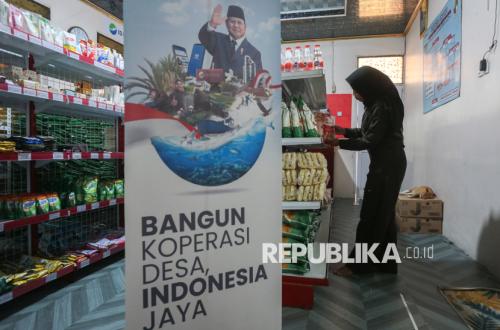
Fadli assessed that the current development of the Red and White Village Cooperatives (KDMP) shares similarities with the KUD concept, although its scope of activities is broader as it touches various economic sectors of village communities.
“This KDMP is intended to drive the village economy by opening access for farmers, fishermen, smallholders, and small traders to place their products there and obtain a fair price for their produce. The strength of a cooperative lies in togetherness; they can determine the price of their products,” he explained.
He added that a strong cooperative model can also be found in Japan through JA Zen-Noh, which plays an important role in supporting the agricultural sector and rural economy. “Initially, there will certainly be adjustments and problems. But these can be resolved well,” said Fadli.
Besides the agricultural and cooperative sectors, Fadli also touched on Indonesia’s role in international relations during the Soeharto era, including involvement in ASEAN, APEC, and the Non-Aligned Movement.
“We can see Mr. Harto’s involvement in ASEAN, APEC, and the Non-Aligned Movement. In fact, Mr. Harto was also recorded as a mediator in various conflicts between countries, in Cambodia and the Philippines,” he stated.
Meanwhile, Minister of Elementary and Secondary Education Abdul Mu’ti assessed that Soeharto made a major contribution to expanding access to basic education in Indonesia. According to him, the Presidential Instruction Primary School (SD Inpres) development programme helped reduce the illiteracy rate during that period.
“With the basic education programme at that time, especially the SD Inpres, which were built throughout Indonesia, the country was able to free itself from the ‘3B’ — illiteracy, innumeracy, and lack of basic knowledge. These are his services that we cannot ignore,” said Abdul Mu’ti.