
Cooperative Minister Asserts 2027 Budget Will Focus on Strengthening Cooperatives
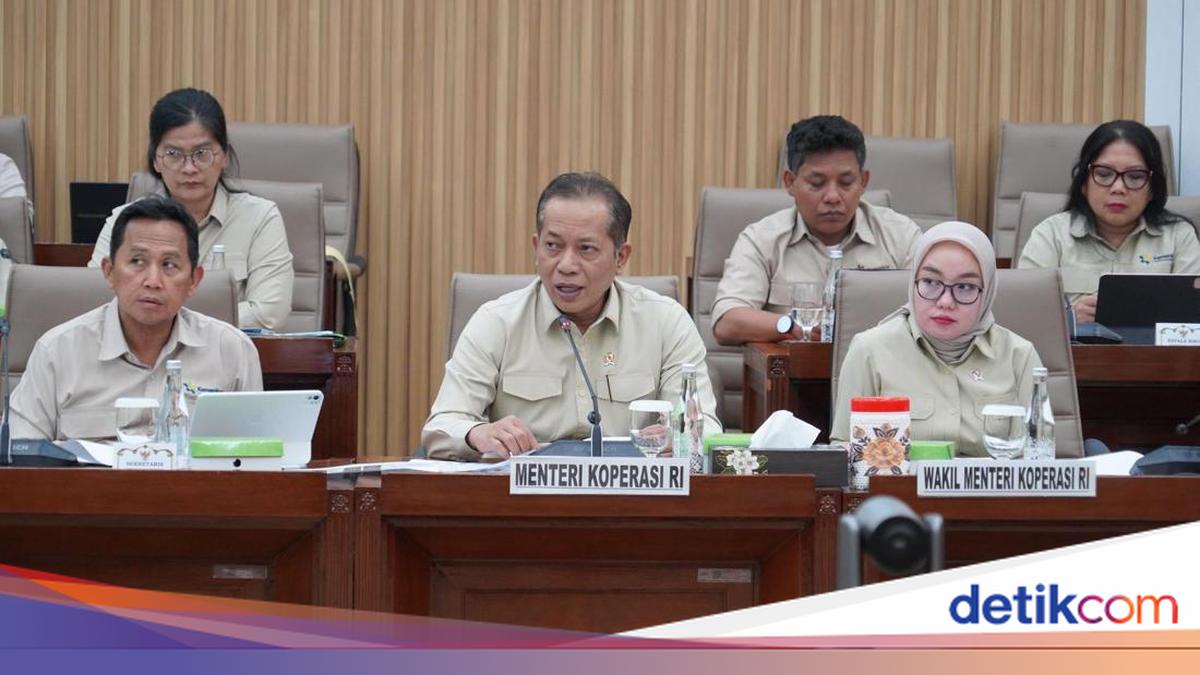
The Ministry of Cooperatives (Kemenkop) has confirmed that the direction of the 2027 fiscal year budget will focus on strengthening the implementation of cooperative programmes, particularly in reinforcing the institutional framework and the operationalisation of the Merah Putih Village/Sub-district Cooperatives (KDKMP).
Kemenkop has also requested additional funding to support the implementation of the KDKMP national priority programme. This additional budget will be directed towards human resource development, education, guidance, assistance, and the supervision of cooperatives.
The Minister of Cooperatives, Ferry Juliantono, explained that the additional budget is necessary because the Ministry is responsible for monitoring and providing guidance to both existing cooperatives and the developing KDKMP.
“We are requesting additional budget because the Ministry of Cooperatives has the responsibility to conduct monitoring and guidance for existing cooperatives as well as the KDKMP,” he stated in a written statement on Wednesday (2/9/2026).
This was conveyed during a Working Meeting with Commission VI of the Indonesian House of Representatives (DPR RI) regarding the discussion of the Ministry of Cooperatives’ 2027 Work Plan and Budget in Jakarta on Tuesday (1/9).
The meeting was led by the Deputy Chairman of Commission VI of the DPR RI, Elam Hendro Purnomo, and attended by officials from Kemenkop and members of Commission VI.
In addition to discussing programme budget requirements, Ferry also addressed reports regarding a budget of Rp 103 billion, which was alleged to be specifically for podcasts.
He emphasised that the budget is not intended exclusively for podcasts, but is part of the broader requirements for public communication and supporting the ministry’s duties. According to him, the allocation covers various functions, ranging from public relations, public communication, documentation, and publication to administration, information technology, and infrastructure support.
“Public communication is not just about podcasts. Podcasts are one communication channel. There are functions for public relations, administration, information technology, infrastructure, documentation, publication, and various other supports required in the execution of ministerial duties,” he explained.
He added that public communication is a vital component in ensuring that various government policies and programmes are accurately understood by the public. Therefore, its management requires professional knowledge and expertise so that information can be conveyed effectively and reach the wider community.
“The science of communication plays an important role in ensuring that government policies and programmes are well understood by the public. Therefore, public communication needs to be managed professionally as part of the execution of government duties,” he said.
He noted that this public communication support is necessary so that various cooperative programmes can be communicated to the public and cooperatives throughout Indonesia, including both existing cooperatives and the developing KDKMP.
He asserted that all uses of the Kemenkop budget will be directed towards supporting the execution of ministerial duties and the achievement of performance, while maintaining the principles of effectiveness, efficiency, accountability, and measurable results.
“We understand that the state budget must be used responsibly. Therefore, we continue to ensure that every use of the budget is carried out effectively, efficiently, accountably, and with measurable results,” he emphasised.
Meanwhile, the Deputy Chairman of Commission VI of the DPR RI, Eko Hendro Purnomo, appreciated Kemenkop’s performance and requested that future budget needs be specifically directed towards strengthening cooperatives, including the KDKMP.
In his view, this strengthening should be achieved through training, guidance, supervision, and the provision of professional, performance-based assistants.
“Cooperatives, including the KDKMP, must have healthy management and governance so that they can provide real economic benefits to the community,” he concluded.
Through continuous institutional strengthening, guidance, and supervision, Kemenkop hopes that cooperative programmes can further develop and provide broader economic benefits to the public.