
Cooperative Material Inserted into School Curriculum, Minister: So It's Not Liberal Capitalist Economy
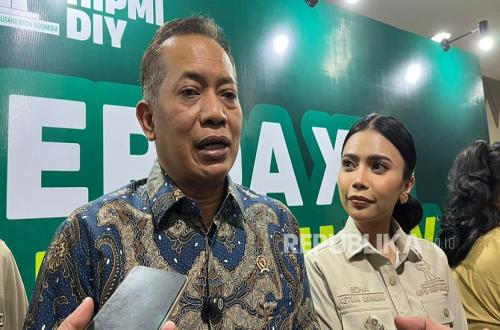
Cooperatives Minister Ferry Juliantono has expressed appreciation for Central Java Province’s plan to insert material about cooperatives into the education curriculum for elementary to senior high schools and their equivalents in the region. He hopes this will make the younger generation more familiar with cooperatives and not solely influenced by the liberal capitalist economic system. Ferry stated that Central Java is the first province to undertake the insertion of cooperative education into its curriculum, both in formal and religious-based education. The programme has already received the green light from the Ministry of Primary and Secondary Education and the Ministry of Religious Affairs. He hopes that the teaching of cooperatives can be implemented soon. ‘Indonesia’s national economy, as conveyed earlier by the Governor, is an economy that is Pancasila in nature in accordance with the 1945 Constitution, specifically the clauses in Article 33,’ Ferry said while attending the launch of the Central Java Cooperative Education Insertion programme at the Gradhika Bakti Praja Building in Semarang City on Friday (5/6/2026). ‘It is hoped that this can be applied and understood again by our young generation, to restore things so it is not a liberal capitalist economy with all its accompanying values, recent values of greed, individualistic values, values of wanting to win alone, and so on,’ Ferry added. According to him, it is important to instil the values of mutual cooperation, togetherness, and familialism, as desired by the nation’s founders, because they also wanted cooperatives to be the pillar of the national economy. Ferry revealed that the educational material on cooperatives would contain everything related to cooperatives. ‘One of the things might be about the Merah Putih Village Cooperatives, but also about other cooperatives,’ he said. ‘So it is important to convey because cooperatives can be an alternative for providing employment opportunities for Millennials, Gen Z, young people, and the Alpha generation who are currently still in school,’ added Ferry.