
Cooperative Managers and Members Protected by BPJS Ketenagakerjaan
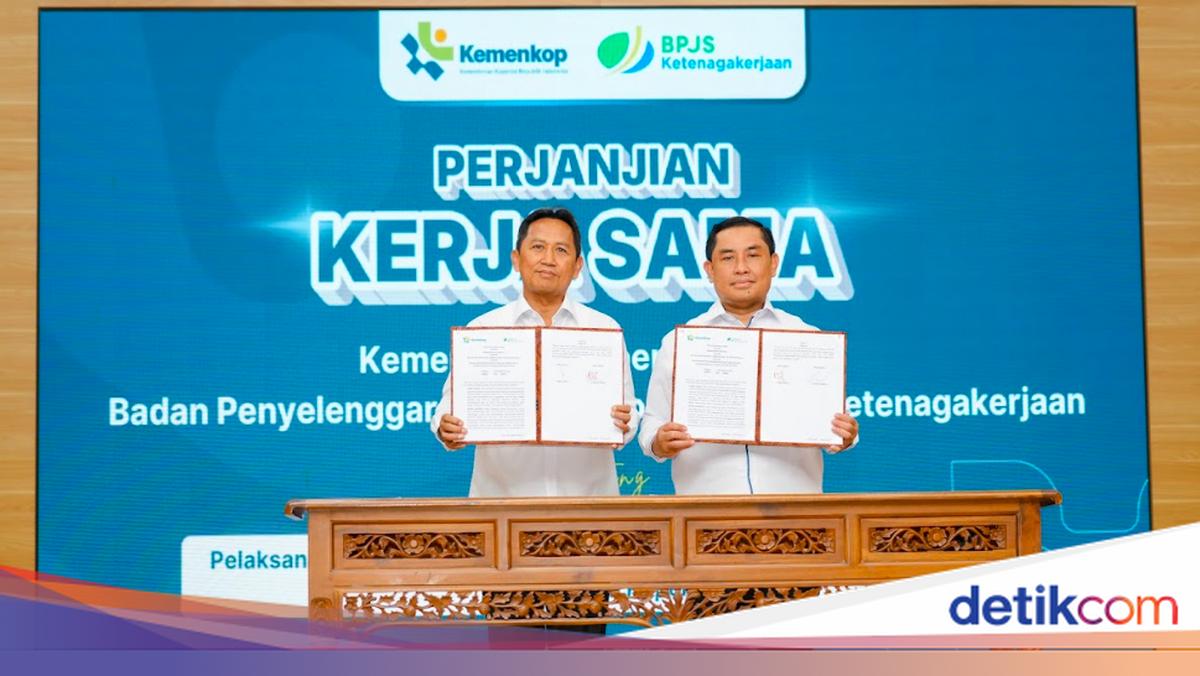
The signing of the MoU and PKS was conducted by the Minister of Cooperatives of the Republic of Indonesia, Ferry Joko Juliantono, and the Secretary of the Ministry of Cooperatives, Ahmad Zabadi, with the President Director of BPJS Ketenagakerjaan, Saiful Hidayat, and the Director of Membership of BPJS Ketenagakerjaan, Agung Nugroho, at the Ministry of Cooperatives building in Jakarta.
The Minister of Cooperatives of the Republic of Indonesia, Ferry Joko Juliantono, stated that the cooperation with BPJS Ketenagakerjaan is a strategic step in strengthening the national cooperative ecosystem, which is not only productive and competitive but also has strong social protection for all actors within it.
“We encourage social security protection for employment to reach the entire cooperative ecosystem, including village/sub-district merah putih cooperatives, which are currently being strengthened as engines of community economic activity in the regions. The presence of social protection is an important part in maintaining business continuity while improving community welfare,” said Ferry Juliantono in a press release on Tuesday (12/5/2026).
This was stated by Ferry during the signing of the cooperation at the Ministry of Cooperatives building on Monday (11/5).
The cooperation provides protection for the entire cooperative ecosystem, from managers, administrators, workers, to cooperative members who have productive work activities. This signing is also part of efforts to increase coverage and strengthen worker protection in the people’s economy sector, which plays an important role in national economic growth.
The scope of the cooperation includes BPJS Ketenagakerjaan’s protection programmes for the cooperative ecosystem, exchange of membership data and information, as well as strengthening access to registration and payment services. This collaboration is expected to accelerate the expansion of membership coverage while improving ease of access to services for cooperative actors throughout Indonesia.
In addition, this cooperation supports the strengthening of village/sub-district merah putih cooperatives so that the economic drivers within them receive protection against work risks, such as work accidents or death risks. The presence of employment social security protection is expected to provide a sense of security for workers, thereby increasing productivity and the sustainability of cooperative businesses.
The President Director of BPJS Ketenagakerjaan, Saiful Hidayat, stated that the synergy between BPJS Ketenagakerjaan and the Ministry of Cooperatives is an important step in ensuring social protection reaches all layers of workers, including the cooperative and people’s economy sectors, and protects workers if work risks occur such as work accidents, Old-Age Security (JHT), Pension Security (JP), or death.
This effort is also in line with BPJS Ketenagakerjaan’s 3C strategy, namely Coverage, Care, and Credibility. Coverage is realised through the expansion of employment social security protection coverage throughout the cooperative ecosystem, including village/sub-district merah putih cooperatives; Care through the provision of increasingly easy, fast, and affordable services in the registration and contribution payment process, as well as Credibility through strengthening governance, integration and utilisation of membership data, and inter-institutional collaboration to ensure protection runs more effectively, on target, and sustainably.
“Through this cooperation, we want to ensure that workers and the cooperative ecosystem receive employment social security protection in an easy, fast, and sustainable manner. If you look at the potential for cooperation with the Ministry of Cooperatives currently, it is quite large; regular cooperatives alone have a potential of around 142 thousand cooperatives, with only about 9 thousand registered, while merah putih cooperatives from a potential of around 81 thousand have about 800 registered,” said Saiful.
The Work Accident Security (JKK) programme from BPJS Ketenagakerjaan provides protection against work accident risks and occupational diseases for registered active participants, including during travel to and from work. Participants receive healthcare services according to medical needs, Temporary Incapacity Benefit (STMB), as well as benefits if they experience disability or death, including scholarships for the participant’s children with a maximum amount of 174 million rupiah for 2 children. The Old-Age Security (JHT) and Pension Security (JP) programmes can be enjoyed if participants experience the impact of layoffs or reach retirement age. Meanwhile, the Death Security (JKM) programme provides benefits to the heirs of participants who die not due to work accidents, in the form of death benefits, funeral costs, and educational scholarships to help sustain the economic continuity of the bereaved family.
“Actually, the great benefit for cooperatives is not only for managers and administrators, but also for workers and members. Participants from the cooperative ecosystem feel comfortable and calm while working, so if something unwanted happens, such as a work accident, treatment costs are covered by BPJS Ketenagakerjaan; if layoffs or death occur, participants can receive Old-Age Security (JHT), Pension Security (JP), and Death Security (JKM) benefits so that participants and their families can continue their lives,” added Saiful.
He also added that the integration of membership data and information will be an important foundation in accelerating validation and expansion of protection for cooperative workers in various regions. The establishment of the Social Security Impact Index (IDJS) is a strategic step to present a national measurement tool that can be used jointly in assessing the effectiveness of employment social security programme implementation in Indonesia. This index is expected to become one of the indicators for policymakers in formulating policies that are increasingly geared towards worker welfare. Of course, in the implementation of IDJS, we need guidance and collaboration with the Ministry.